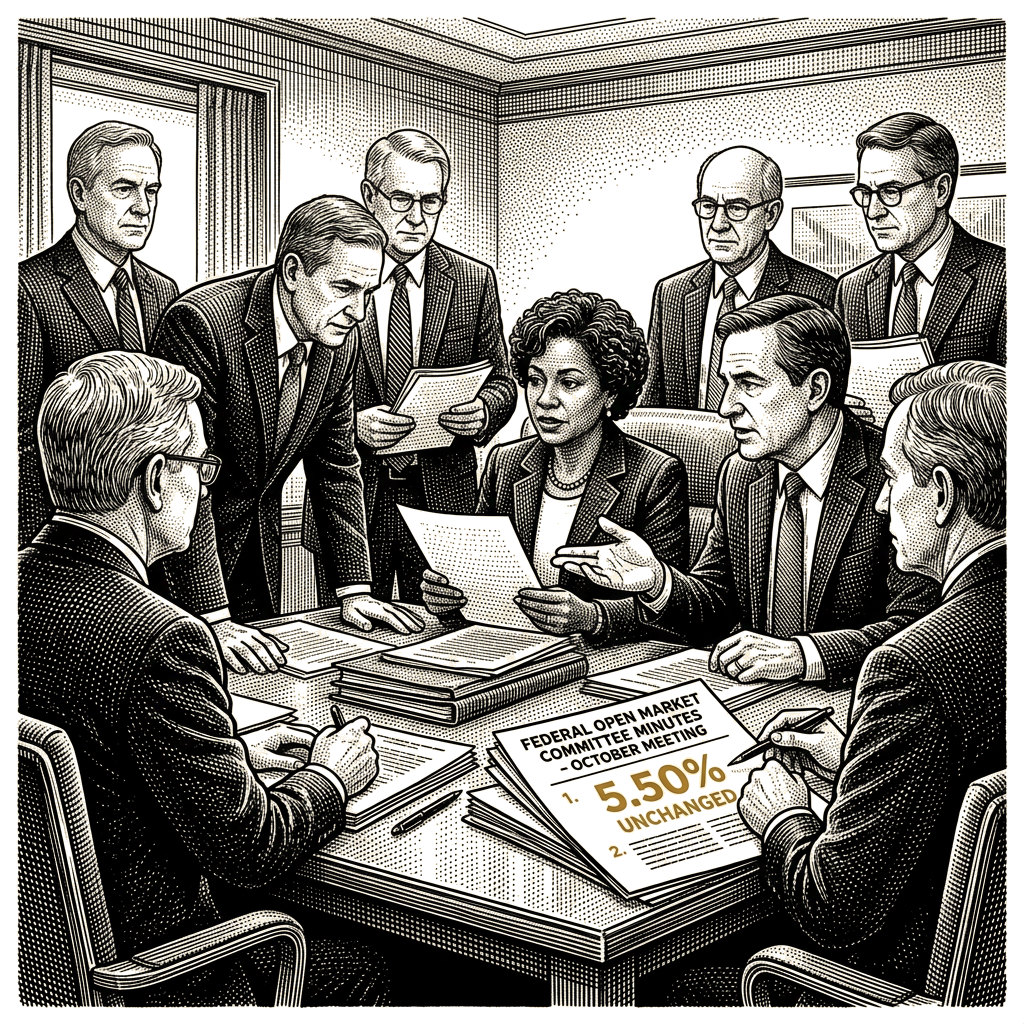
Many Fed watchers expect there could be two or three dissents Wednesday
Federal Reserve policymakers are likely to keep their key interest rate unchanged at Wednesday’s meeting, but the vote itself may not be unanimous. The Fed’s September decision to lift rates was unanimous, and many Fed watchers expect there could be two or even three dissents this week among the 12 officials who vote on rates. Beth Hammack, president of the Federal Reserve Bank of Cleveland, and Lorie Logan, president of the Dallas Fed, are considered the most likely to vote in favor of a rate hike. Both have expressed concerns that the Fed’s key rate isn’t high enough to slow the economy and cool inflation. Some economists said dissents could help Warsh and the Fed by showing that support for higher rates remains on the committee.
Top officials have moved in recent speeches to downplay the likelihood of an increase in October. Federal Reserve Board Vice Chair Philip Jefferson said longer-term interest rates had shot higher in financial markets and added, “my colleagues and I will need to come to our own judgment, which may take more time.” Joseph LaVorgna, chief economist at SMBC Americas and a former top Trump administration official, said the central bank would hold back just before the election. “The Fed doesn’t want to poke the White House in the eye six days before an election,” LaVorgna said.
Futures prices now show almost no chance of an increase in the Fed’s rate, currently at about 3.9%, making for what may seem like an uneventful meeting, and most economists see the odds of a hike as quite low. After inflation came in hotter than expected last month, Wall Street investors and some economists had expected the central bank to lift rates by a quarter-point at Wednesday’s meeting, to about 4.1%. The Fed is charged with combating inflation and typically seeks to cool spending and bring down inflation by boosting borrowing costs.
The Oct. 27-28 meeting is the fourth of Chairman Kevin Warsh’s tenure, following his appointment by President Donald Trump earlier this year, and it comes just six days before midterm elections that have been shaped by affordability concerns. Gas prices have soared, grocery prices remain elevated, and the average 30-year mortgage rate reached a three-year high of 7.4% earlier this month before slipping to 7.32% last week; a year ago, the rate was just under 6.2%. Oxford Economics estimates that the sharp increases this year have put home buying out of reach for another 5 million households. Further Federal Reserve rate hikes could push mortgage rates even higher.
Jefferson’s comments and those of other officials raise questions about one of Warsh’s signature initiatives: his disdain for so-called “forward guidance,” a term for the clear signals about the central bank’s next moves provided by previous chairs. Warsh has said that such direction commits the Fed to a specific path and limits its ability to respond to economic data. Yet the speeches this month by top officials appeared to some economists to be very much like forward guidance — just not from the chairman.
Aditya Bhave, head of U.S. economics research at Bank of America, set out two possible readings of the officials’ messages: “Either he blessed this message from them and he was on board, in which case, one would have to question the credibility of this idea that that he doesn’t like forward guidance,” Bhave said. “But the other possibility is that he wasn’t on board.” If Warsh did not endorse that message, he could implement a surprise rate hike, which would “end forward guidance by showing markets that they can’t listen to the guidance anymore.”
Warsh’s own characterization of inflation will carry weight. Inflation has come in hotter than most economists expected for two months in a row, heightening concerns that gas price spikes could raise costs across the economy. Diesel fuel reached an all-time high of $6.53 in late September and has only fallen to $6.35 since then. High diesel costs raise the price of shipping all sorts of goods, including groceries, cars and nearly everything else, and businesses could pass those costs on to consumers, spreading inflation to more parts of the economy. Bhave noted that inflation has not been at the Fed’s target of a 2% annual rate for a single calendar quarter since the final three months of 2020, nearly six years ago. If Warsh reiterates that inflation is too high and that the Fed intends to return it to 2% in a “timelier” fashion, economists and investors will see such comments as a sign the Fed will likely hike rates at its next meeting in December.
Questions about Warsh’s independence from Trump have marked his tenure. At the Fed’s last meeting in September, Warsh defied Trump’s preferences and raised rates, a step that defied concerns that the new Fed chair would turn out to be, in the words of Massachusetts Sen. Elizabeth Warren, “a sock puppet” for the president. Trump had said before choosing Warsh in January of this year that he would only pick a Fed chair who would cut rates. James Knightley, chief international economist for Netherlands-based bank ING, said September’s rate hike, in defiance of the White House, largely assuaged those concerns. “So far I think the markets have been encouraged by what they’ve seen,” Knightley said.
Trump has since renewed his efforts to fire Fed governor Lisa Cook. If he succeeds, another slot on the Fed’s board would open for Trump to fill, though the Supreme Court blocked an earlier attempt to remove Cook in June. Trump also said after last month’s Fed meeting that he had called Warsh beforehand and told him he “might as well” vote to raise rates because other officials on the rate-setting committee had publicly called for a hike. Trump said the committee is “hostile” and “political.” Warsh declined at last month’s news conference to comment on any communications with Trump, despite news reports that the two have spoken often. With the scope of Warsh’s communications with Trump unclear, Derek Tang, an economist at Monetary Policy Analytics, said, “I think there is still a question mark there” regarding the chairman’s independence.
Wednesday’s statement and any dissents will carry the information investors want about the Fed’s next move, even though the rate decision itself is expected to be unchanged.