Commitments reached $7.8 billion against a $10 billion year-end target
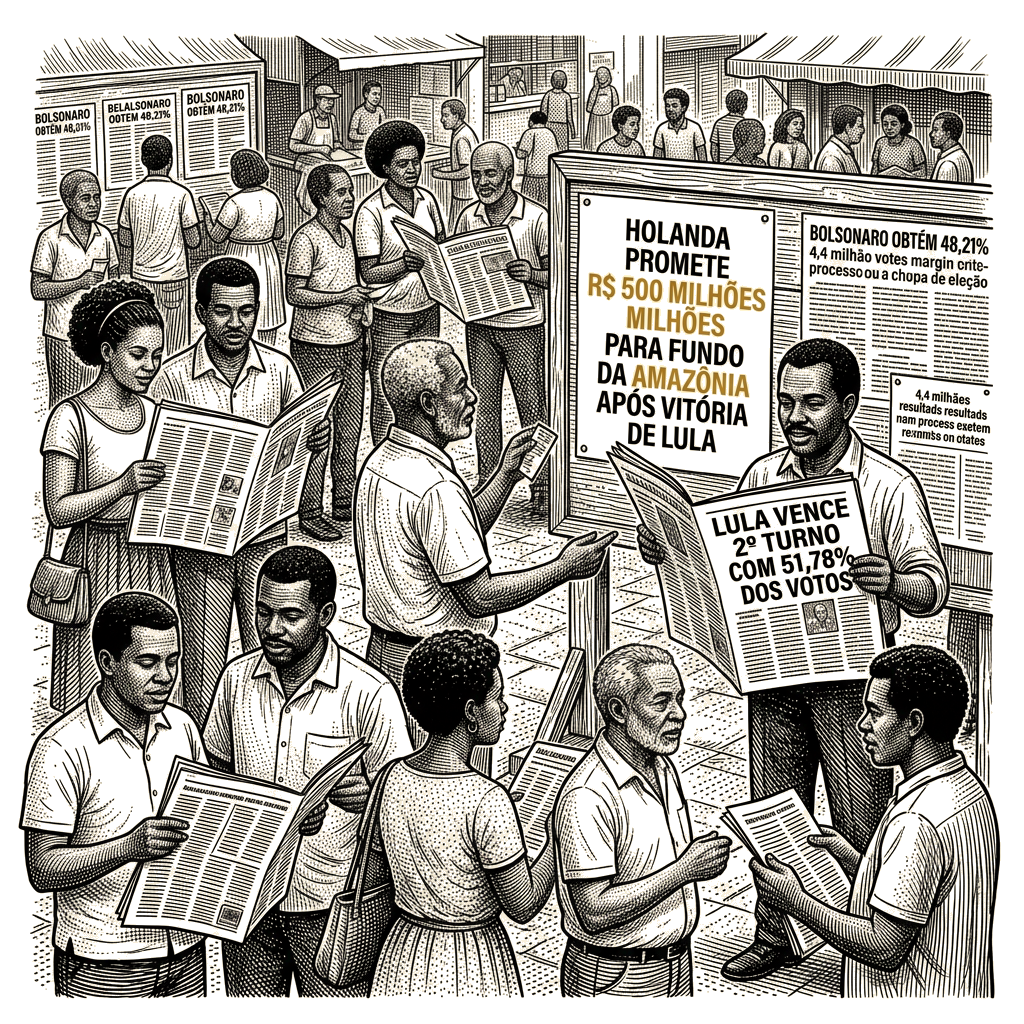
The Netherlands pledged $500 million on Monday to the Tropical Forest Forever Facility after President Luiz Inácio Lula da Silva’s runoff victory. The Brazil-backed fund, launched at last year’s U.N. climate summit in Brazil, pays developing countries to keep forests standing but has struggled to secure an initial $10 billion by year’s end. The pledge brought commitments to $7.8 billion. Claudio Angelo, the Climate Observatory’s head of international policy, said prospective donors had put plans on hold pending the election results and called the Dutch pledge a vote of confidence in Lula’s victory. “There was justified concern that a Flávio Bolsonaro victory could derail the TFFF, that Brazil would pull out and the fund would miss its $10 billion target,” he said.
President Luiz Inácio Lula da Silva defeated Sen. Flávio Bolsonaro, the son of former President Jair Bolsonaro, in Sunday’s runoff with 51.78% of the vote to 48.21%. After trailing in the first round, Lula staged a comeback to win by 4.4 million votes. Environmentalists, Indigenous groups and climate scientists celebrated the outcome because it brought the prospect of a continued focus on stopping the illegal cutting of the Amazon, the largest rainforest in the world. Lula’s supporters warned that “a Congress increasingly dominated by the far right and the agribusiness caucus could undermine those efforts to protect the forest and combat climate change.”
Lula’s victory reflected shifts in voter support and higher turnout nationwide. In the Amazon, Indigenous communities and advocacy groups mobilized voters and, aided by court rulings last week, helped secure government transportation for people living in remote areas. The Articulation of Indigenous Peoples of Brazil, known as APIB, was among the organizations that went to court to secure Indigenous voters’ access to the polls. APIB said Lula’s victory reflected the “strength of grassroots mobilization in defense of democracy, life and Indigenous peoples’ rights,” in a statement.
Flávio Bolsonaro refused to concede Monday and said he would ask the electoral court to nullify the results. He faces a high hurdle: presenting evidence of fraud sufficient to overturn Lula’s winning margin and persuading the court before the results are certified Dec. 18. Early signals from Brazil’s institutions and regional leaders, including conservative presidents who oppose Lula, suggest the outcome will be accepted at home and abroad.
“The Amazon can breathe a sigh of relief!” said David Lapola, a Brazilian scientist and lead author of a chapter on so-called tipping points in an upcoming United Nations climate report. Scientists debate the threshold beyond which the dense, humid Amazon rainforest could shift to a drier ecosystem, with irreversible consequences for biodiversity and the climate. The forest absorbs vast amounts of carbon dioxide, a greenhouse gas that drives global warming, and about 60% of the Amazon lies in Brazil.
Flávio Bolsonaro had pledged to pursue policies aligned with those of his father, former President Jair Bolsonaro, who governed from 2019 through 2022. Deforestation surged under Jair Bolsonaro as his administration weakened environmental enforcement agencies and loosened regulations, while Lula’s government last week announced the lowest Amazon deforestation rate on record.
Many environmentalists said Flávio Bolsonaro’s policy choices could put the Amazon and Brazil’s overall environmental protections at risk. Flávio denied climate change while claiming support for environmental protection, but he offered few details on forest protection or financing. He called for “modernizing” environmental laws and giving Amazon landowners more decision-making power; environmentalists warned that the proposals could weaken safeguards and accelerate deforestation.
Lula is expected to continue efforts to curb deforestation and finance a sustainable economy through international donations as well as public and private funding. He was the clear favorite for environmentalists, climate scientists and others who want to protect the Amazon, but Lula has put forward policies that have drawn criticism, most recently his support for efforts to drill for oil in offshore waters near the Amazon.
Brazil’s Climate Observatory, a nonprofit coalition of 172 organizations, welcomed Lula’s reelection but said seven in 10 incoming lawmakers oppose the climate and environmental agenda. The group cited recent measures weakening pesticide rules, Indigenous land rights and environmental licensing and urged Lula to broaden his alliances and strengthen ties with Congress. “The goal of ending deforestation across Brazil’s biomes must be pursued relentlessly,” the group said.
Amazon Watch, a nonprofit focused on environmental protection and Indigenous rights, also welcomed Lula’s victory while warning of legislative obstacles. “A Congress strengthened by forces seeking to open Indigenous lands to mining and weaken environmental protections remains a serious threat,” said Ana Alfinito, an Amazon Watch legal adviser.
WWF Brazil said Brazil’s vast biodiversity and its share of the Amazon give the country a strategic role in addressing climate change. The organization credited Lula with strengthening Brazil’s leadership through international cooperation. “Maintaining this leadership is essential to mobilizing other countries, raising the ambition of global commitments and turning agreements into concrete action,” WWF Brazil said.
Funding disclosure: The Associated Press says its climate and environmental coverage receives financial support from multiple private foundations. AP says it is solely responsible for all content.