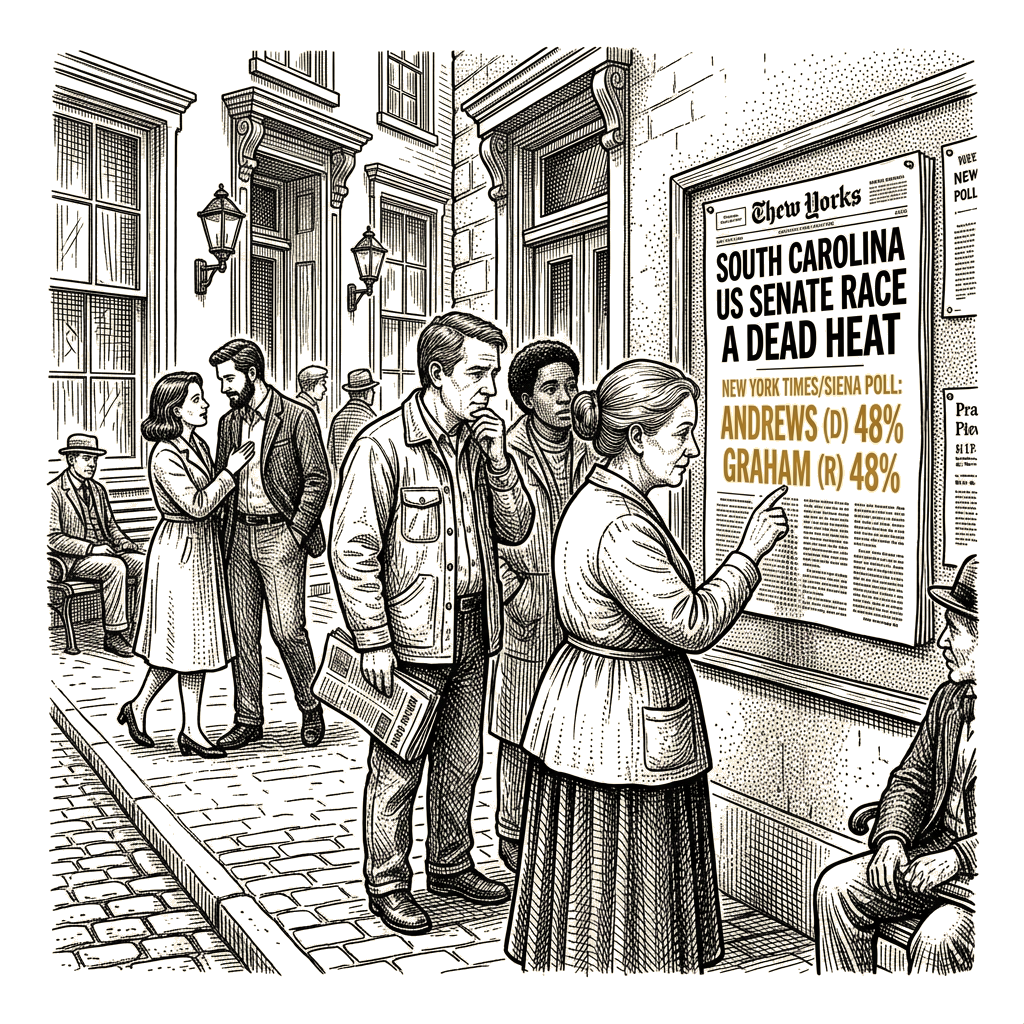
South Carolina has not elected a Democrat to Senate since 1998
A New York Times/Siena poll this week shows Annie Andrews, a Democrat, and Darline Graham, the Republican incumbent, tied at 48% each in South Carolina’s US Senate race. The survey puts the two candidates in a dead heat in one of the most Republican states in the country.
South Carolina has not elected a Democrat to the Senate since 1998. Donald Trump won the state by nearly 18 points in 2024.
Graham was appointed to the seat after her brother, Lindsey Graham, died in July, and she entered the race at Trump’s urging without having ever held elected office. Her inexperience has become one of the defining aspects of the campaign, culminating in an August debate when she said she was “not that informed on national security” when asked about US policy on Taiwan.
In the poll, 51% of voters said Graham lacks the right experience to be an effective senator.
Andrews, a pediatrician from Charleston, has built her campaign around her medical career. Her answer to better access to doctors and climbing medical bills is to advocate for a public option and cheaper prescription drugs.
She has kept her distance from the Democratic Party’s left flank, saying she does not support the Medicare for All proposed model of universal healthcare, conceding that Democrats failed on the border, and declining to name a national Democrat she would like to campaign with her. The pitch appears to be working with independents, who back her over Graham by 57% to 37%.
Graham, by contrast, is leaning heavily on Trump’s support. She opposes abortion rights, and has said she completely trusts Trump on tariffs and the war with Iran. On immigration, she has argued that anyone in the country illegally should be deported “immediately.”
Trump visited the state last week to rally for Graham in a 90-minute speech in which he called Andrews extreme and drew repeated interruptions from protesters. He returns again on Thursday.
Republicans are spending heavily in South Carolina despite their longstanding electoral dominance in the state. The party’s establishment is not entirely united: Republican congressman Ralph Norman, who lost the runoff against Graham, has said he will not campaign for her.
Other recent polls show an equally tight contest, though most have Graham narrowly ahead. A South Carolina Policy Council survey conducted this month gave Graham a one-point lead, within its margin of error. The same poll showed how much Andrews has been outrunning her own party — the Democratic candidate for governor, Jermaine Johnson, trailed the Republican, Alan Wilson, by 10 points.