Funds would shift from programs that typically support single mothers, low-income families
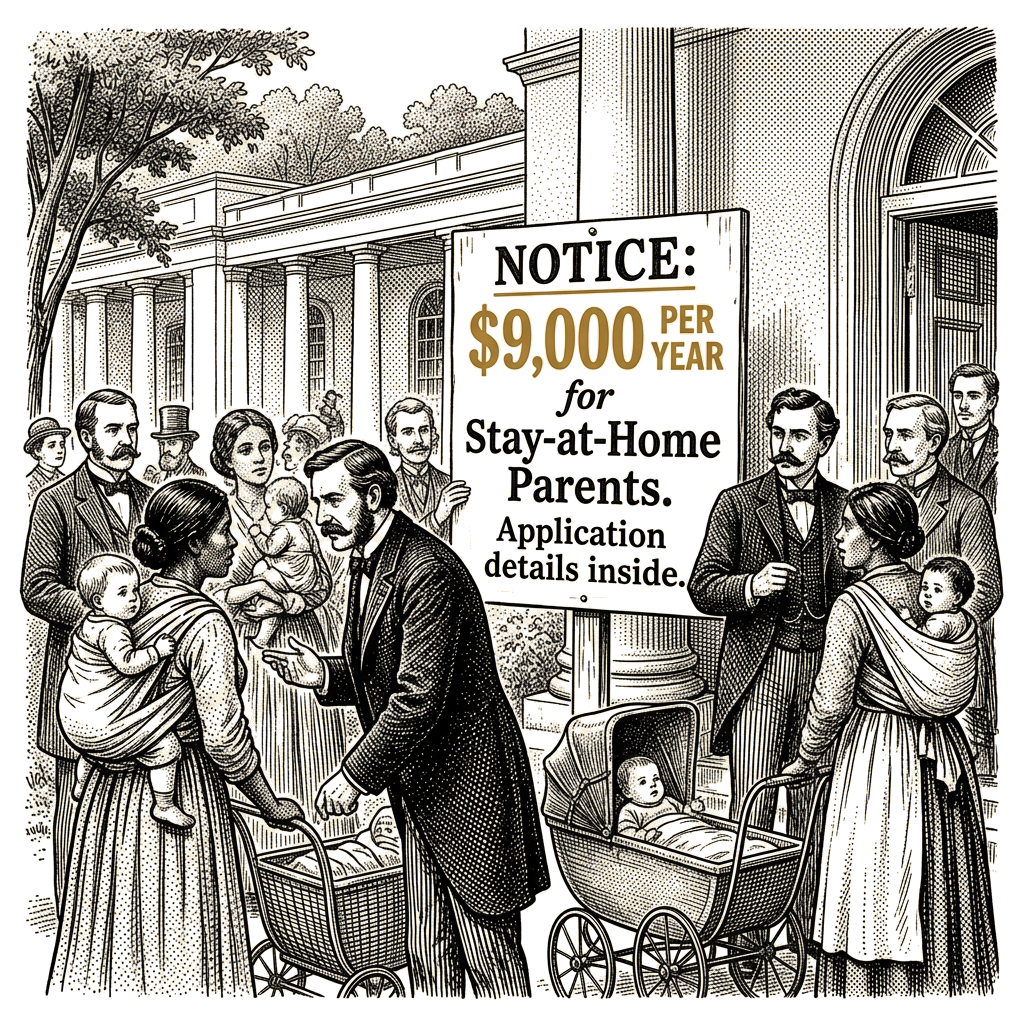
The White House is considering a program that would pay parents $9,000 a year to stay home with their children, drawing the money from federal programs that typically support single mothers and low-income families, according to the New York Times. The proposal is part of a Trump administration agenda that emphasizes a “traditional” family structure, in which one parent stays home to care for children, even as households with two working parents have become more common than ever among American families.
The plan was reportedly proposed by Vice President JD Vance, a potential 2028 presidential candidate who has proclaimed himself a defender of “pro-family” policies. Vance penned a Wall Street Journal op-ed in 2021 criticizing federal spending on daycare, claiming that “young children from average, healthy homes can be harmed by spending long hours in childcare.”
“It turns out that normal Americans care more about their families than their jobs, and want a family policy that doesn’t shunt their kids into crap daycare so they can enjoy more ‘freedom’ in the paid labor force,” Vance wrote on social media at the time.
As vice president, Vance has continued to cast himself as a defender of families. “To the radicals who wish to abolish my family and the thousands and millions of other families across our country, we have a simple message for them: stay the hell away from our kids!” Vance said at the party’s midterm convention in September.
The proposal arrives amid a long-term shift in how American families earn money. More American families than ever consist of two working parents: 52% are dual-income households, compared with 31% in 1975, according to the Pew Research Center. Eight out of 10 of these families say the arrangement has been beneficial to their finances.
Experts and parents who spoke to the Guardian said the proposed program for stay-at-home parents prioritizes a single type of family structure and ignores the flexibility that families need to support themselves and their children. “Families of all compositions need help right now. All families do. We should not pit families against each other,” said Chandra Childers, a senior policy and economic analyst at the Economic Policy Institute.
Erica Hall of Seattle said she and her husband intentionally had their children five years apart because paying for two children in daycare would have been too expensive. When her first child was born, Hall self-funded her maternity leave by drawing on savings, and she was laid off recently from her tech job, leaving her at a crossroads. “Do we move to a lower-cost daycare? What kind of job should I look for? Can I dial back now?” she said. “Do we need to completely 100% replace my income?”
For Natalia Goodnow of Pittsburgh, being a stay-at-home mother of two was a temporary choice that allowed her family to save on the cost of child care while she pursued a second master’s degree. After graduating, she was forced to delay her job search because the waitlist at her child’s daycare, like many in the country, had grown significantly after the pandemic. She is now balancing child care with building a consulting business she believes will give her the flexibility to work around her daughter’s schedule, and she does not expect to ever stop working in some capacity. “I’m not built to be just a stay-at-home parent,” Goodnow said.
Goodnow said her family is able to live “somewhat stable” on her husband’s income as a physician, but she worries that the demands of his career, combined with the responsibility of supporting the whole family himself, will lead to burnout. “I have to have a second income stream created to give him flexibility to scale down, because it’s just not sustainable,” she said, noting that the proposed $9,000 would not be enough to match what she would make if she worked. “It should be up to me and my family to make that decision, and not the government pushing me to stay at home,” Goodnow said.
Jillian Whitlow, a Texas mother of three who is pregnant with her fourth child, said she at times wishes she could stay home with her children, but after launching a successful marketing business, her husband left his job as a mechanic to care for the kids. The choice stemmed from practicality: the cost of daycare for her children was greater than their monthly mortgage payment. Though Whitlow’s family is in a better financial place than it has ever been, she said, they still feel rising costs and are still paying off student debt and loans on their mobile home.
Whitlow sees the White House’s proposal as unnecessary interference in personal family decisions. “I would love it if there was a lot less government in all of our lives,” she said. “I would love it if each individual family had more freedom to make the decisions that they want to make about the best way to raise their families.”
Child care costs already pose a major financial burden on families. Forty per cent of households, including those that have one parent who works less than full-time, spend an outsized percentage of their income on child care, according to a recent report from the Georgetown Law Center on Poverty and Inequality.
Childers said the White House plan — by reallocating federal funds from the Department of Health and Human Services that have typically gone to low-income, single-parent families — could actually make child care even more expensive or less available. “The minute you start draining resources that go into funding this childcare pool, then rates have to rise on other families, some of whom may already be stretching to make it as it is,” she said.
Liz Hipple, a policy expert at the Georgetown Law Center on Poverty and Inequality, said recent policy changes by the Trump administration may also indirectly make it harder on American families. Recent pushes to increase work requirements for Medicaid and Snap benefits, for example, will probably make it harder for some families to support themselves, she said. Policies that support higher wages or paid parental leave would go much further to support families, she added. “If the Trump administration was serious about supporting traditional families with one breadwinner, there are plenty of labor policies that they could support,” Hipple said. “Those aren’t the policies that they’re pursuing.”