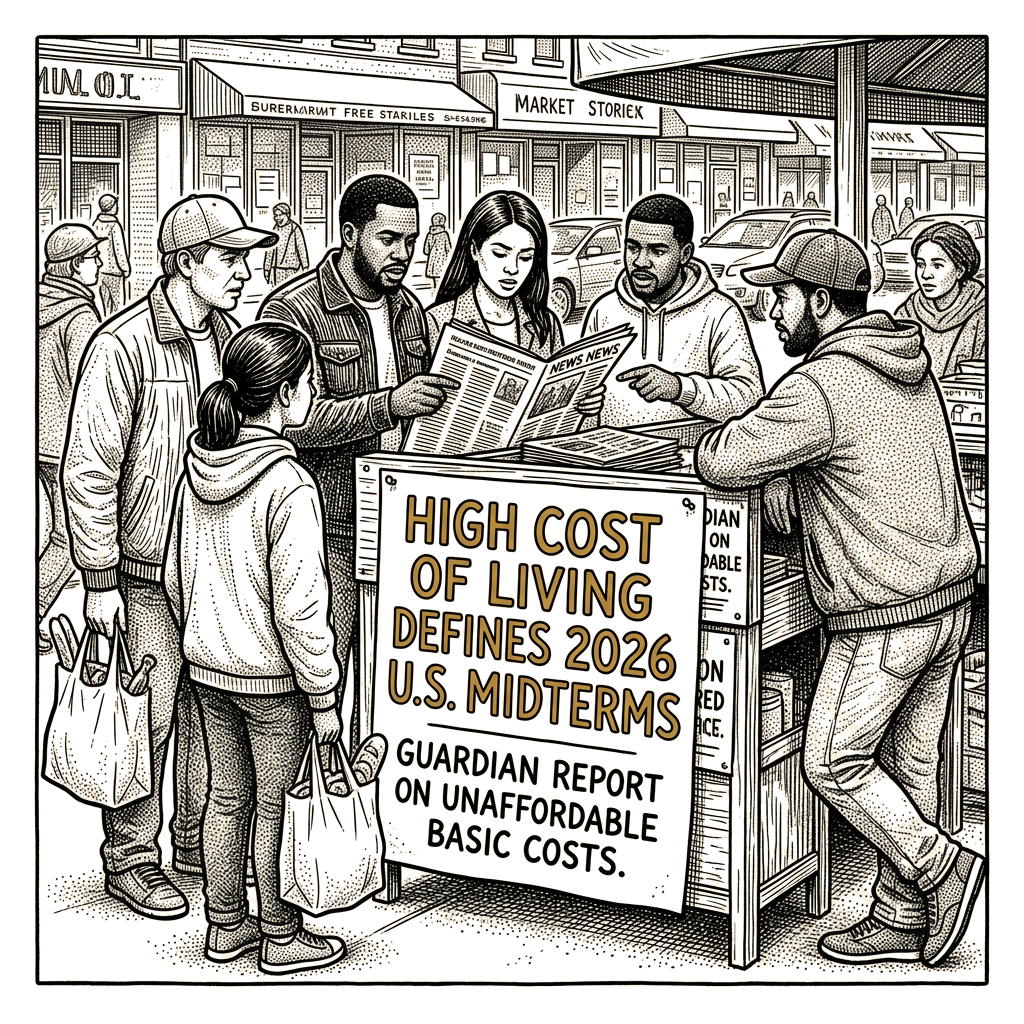
Record early voting accompanies a Democratic push for historically Republican-held seats
The Guardian described the unaffordability of basic living costs as a defining issue in the 2026 midterms and the second Trump administration’s policies as shaping the political backdrop. Americans have already voted early in record numbers, while Democrats are targeting historically Republican-held seats.
The Guardian said the affordability issue covered groceries and gas through childcare, housing and healthcare. It said concerns over the economy were making even deeply conservative seats competitive. Republicans entered Election Day holding the White House, the House and the Senate, but their majority was thin and at risk of erosion, so Democratic gains could change which party controlled Congress.
The economic debate was tied to the administration’s foreign policy and tariffs. The Guardian said Trump’s agenda had taken the United States into what it called a “deeply unpopular” and “expensive” war alongside Israel against Iran. The war had sparked a global energy crisis and a regional conflict that remained unresolved, exacerbated inflation and worsened a cost-of-living crisis that the administration’s tariff policies had already intensified.
The outlet described Trump as “almost unprecedentedly unpopular” even though he was not on the ballot. It said Democrats were aiming for what would be “stunning victories” in seats where, for decades, “turning blue would have been unthinkable.” The Guardian called the election “a referendum on the direction of the country under his Republican party.”
The second Trump administration’s domestic policies formed another part of the election backdrop. The Guardian said the administration had overseen what it called “violent surges of federal immigration enforcement” across Democrat-led cities, calling the operations “deeply divisive” and saying they killed two Americans earlier that year.
The administration also pursued what The Guardian called an “aggressive and cruel mass deportation policy.” It said the administration had slashed federal government agencies and Medicaid funding, supported restrictions on abortion rights in many states and expanded presidential power in “unprecedented ways.”
The election administration formed another part of the political backdrop. The Guardian said months of gerrymandering and efforts to curtail voting rights accompanied the race, along with what it called Republican “scaremongering over election integrity” as the party sought to cling to power. It said the unresolved question of whether Trump and his allies would accept the results was looming over the election.
An accompanying Guardian live report said early House and Senate contests could show how the election was trending as polls closed in stages. The report listed poll-closing times of 6 p.m. ET in Kentucky, 7 p.m. in Florida and Virginia, 7:30 p.m. in Ohio and North Carolina, and 8 p.m. in Pennsylvania. The outlet said there was a strong possibility it would not know which party would come out on top until the following day or later that week.
The Guardian characterized the election as “a defining moment for American democracy.” Voting began Tuesday, Nov. 3, after months of campaigning, debate and analysis. The results will determine the balance of power in Congress and, with it, Trump’s ability to advance his agenda over the next two years; they will also determine the trajectory of the remainder of his presidency.