State election officials say review reports contain confidential voter information
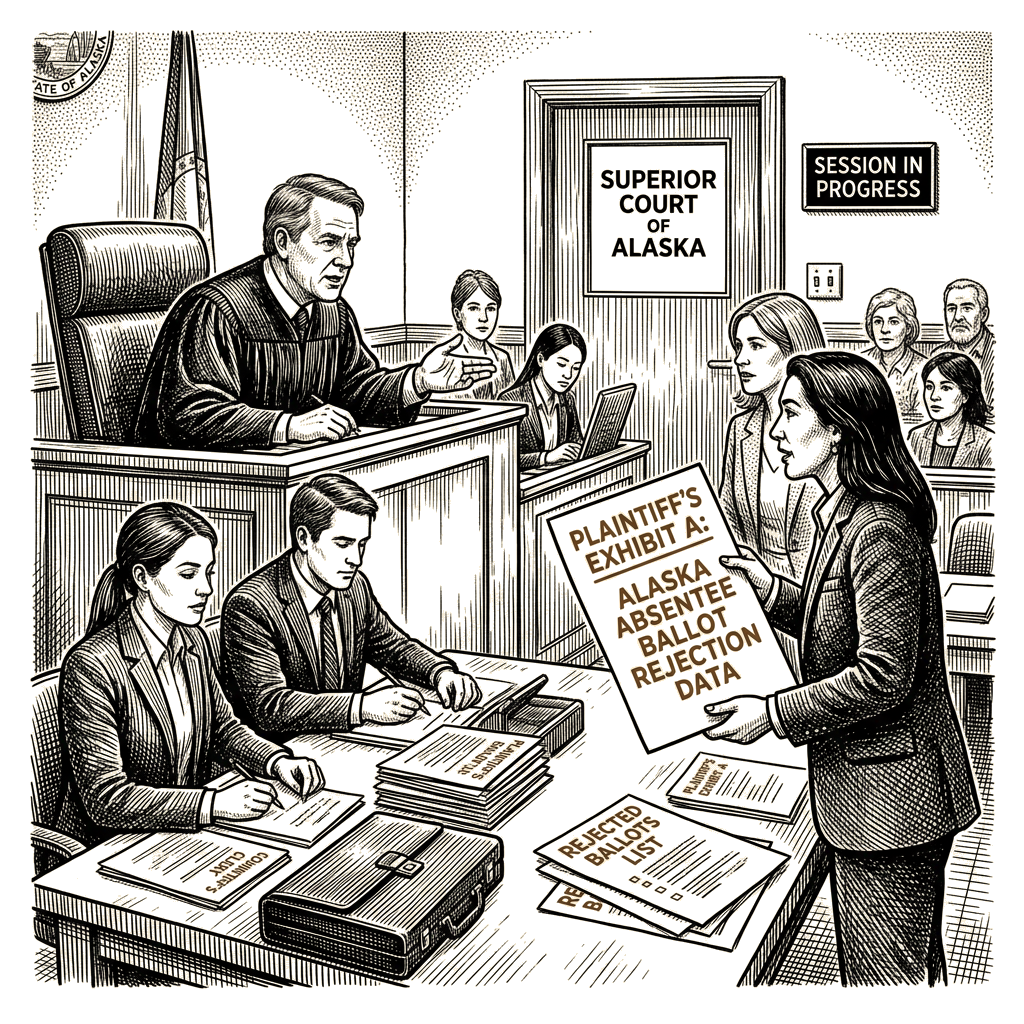
A state Superior Court judge in Alaska said Tuesday that he expects to issue a quick decision in a lawsuit filed by the campaign of Mary Peltola, the Democratic candidate for U.S. Senate. The campaign is seeking a list of absentee voters whose ballots have been rejected in the race against two-term Republican Sen. Dan Sullivan, one of the most closely watched contests of the midterm elections.
The campaign sued Friday, three days after the ranked choice election in which Peltola and Sullivan are the main contenders, and absentee, early in-person and other ballots were still being tallied. Alaska’s is one of two U.S. Senate races, along with Mississippi’s, that remain too early to call.
Peltola’s campaign also said it wants to know the reasons for the rejections and said its intent is to ensure that all qualified voters have their ballots counted. Attorneys for the state said the information requested would violate voter privacy.
Abha Khanna, an attorney for Peltola, told the judge that the campaign is not seeking to disrupt the ongoing ballot counting process and has seen no cause for concerns. “As far as we can tell, the absentee ballot review process is going incredibly smoothly and we plan to keep it that way,” Khanna said.
Khanna argued that the information the campaign seeks is a matter of public record and is in line with what campaign observers can access in locations where absentee review boards are meeting. The campaign wants access to that information in a more centralized way, she said.
Absentee review boards meet at the Division of Elections’ regional offices, and campaigns and parties can have observers on hand to watch the process. State law includes provisions for challenging absentee ballots if there is “good reason to suspect” that a challenged voter is ineligible to cast a ballot.
In a court filing, attorneys for the state said the daily reports generated by the division with lists of absentee ballots to be reviewed are not public records because they contain confidential information and are “ephemeral working documents that are not meant for preservation.”
The final word on whether to accept or reject an absentee ballot comes from the state review board, which goes over the work of the regional absentee review boards. Michaela Thompson, who manages absentee ballot review boards for the elections division, said the version of the report that observers receive does not include as much confidential information but does include home addresses that many voters seek to keep private.
The state’s “old, inflexible” voter database cannot produce a report that excludes confidential addresses, Thompson said. Observers must sign confidentiality agreements and cannot keep, copy or record information in the report, she said. No absentee ballot is rejected until after the state review board process finishes and the results are certified, Thompson said.
Assistant Attorney General Margaret Paton Walsh told the judge that state law sets out timelines for notifying voters if their absentee ballot is rejected. Voters can check the status of their ballot through an online system, but the information is not posted until at least 10 days after certification, she said. “It doesn’t make sense that a campaign would have access to that information before a voter does,” Paton Walsh said.
Alaska does not have a process that allows voters to fix problems on absentee ballots that can cause them to be rejected, such as forgetting to sign the envelope.
The state accepts ballots up to 15 days after general elections from overseas voters, making Nov. 18 the final day to receive them. Nov. 18 is also the target for the Division of Elections to conduct ranked vote tabulations if no candidate wins more than 50% of the first-choice votes. The division has announced vote counts for Tuesday and Friday this week, with the potential for additional days, as well as the Nov. 18 count.
Stacey Stone, an attorney for Sullivan’s campaign, filed a motion in support of the state. Sullivan’s campaign said that if the judge ordered any production of data or documents, the campaign is asking that such information be made “equally and simultaneously available to all candidates in the affected race.”
Matthews said he planned to issue a written ruling within a day of Tuesday’s hearing. Until the state finishes its review of absentee ballots and completes its scheduled counts, the outcome of the race remains unresolved.