Wyden opens two investigations into Kennedy after midterms
When Democrats take over Congress in January, one of their oversight targets will be Health Secretary Robert F. Kennedy Jr., whose overhaul of longstanding vaccine guidance and cuts to medical research over the past two years have drawn fierce criticism. Some high-ranking lawmakers have suggested impeaching him.
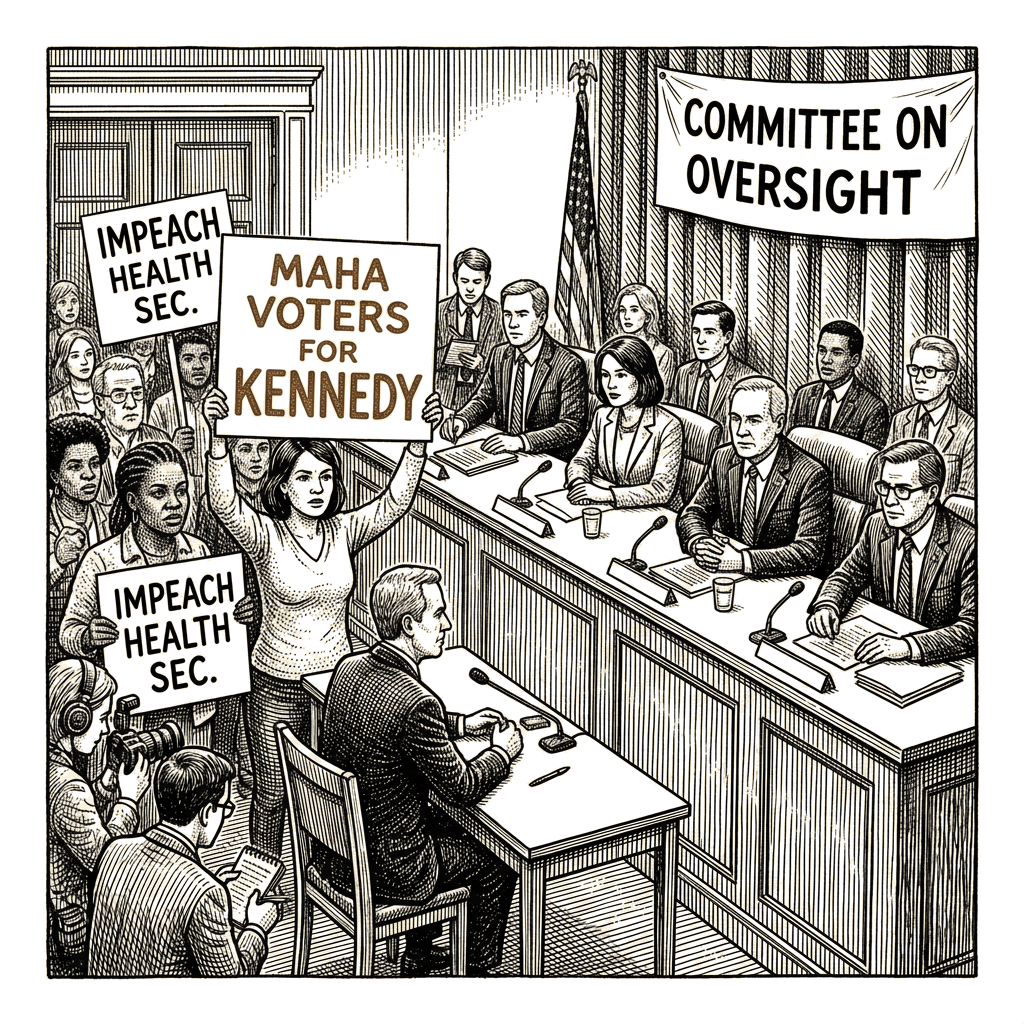
Those efforts could conflict with another priority for many Democrats: nurturing areas of common ground with Kennedy’s Make America Healthy Again followers, with the aim of securing their political support. Many MAHA activists whom Democrats are courting still view Kennedy as their closest ally.
“It’s an unenviable position for Democrats to be in,” said Matt Motta, a professor at Boston University School of Public Health. In addition to treading carefully not to upset MAHA voters, Motta said, lawmakers will also have to answer to a left-leaning base that wants more accountability from Kennedy on vaccines as measles outbreaks surge around the country.
Kennedy, a lifelong Democrat who ran for president as an independent in 2024 before backing President Donald Trump’s campaign, has repeatedly clashed with his former party since joining the Trump administration. Democrats have criticized the Health and Human Services Department for staffing cuts unleashed as part of Trump’s government efficiency push and for eliminating areas of scientific study the administration deemed too focused on diversity, equity and inclusion. They have also questioned him in congressional hearings over his efforts to change government vaccine policies without following long-held protocols for that reform.
After Democrats swept the midterm elections last week, many took to social media to call for Kennedy to leave office. “Unless RFK Jr. is interested in spending the next two years in front of congressional committees, he should go ahead and resign now,” Sen. Raphael Warnock, D-Ga., wrote on social media.
Rep. Jamie Raskin, D-Md., most likely the next chair of the House Judiciary Committee, has vowed to investigate Kennedy’s “wrongdoing.” Rep. Jim Clyburn, D-S.C., said on CNN that Kennedy should be one of two high-priority impeachment targets for the House majority next year. Sen. Bernie Sanders, I-Vt., who is poised to take over the Senate Health, Education, Labor and Pensions Committee with jurisdiction over Kennedy’s department, told the network he is “absolutely open” to that idea.
Sen. Ron Wyden, D-Ore., expected next year to chair the Senate Finance Committee, another panel with HHS jurisdiction, told The Associated Press he plans to hold Kennedy and the administration accountable “for actions that have harmed children, raised health costs, and made America less healthy.” Wyden said he already launched two investigations this week into Kennedy — one into the accuracy of his testimony about a 2019 trip to Samoa, and the other into his reported acceptance of hundreds of thousands of dollars in lavish gifts.
“For those that have broken the law and betrayed the trust of taxpayers and American families, nothing should be off the table,” Wyden said.
Even as many Democrats want Kennedy to answer for his actions, others are open to working with him — and with his followers. Aspects of the sprawling MAHA movement resonate with U.S. adults of both parties, including reducing processed foods and addressing government corruption, giving the new Congress a rare opening for coalition building. It also helps Democrats that many MAHA followers have soured on the Republican Trump administration, viewing actions such as an executive order boosting pesticide use as a betrayal of their trust.
Some MAHA members say they are eager to work with Democrats on shared interests like regulating pesticides and making school lunches healthier, though extensive investigations into Kennedy or hostility toward him could complicate those collaborations. Mark Gorton, president of the Kennedy-aligned MAHA Institute, warned of the political cost.
“I’m not saying that the Democratic leadership can’t continue to have an irrational war on Secretary Kennedy until they collapse,” Gorton said. “But when they do that, they alienate all the MAHA voters out there, the people who really care about fighting corporate capture.”
More cracks in that support have emerged since the election. Calley Means, a former administration adviser and top MAHA advocate, recently accused White House officials of catering to foreign and domestic lobbyists at the expense of Americans’ health — though in the interviews where he made those accusations, he also praised Kennedy.
Maine Rep. Chellie Pingree, Massachusetts Rep. Jim McGovern and New Jersey Sen. Cory Booker are among the Democrats who have teamed up with MAHA activists to devise proposals on regenerative agriculture, healthy school lunches and liability for pesticide manufacturers. Pingree told the AP she hopes cooperation can continue even though many of her MAHA-aligned contacts remain strong supporters of Kennedy, and that whether colleagues try to impeach Kennedy is “out of my hands.”
“But if he’s still there, I’m hoping we can continue to work on some of these things and make whatever gains we can,” Pingree said.
McGovern said he has been clear with MAHA leaders he works with that “we need to hold RFK Jr. accountable for his broken promises and lying to his supporters while enabling the corruption he swore he would stand up to.” Those leaders, McGovern said, “quietly agree and are ready to move forward together to actually fix the broken status quo in Washington.”
New Democratic additions to Congress are also cautiously open to working with Kennedy and his followers. Sen.-elect Abdul El-Sayed, a former public health official, has called Kennedy a grifter and told the AP he wants to understand how the department made decisions over the past two years on issues like vaccine recommendations. He said he could still collaborate with Kennedy on policies to make America healthier, on one condition: “If he wants to be evidence driven, I’ll work with him.”
Democrats will also be balancing MAHA-minded legislation against goals that reach a wider set of Americans: lowering health costs and expanding access. They plan to vote quickly to reinstate the Affordable Care Act health-care tax credits, which expired in late 2025, leaving millions of Americans facing higher insurance costs. Proposals are also ready to reverse the Medicaid funding reductions Republicans enacted in their sweeping bill of tax breaks and program cuts, including new work requirements for recipients.
Motta said Democrats’ ability to pass those changes will be one of the most important factors in keeping the support of independent and swing voters who voted for them this year. “Above all, people want the price of healthcare to go down,” Motta said. “The people who can do that for them are the people who will be rewarded at the ballot box.”