Federal rules still take effect Jan. 1 despite the six-month reprieve
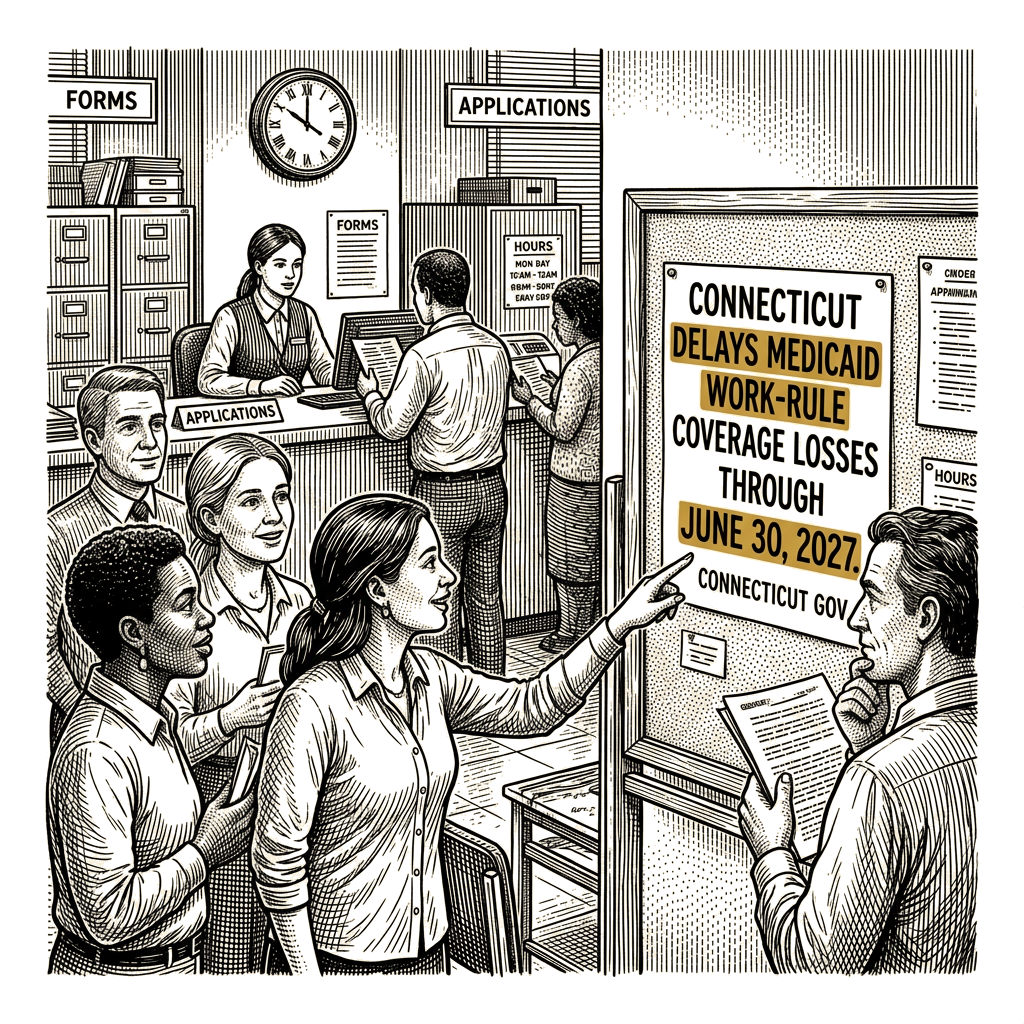
Connecticut Gov. Ned Lamont and state Department of Social Services Commissioner Andrea Barton Reeves said Monday that the state will use a federal hold harmless period to prevent otherwise eligible HUSKY D members from losing Medicaid coverage if they fail new work requirements. The six-month period extends through and including June 30, 2027, although the requirements themselves take effect Jan. 1.
Beginning that date, HUSKY D enrollees must meet work requirements, also described as “community engagement requirements.” To keep coverage, enrollees must show they work at least 80 hours or earn at least $580 per month. They can also meet the requirement by documenting at least 80 hours of monthly participation in school, community service or a qualified training program. Several exemptions exist.
On Friday, the Centers for Medicare & Medicaid Services announced that states could implement a “hold harmless” period through June 30, 2027. During the six months, HUSKY D members who are otherwise eligible would not lose coverage just because they did not meet the work requirements. The announcement said the option was intended to give states more time to implement the changes, and Connecticut said Monday that it would elect the period.
“This additional time will help our residents meet the changing federal requirements and ensure our systems are working the way they should,” Lamont said in a statement. Barton Reeves called the “hold harmless” period “a true benefit to our members.”
The work requirements were passed in 2025 as part of House Resolution 1, commonly referred to by President Donald Trump as the “One Big Beautiful Bill.”
Sen. Matt Lesser, D-Middletown, co-chair of the state legislature’s Human Services Committee, said the federal government’s decision to extend a hold harmless period could be the result of the Democrats’ sweep in the midterm elections. “Elections have consequences,” Lesser said. “My hope is that this is the sign that the writing is on the wall for the president’s disastrous domestic policy agenda.”
The hold harmless period is only a six-month reprieve from coverage losses. It does not delay the Jan. 1 work requirement, which remains set to take effect. After the reprieve, HUSKY D members who do not meet the requirement and do not qualify for an exemption could again lose coverage.
Several Democrats who won their races campaigned on permanently reversing some of Trump’s healthcare policies, including the Medicaid changes. Even with Democratic majorities in both chambers, Trump can veto any proposal to reverse the changes. Overriding the veto would require Republicans’ support, while Democrats could instead seek a deal with Trump if he is open to one.
Last week, before Connecticut’s announcement, State Comptroller Sean Scanlon said state officials hoped Democrats could repeal the Medicaid changes, though success likely depended on Trump’s willingness to negotiate. “We’re really hoping that that is something that they get done in the first couple weeks of a new Congress,” Scanlon said. “Of course, the president is still the president. What his appetite is to do deals with the Democrats and resolve some of these things is really unclear and I don’t think anybody knows at this point.”