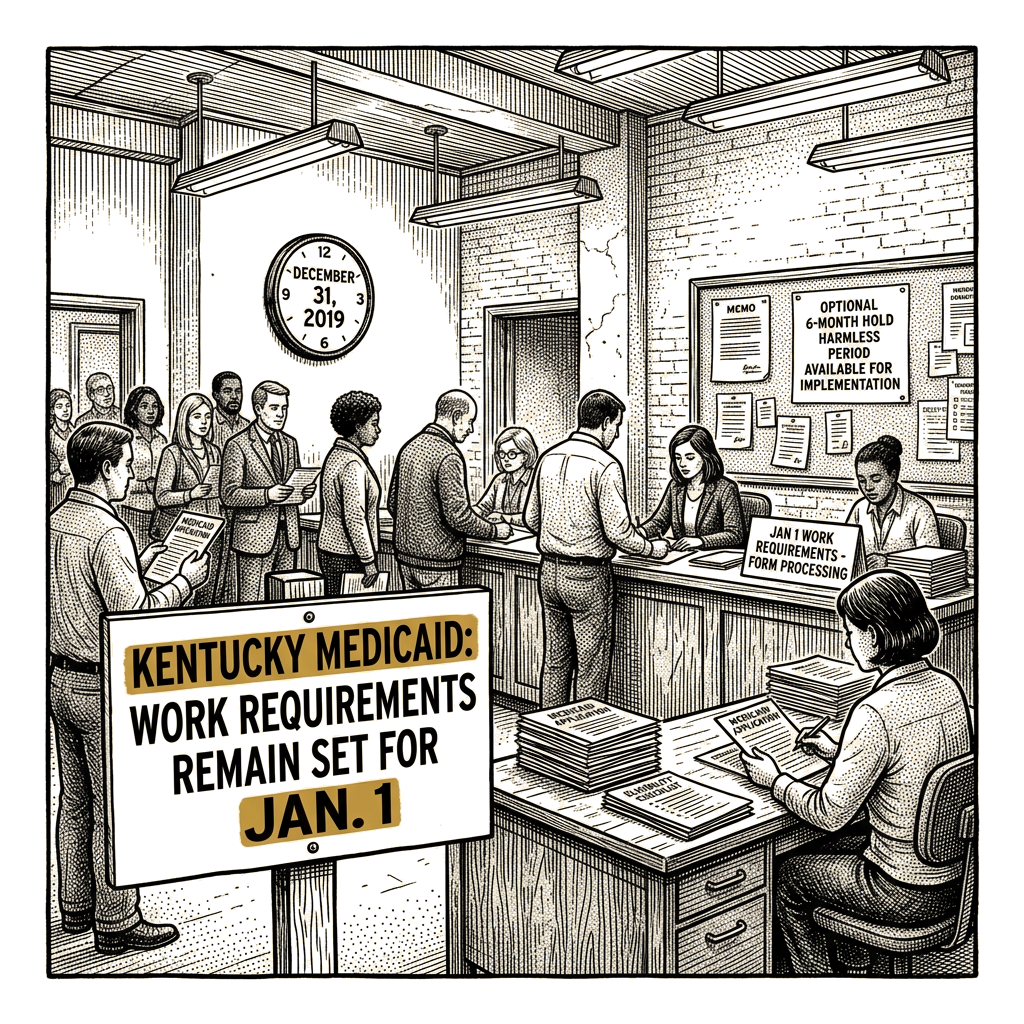
States may use 6 months to update systems and improve processes
The Trump administration offered states an optional 6-month hold harmless period on Friday to implement Medicaid work requirements, but the Beshear administration said Kentucky cannot take advantage of it. Beth Fisher, a spokesperson for the Cabinet for Health and Family Services, said the state must follow House Bill 2’s timeline.
The Centers for Medicare & Medicaid Services said in a statement that the optional hold harmless period would give state governments more time to update their systems and improve the processes they have in place. States choosing the option would have 6 more months to implement the work requirements.
“States have made real progress, and they’ve been clear with us about what it takes to get this right for beneficiaries—at scale and for the long term,” Dan Brillman, director of the Center for Medicaid and CHIP Services, wrote in the statement.
Kentucky’s schedule is set by state law. Fisher said Kentucky has to align with the timeline requirements in House Bill 2, which requires implementation of the new work requirements in the One Big Beautiful Bill Act on Jan. 1. That leaves Kentucky scheduled to implement the requirements on Jan. 1 even as other states can use 6 more months.
Under the rules, people covered by Medicaid between the ages of 19 and 64 will have to spend 80 hours a month either working, participating in community services or attending an educational program.
Some people are exempt, including those with physical, intellectual or developmental disabilities.
Fisher also warned about the effects on hospitals and insurance coverage. “Gov. Beshear has repeatedly pushed back against these harmful Medicaid cuts, which will put 35 Kentucky rural hospitals at risk of closing and strip 250,000 Kentuckians of their health insurance,” Fisher said in a statement.
Medicaid is the federal-state program that pays for 1 in 3 Kentuckians’ health care. “Team Kentucky believes healthcare is a basic human right and values the critical role of Medicaid in providing coverage for 1.4 million Kentuckians,” Fisher said.