Pax Silica plan draws anger over water, energy and Ayta displacement
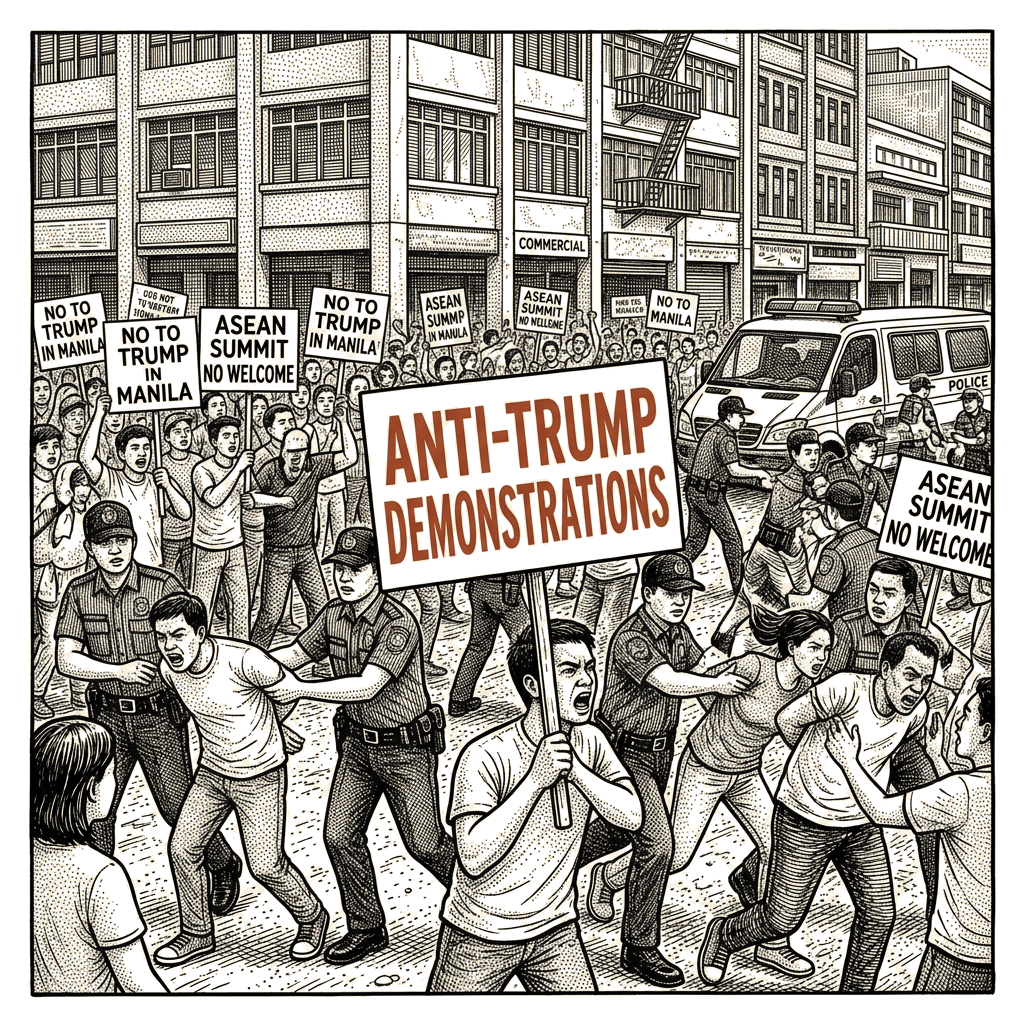
Philippine police arrested nearly 300 people during widespread demonstrations against Donald Trump in Manila, ahead of the US president’s planned Tuesday arrival for the Association of Southeast Asian Nations summit. Large parts of the capital were closed and public holidays were instituted as authorities tightened security around the summit.
Organisers claimed as many as 10,000 people would join the next round of demonstrations on Tuesday. Crowds were expected to try to walk to the summit site at the Philippine International Convention Center.
Some protesters burned effigies of Trump and faced police officers armed with batons and shields. Placards called him the world’s “number one terrorist,” while Indigenous communities and other groups joined Monday’s protest. Demonstrators tried to reach the Philippine International Convention Center but were blocked by police.
Demonstrators were angry about the cost of living and an energy shock caused by the Iran war. They also opposed the new US-led Pax Silica initiative on AI and critical minerals.
Pax Silica includes a technology hub planned at New Clark City in Tarlac, about 120km from Manila. Critics said the project would affect water and energy supplies and displace members of the Ayta Indigenous community, creating tensions ahead of the summit.
The initiative is intended to bolster western stocks of AI technology and reduce “excessive dependencies” on single-source supply chains, including from China. Pax Silica will provide chips and critical minerals to 25 participating signatory governments.
Public holidays were instituted for the Asean summit, and large sections of central Manila were closed as part of the security cordon. Trump was scheduled to meet the leaders of Australia, Japan and India on Tuesday night before heading to Shenzhen, China, on Wednesday for the Asia Pacific Economic Cooperation summit and trilateral talks with China’s president, Xi Jinping, and Vladimir Putin of Russia.
The anti-Trump backlash also followed the ouster of Nvidia boss Jensen Huang and allegations that members of the US administration, including commerce secretary Howard Lutnick, knew about Huang’s affair with an alleged Chinese spy. Trump’s delegation was expected to include businessman Elon Musk.
Protest leader Renato Reyes blamed the arrests on what he called the government’s heavy-handed response to Trump, calling Monday the largest single day of police arrests since President Ferdinand Marcos Jr. took office in 2022. Reyes said: “It is really crazy that the Philippine government is rolling out the red carpet for someone who has been so flatly rejected by the American people.”
Reyes said: “Trump started a war that devastated the global economy and pushed oil prices in the Philippines to historic highs. It has caused untold suffering on the Filipino people.” He added: “So yes, Trump will have to pay for his crimes and he will have to be answerable, not just to the American people, but to the people of the world.”
The Philippine national police said some officers were injured during confrontations with demonstrators, including when objects were allegedly thrown at officers.
Amnesty Philippines said demonstrations should not be forcibly or violently dispersed. Director Ritz Lee Santos III said, “Reports of arrests during the protests demand immediate scrutiny,” and called for authorities to explain the specific grounds for each arrest and any continued detention. “Anyone detained solely for peacefully exercising their rights must be released immediately,” Santos said.