Staffing shortages have contributed to a 15-year enrollment decline
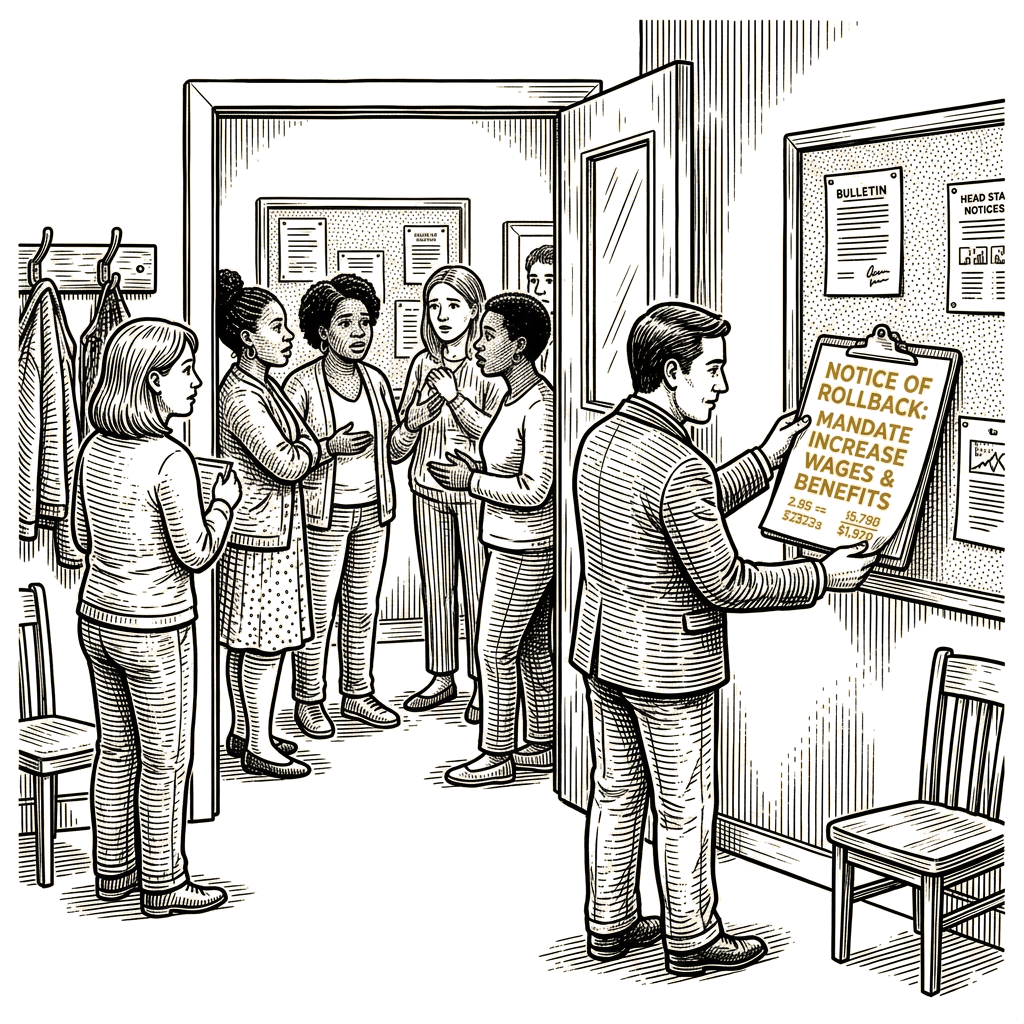
For Head Start programs, the rescission is another federal regulatory change. Last week, the Trump administration announced a rollback of the Biden-era initiative to increase wages and benefits for Head Start teachers and staff. The Administration for Children and Families has rescinded the mandatory wage-and-benefits increase for teachers in the 2024 Head Start Program Performance Standards. ACF said the rule change was “not in line with the plain language of the Head Start Act” and “costly and overly prescriptive to Head Start programs and staff.”
The Biden administration’s 2024 changes reached beyond wages. In an effort to “support and stabilize the Head Start workforce and improve the quality of services,” the administration made several changes to the Head Start Program Performance Standards. Those changes covered wages and benefits, breaks for staff, enhanced support for staff health and wellness, and improved integration of mental health services for students. Programs also were to implement four standards for staff wages, and the regulation changes had been required to be implemented by Aug. 1, 2031.
The changes came amid “severe staffing shortages” at Head Start programs nationwide. In the Federal Register, the Biden administration wrote when it finalized the decision, “For decades, the Head Start programs have been subsidized by low paid workers committed to the mission; now is the time to enact clear Federal requirements for staff compensation.” The administration said the changes would help programs retain high-quality staff and that not doing so would disrupt relationships between teachers and families, negatively impacting children.
The Trump administration cited cost savings and enrollment when it argued for rescission. The administration estimated that revoking the rule change would save more than $2 million in future costs. It said requiring higher wages and benefits without more congressionally approved spending for Head Start would produce enrollment losses, because money would be moved away from staffing classroom capacity and toward higher salaries for existing staff.
ACF also rejected what it called a one-size-fits-all compensation model. “The current Administration has reconsidered the approach adopted in the 2024 final rule and does not believe that a one size fits all approach to staff compensation is the appropriate way to address these challenges, particularly when doing so may reduce access to Head Start services,” the administration wrote. “Instead, ACF has determined that programs should have maximum local flexibility to design compensation packages and provide services that best meet the needs of their communities.”
Head Start is a federal program that provides early education and other comprehensive services, such as childcare and developmental supports, to low-income families with children ages 0 to 5 and expectant parents. It provides services free to those eligible, and News From The States describes it as the nationwide leader for early care and education.
New Hampshire has 33 Head Start programs. Five regional Community Action Partnership organizations manage Head Start and Early Head Start programs in their regions and are responsible for their paychecks.
Enrollment data collected by the National Institute for Early Education Research show that Head Start enrollment has declined for the past 15 years nationwide and in New Hampshire, in part because of staffing issues. Head Start, like private childcare programs, must maintain teacher-to-child ratios for safety and developmental reasons, and a program with too few teachers cannot fill classrooms while maintaining those ratios.
Based on yearly enrollment figures and the required ratios, at least 109 teachers would have been needed to staff New Hampshire Head Start programs as of 2025, down from at least 201 in 2011.
Programs can still choose to implement the 2024 compensation requirement voluntarily. None of the state’s five Community Action Partnership organizations responded to questions from the Bulletin about current employment numbers or whether they had started implementing the 2024 rule change before the new guidance.
News From The States reported that programs may be wary of voluntarily adopting the 2024 change because a separate impending Trump administration rule would overhaul Head Start curriculum, safety, ratio and administrative requirements.