Oil rises on renewed Red Sea and Strait of Hormuz supply concerns
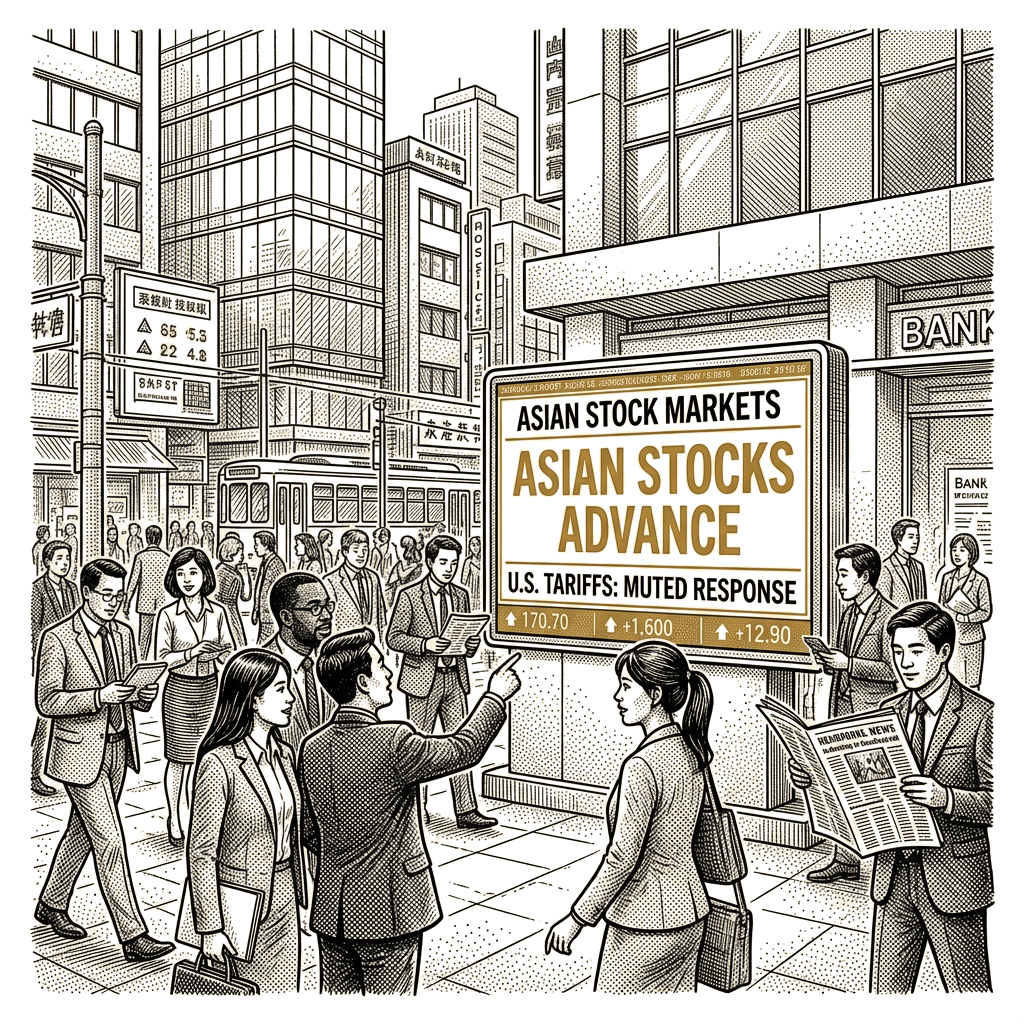
Asian stock markets rose across the region on Thursday as investors largely shrugged off a U.S. proposal for new tariffs on China and dozens of other countries. The moves followed a selloff in technology-heavy Asian markets in the previous session. Wall Street recovered most of its overnight losses before the Thanksgiving holiday.
The United States said on Wednesday that it would propose new tariffs on China and dozens of other countries. The Trump administration argues the duties are meant to counter foreign government support of domestic industrial production, which the administration says is harming American companies.
The new rates would not be added to earlier tariffs levied on 60 economies over forced-labor concerns; under the proposal, the higher of the two rates would apply. The new rates could take effect in January at the earliest, after a comment period for affected industries.
MUFG analyst Lloyd Chan said, “The latest tariff move is therefore better viewed as a reconstruction and legal hardening of the Trump tariff regime than a fresh ‘Liberation Day’ shock.” Stephen Brown, chief North America economist at Capital Economics, said the tariff announcement is “not as alarming as it looks,” as the effective tariff rate looks set to be a touch lower than expected.
The measures appear to be a replacement for existing tariffs rather than an escalation, and that reading soothed some investor concerns.
U.S. trading turned volatile overnight. The tech-heavy Nasdaq Composite Index dropped as much as 4.6%, coming within 2 percentage points of bear-market territory, before recouping most of its losses to end 0.6% lower. The S&P 500 fell 0.3% for its ninth loss in 10 sessions, while the Dow Jones Industrial Average added 0.3%.
Asia’s technology-heavy markets staged a major comeback. Taiwan’s Taiex rallied 2.0%, South Korea’s Kospi rose 2.3% and Japan’s Nikkei Stock Average was 1.5% higher. Hong Kong’s Hang Seng Index rose 2.2%, and China’s Shanghai Composite Index was 0.4% higher.
Oil prices gained as supply concerns returned in the Middle East. Renewed hostilities between Saudi Arabia and Houthi groups in Yemen raised concerns over the security of Red Sea shipping routes, which have become increasingly important for Saudi oil exports amid disruptions around the Strait of Hormuz.
OCBC’s Sim Moh Siong said in a note that supply concerns had resurfaced because of attacks on Saudi Arabia’s energy infrastructure and renewed disruption in the Strait of Hormuz. Front-month West Texas Intermediate crude-oil futures rose 0.7% to $84.29 a barrel, while front-month Brent was up 0.4% at $95.00 a barrel.
MSI’s November 25 report covered the administration’s tariff proposal before this trading session. The market response advances that account: Asian indexes rose, and investors appeared to treat the plan as a rebuild of existing duties rather than a fresh escalation.