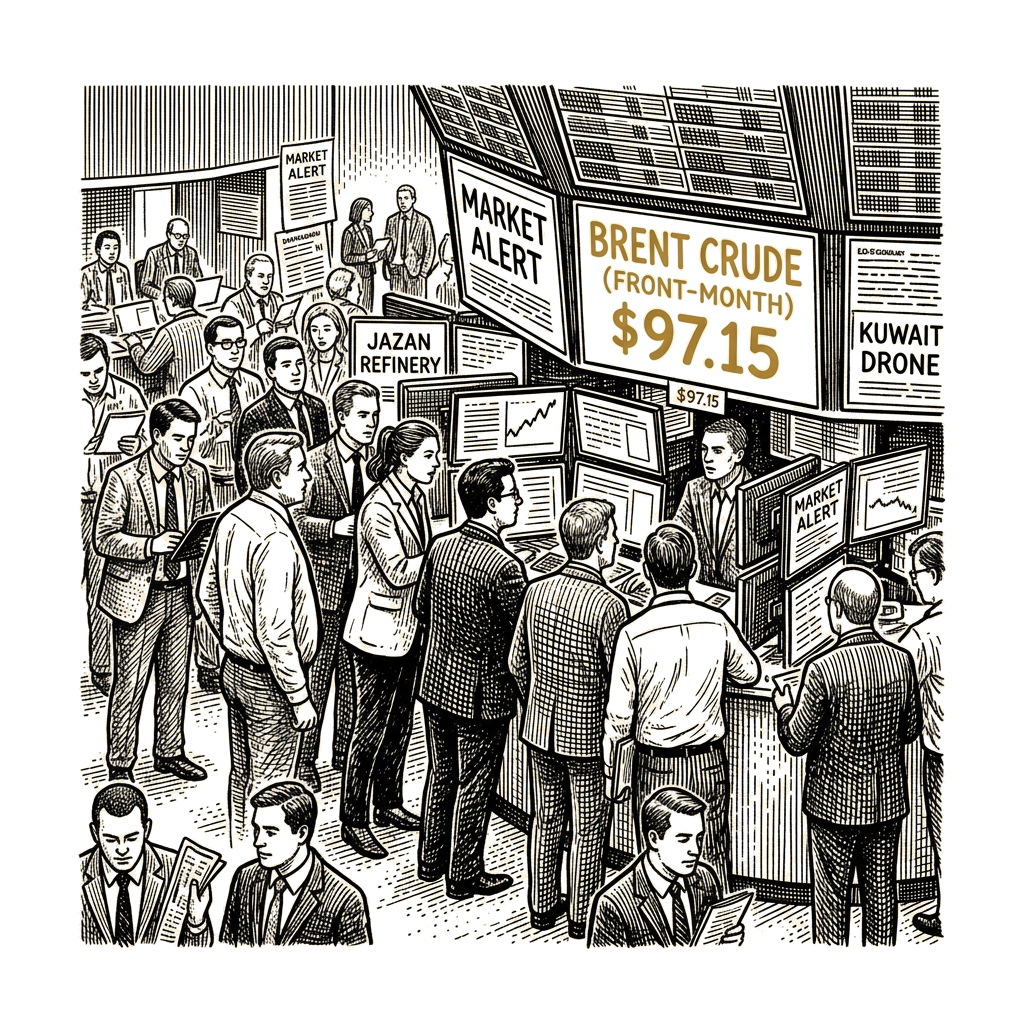
Front-month Brent premium widens as supply policy choices remain unresolved
Front-month Brent crude futures rose 0.6% to $97.15 a barrel Friday, while U.S. West Texas Intermediate gained 2.7% to $85.96. The increases came as traders weighed renewed threats to Middle Eastern supplies ahead of the weekend meeting of the Organization of the Petroleum Exporting Countries and its allies.
Both benchmarks were on track for their first weekly gain this month as geopolitical risks in the Middle East intensified, analysts at MUFG said in a note. The premium of front-month Brent over the following month’s contract widened to $4.28 a barrel from around $2.50 at the start of the week, the analysts said. MUFG analysts also said the Sunday OPEC+ meeting’s impact on oil prices was likely to be tempered by the outlook for the regional conflict.
The Organization of the Petroleum Exporting Countries and other producers in the broader OPEC+ group are expected to discuss their collective output policy for 2027 on Sunday. Existing production agreements are set to expire at the end of the year.
The group’s assessment of members’ sustainable production capacities will help determine individual output quotas for next year. Disruptions to production and exports during the Iran war have complicated efforts to establish how much individual countries can pump.
It remained unclear whether Saudi Arabia, the cartel’s de facto leader, and other members would restore more supply, maintain current restrictions or consider fresh cuts to support prices. The combination of quota uncertainty and active supply threats left several policy paths unresolved ahead of the meeting.
Saudi Arabia’s energy ministry said Thursday that an attack on the Jazan oil refinery sparked a fire and temporarily halted some operations. One worker was killed and several others were injured, the ministry said. Authorities were assessing the damage and checking the safety of the facilities, it said.
A drone attack in Kuwait killed two Italian technicians, The Wall Street Journal reported. Iran denied responsibility for the attack, which came as negotiations between Washington and Tehran remained deadlocked despite a ceasefire.
Taken together, the renewed attacks and quota uncertainty gave Sunday’s meeting a more complicated backdrop: traders were weighing immediate supply risks while producers still had to estimate how much they could sustainably produce in 2027. MUFG analysts said the conflict outlook was likely to limit how much the meeting’s policy decision alone could move prices.
In MSI’s Nov. 26 report, Brent slipped 0.2% to $94.48 a barrel while WTI rose 0.3% to $83.93 as traders assessed supply risks ahead of the same meeting. By Friday, both benchmarks were rising, Brent’s front-month premium had widened, and the Jazan and Kuwait attacks had added to the supply risks facing producers.