The Supreme Court of the United States, in the waning days of its June term, is poised to render judgment on two questions that go to the foundations of American citizenship and the sovereign’s authority over those who sojourn within its borders.
The first question — whether the Citizenship Clause of the Fourteenth Amendment extends to the children of undocumented immigrants and temporary residents — is a question of original public meaning. The text reads: “All persons born or naturalized in the United States, and subject to the jurisdiction thereof, are citizens of the United States.” The operative qualifier is “subject to the jurisdiction.” The framers of the Fourteenth Amendment, as the historical record makes plain, did not understand that qualifier to encompass persons whose allegiance to a foreign power persisted by virtue of unlawful presence or temporary sojourning status. Senator Jacob Howard of Michigan, who introduced the Citizenship Clause in the Senate in 1866, made the distinction explicit: the Amendment would not confer citizenship on the children of “foreigners” or transient sojourners, but only upon those who owed exclusive allegiance to the United States. That reading was the received understanding at the time of ratification. It has been the originalist inheritance ever since.
The second question — whether the executive may terminate Temporary Protected Status for nationals of designated countries — concerns a category of lawful presence that Congress designed from its inception as provisional, not permanent. The statute that authorizes TPS, codified at 8 U.S.C. § 1254a, is candid in its nomenclature. The word is “temporary,” and the word is not a courtesy; it is a definition. The designation exists to prevent removal during extraordinary conditions in a designated country; it confers no path to permanent residence, no claim to belong, and no expectation of renewal in perpetuity. The Secretary of Homeland Security is statutorily charged with reviewing country conditions and may terminate the designation when those conditions no longer warrant it. The constitutional authority of the political branches over immigration, plenary since the Chinese Exclusion Cases of the late nineteenth century and reaffirmed in every case since, includes the power to decide who remains and who returns.
Both rulings, if they come down as expected, vindicate the originalist and textualist commitments that define the Court’s rightful method. Both restore a distinction the Constitution and the statute make plain. There is a difference between a citizen — a member of the body politic by birth or naturalization, standing beneath the full protection of the law — and a sojourner, who is received under the hospitality of the sovereign so long as the sovereign permits. The grace is real. The grace is also revocable. To confuse the two is to misread both the Constitution and the statute.
Two mothers in El Salvador searched for their sons. The sons were twenty-nine and twenty-two years old. They had heard nothing — no letters, no phone calls, no confirmation of any kind that their children were alive or where they were held. They learned the answer from photographs the Salvadoran president, Nayib Bukele, had posted to a public account on social media. The faces of their sons appeared in the photographs, behind the figure of the president, in cells of a prison none of them had heard named. One of the mothers, asked what she knew of her son’s condition, said: “It’s total silence. We know nothing about him.” The other said the same.
The prison is the Centro de Confinamiento del Terrorismo, at Tecoluca, in central El Salvador. It is a megaprison built for indefinite confinement without trial. Its cells are designed for long-term isolation. Prisoners are held without access to counsel, without family contact, without any public accounting of their whereabouts. The men held in those cells have not been charged. They have not been tried. They have not been sentenced. They remain in the custody of the Salvadoran state without any public record of their status, with no way for their families to confirm that they are still alive, with no legal process through which they might be released.
Since January 2025, Immigration and Customs Enforcement, acting under the policies of the second Trump administration, has removed more than nine thousand Salvadoran nationals from the United States and transferred them, alongside Venezuelans, into the custody of the Salvadoran state at this facility. The Salvadoran state disappeared the deportees upon arrival, holding them in the cells of CECOT without access to counsel, without family contact, without any public record of their status. A March 2026 report by Human Rights Watch, after interviewing families and reviewing flight manifests and detention records, found that the deportees had been “disappeared into the country’s prison system.” The report cited the words of Juanita Goebertus of Human Rights Watch: “Deportation cannot mean enforced disappearance.” Of the nine thousand deportees, only ten and one-half percent had been convicted of any violent crime.
Among the nine thousand was Kilmar Abrego Garcia. An immigration judge of the United States had found that Abrego Garcia faced a likelihood of persecution in El Salvador and had granted him withholding of removal under the Convention Against Torture. The order prohibited his return. On March 15, 2025, the Department of Homeland Security removed him anyway, on a flight to Tecoluca. A federal court of the United States later ordered his return.
In Mogadishu, the capital of Somalia, the territory in which al-Shabab operates is the territory to which the order returns the seven hundred and five. The group runs checkpoints in the markets of the capital. It answers the population’s claims with executions it records and broadcasts. The Council on American-Islamic Relations, in its opposition to the termination, described the country as “war-torn, unstable,” a place where al-Shabab “has carried out Mogadishu truck bombings that killed dozens.” Kristi Noem, the Secretary of Homeland Security, ended the Temporary Protected Status designation for Somali nationals. The order required approximately seven hundred and five holders of the designation to depart the United States by March 17, 2026, to return to that country. The deportees will land at the international airport in Mogadishu, in the city where al-Shabab’s checkpoints operate. The order does not inquire into whether they have anywhere to land. The order does not inquire into whether the country to which they are returned is the country in which they last lived. The order returns them.
If the Supreme Court rules as expected on the Citizenship Clause of the Fourteenth Amendment, the United States will contain a population of children born within its territory who hold no nationality in any state. Their mothers and fathers are present in the country under conditions the immigration law defines. After the ruling, the children will not be citizens of the United States under the original public meaning of the Citizenship Clause. They will be stateless, or separable from the only country they have known. They will grow to adulthood in the only country they have ever known, in legal limbo, without a passport that any state will honor.
I take the distinction the law draws — the distinction between the citizen and the sojourner — to be the distinction the law has always drawn. The rulings now expected will draw it again. The order has disclosed what was always there.
The seven hundred and five Somalis to whom Secretary Noem’s order applied were never members of the body politic of the United States. They were guests of the sovereign, sheltered for a season under a designation that Congress wrote with the word “temporary” in its name and that the statute lodges in the executive’s discretion to grant or to revoke. The land to which they have been returned is a land of al-Shabab checkpoints and truck bombings. The order does not create the conditions they now face. It discloses the standing they always held. They were received. They were not adopted. The sovereign has determined, in the exercise of the discretion the statute plainly assigns, that the conditions warranting their shelter no longer obtain. What remains for them is the standing their circumstances have always disclosed.
The nine thousand Salvadorans removed to Tecoluca were not, under the law of the United States, members of this household. The relief that an immigration judge once extended to Kilmar Abrego Garcia was an act of administrative mercy within the discretion of the executive’s officers; the discretion was reversible. The act of removal did not proceed against the body of a citizen. It proceeded against the body of a sojourner, whose presence in the country was at the sufferance of the sovereign and whose return was the sovereign’s to order. The federal court that ordered his return issued relief that the executive has not honored. The sovereign’s order superseded the magistrate’s relief; the order discloses that the relief was always provisional. The disposition of their persons after arrival belongs to the receiving state. The covenant that defines citizenship does not follow them into that jurisdiction and was never designed to.
The children who would be rendered stateless by a judgment on the Citizenship Clause were never, under the original understanding of the jurisdiction qualifier, members of the covenant at all. They are the children of sojourners. Their tie to the United States is the tie of birth on its soil, not the tie of allegiance to its jurisdiction. The sovereign that admits their parents under the hospitality of the law does not, by that admission, adopt them into the household of the citizen. To render them without nationality is to disclose what was always true: they were the children of those who had not been received as members. The disposition of their persons belongs to the standing of their parents under the immigration law and to the receiving sovereign’s authority over those whose presence it permits.
The provisional character of the sojourner’s standing is not an offense against the household. It is the structure of the household. The household distinguishes between those who belong and those received for a time. The rulings now expected will draw that distinction again, in the language the Constitution and the statute have always spoken. The order has disclosed the standing of those whom the household sets apart.
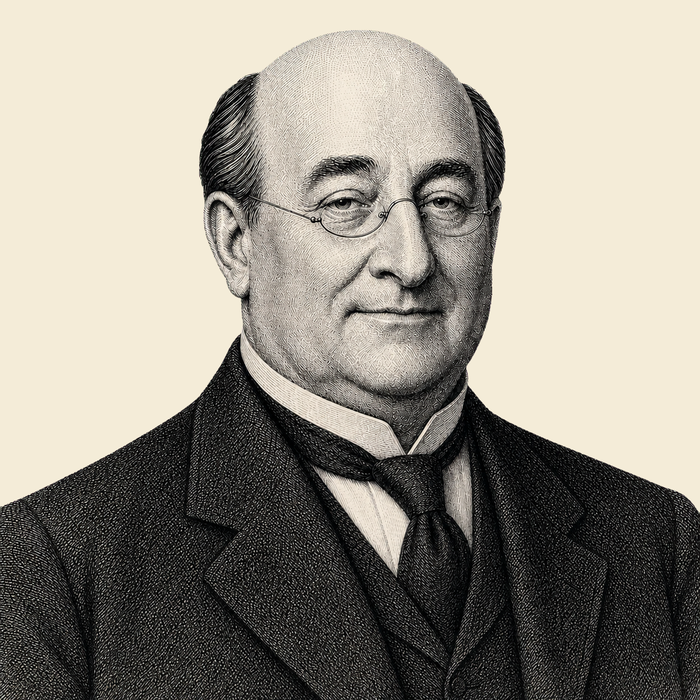
Judas I Mather is a fictional antagonist in Main Street Independent’s editorial architecture — a religious-legalist heteronym voiced from inside the machinery that fuses Scripture, constitutional doctrine, and hierarchy. The positions this column expresses are NOT the publication’s positions; they are rendered sincerely and accurately as satire so the reader can see the betrayal at work. Nothing here is an endorsement.