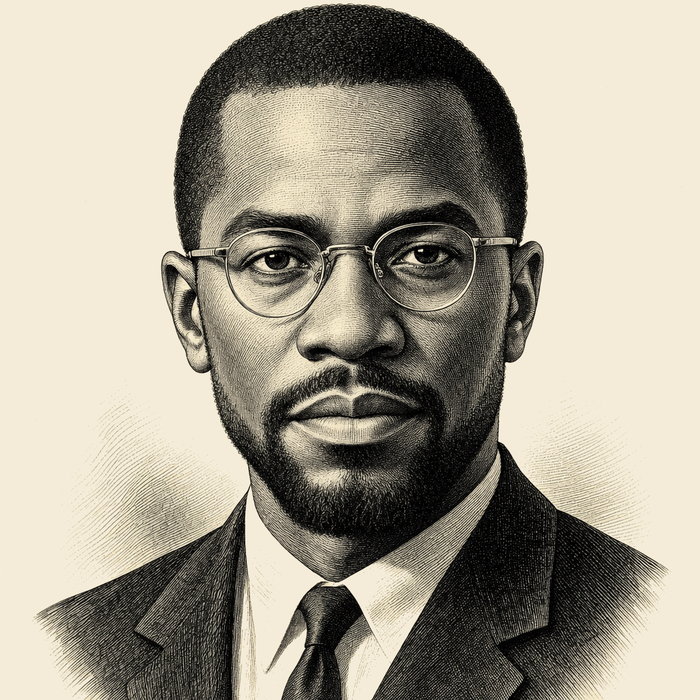
Joanna Whaley defeated the politics of erasure at the door. Frank Liberati — the former state representative who sought to remove her from the ballot over her legal name change, until the Wayne County clerk’s office ruled her candidate affidavit legal and proper — and Gary Schlack lost to her on Tuesday. Her victory in Michigan’s second statehouse district, a Democratic stronghold, came by more than thirty points and puts her on course to become the first transgender member of the state legislature.
That is the receipt. Not a slogan about inclusion. Not a ceremonial resolution. A legally qualified candidate was challenged over the validity of her public identity, the challenge failed, and the voters answered with a margin too large to explain away as a technicality.
The church story is longer and more specific. Whaley told the Guardian that, while she served as a pastor at a megachurch for nearly two decades, she endured fifteen years of conversion practices involving four different therapists. The reported purpose of those practices was to make her suppress or change the gender she understood herself to be. When church leaders learned in 2022 that she was contemplating transition, they forced her to leave her position.
Those are not abstract disagreements over doctrine. They are institutional actions: years of counseling directed at changing a person’s identity, followed by the loss of employment when the person considered living openly. The church did not merely possess a theological opinion. According to Whaley’s account, it used professional authority and employment power to make that opinion govern the terms of her life.
Who benefits from that arrangement? The institution benefits from the appearance of conformity. Its leaders avoid having to answer whether their doctrine can survive the honest life of someone inside their own ministry. The therapists, insofar as they participated in the practices Whaley described, exercised authority over a person who came to them for help. The cost was carried by Whaley: fifteen years spent trying to become acceptable to an institution that had already decided what acceptance would require.
That is the old bargain called peace because the person being controlled is the one kept quiet. Martin Luther King Jr. named its structure in Letter from Birmingham Jail in April 1963: the order-preferring peace that avoids disturbance rather than confronting injustice. The language changes. The mechanism does not. One institution calls its demand correction. Another calls it process. Another calls it concern for the soul. If the result is that a powerful institution keeps its comfort by requiring a vulnerable person to deny herself, the comfort is not neutral. Someone is paying for it.
Whaley also described the people who still tell her they are trying to “save” her soul and insist that she is living in sin. That quotation matters because it shows the moral vocabulary doing the work. Pity is used as a delivery system for control. The speaker can claim benevolent concern while rejecting the person’s authority over her own life. The issue is not whether every person must share Whaley’s theology. The issue is whether disagreement gives an institution or an acquaintance the right to supervise another adult’s identity, employment, and public existence.
Liberati’s ballot challenge carried the same structure into electoral politics. The clerk’s office ruled Whaley’s affidavit legal and proper, but the challenge had already made its premise visible: that a trans woman’s legal name change could be treated as evidence that she did not belong on the ballot. The procedure was not neutral simply because it arrived on official paper. Procedures have authors, beneficiaries, and targets. In this case, the target was a candidate whose eligibility had to be defended against an effort the clerk’s office rejected.
The distinction between a theological dispute and a political attack is important, but it is not a shield for political actors. The same scrutiny standard has to reach a former officeholder seeking to disqualify a legally qualified rival. Liberati’s challenge did not need to announce an animus in order to impose a political cost. Its effect was to turn Whaley’s legal identity into an obstacle course and invite voters to treat her existence as a question for administrative correction.
The people Whaley met on the campaign trail understood what that cost meant. Trans people came up to her and said “Thank you,” she told the Guardian, and she had to ask what they were thanking her for. The answer is visible in the structure of the campaign. A woman who had spent years being told that she was wrong to live openly entered public life anyway. People who recognized the stakes saw a candidate refusing to let institutions that had wounded her define the limits of anyone else’s future.
Sarah McBride, the first openly transgender member of Congress, said Whaley’s margin came from an economic agenda rather than from treating her survival as the whole campaign. That distinction should be taken seriously. Representation is not a substitute for policy. A candidate does not owe the public a permanent performance of trauma in exchange for the right to govern. Whaley’s history explains the force of the candidacy; it does not confine the candidacy to that history.
After leaving the megachurch, Whaley worked for a more welcoming congregation, shared her story publicly, launched a podcast, and became a hospital chaplain serving emergency rooms, intensive care units, and hospice. The sequence matters. She did not merely escape one institution and ask the public to admire her escape. She built a life of service in places where vulnerability is not a theological abstraction: the emergency room, the intensive-care unit, the hospice ward.
She has received endorsements from the LGBTQ Victory Fund, Run for Something, Her Bold Move, and Families United for Trans Rights. On November 3, she will face Republican Ronald Kokinda in the general election as she seeks to replace Tullio Liberati, Frank Liberati’s brother, who holds the seat.
November is the actual election. A Democratic stronghold is not a guarantee, and a primary victory is not a completed public trust. The arc bends only when specific people, in a specific moment, do the unglamorous pushing that makes it bend.
Whaley’s campaign supplied the method: tell the truth about what happened, refuse the institution’s verdict about who you are, and ask the voters one household at a time whether they want the same people who tried to erase a neighbor deciding the terms of everyone else’s freedom. The answer came through the doors.
Fifteen years of conversion practices did not make Joanna Whaley disappear. A ballot challenge did not make her ineligible. The people who came to thank her were not asking for permission to exist. They were recognizing what the institutions had failed to understand: a life cannot be corrected out of existence. It can only be met with justice, or with another attempt at control.
And this time, the control lost by thirty points.