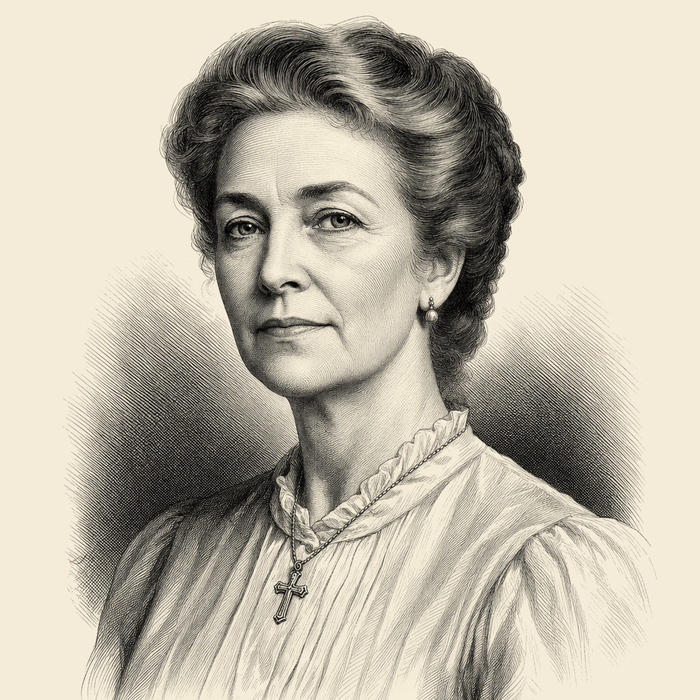
The Diocese of Washington owes the church an accounting of what pressure ended Mariann Budde’s episcopate — and it has not produced one.
Here is what the record does show. On 21 January 2025, the day after Donald Trump’s second inauguration, the Rev. Mariann Edgar Budde — then the first woman ever to lead the Diocese of Washington, its bishop since 2011 — stood at the Washington National Cathedral and asked the president, on national television, to have mercy on immigrants and on “gay, lesbian and transgender children,” some of whom she said “fear for their lives.” That was the sermon. Trump’s answer is on the record too. On Truth Social he called her “nasty in tone” and “not very good at her job,” accused her of dragging her church “into the World of politics,” and declared that “she and her church owe the public an apology.” Days later the same president publicly mused about whether churches that opposed him should still keep their tax exemption. Members of Congress followed: Representative Mike Collins (R-GA) called on federal immigration authorities to “take a look” at her on the theory that her advocacy amounted to sedition; Representative Tim Burchett (R-TN) called her an “Episcopal pulpit pimp”; Representative Nancy Mace accused her of complicity in the immigration crisis she had pleaded about. She did not retract a syllable. She has now announced her resignation — she is 66; her last day will be 3 June 2028 — leaving with the man who demanded her apology still in office. The institution that was publicly threatened with federal scrutiny has said, so far, nothing about whether that scrutiny touched its own deliberations.
That silence is the indictment, and the church has a right to be done with it. So here are the mechanics, because the mechanics are where the record must now appear. A diocesan bishop in the Episcopal Church is elected by the diocesan convention under the Constitution and Canons and serves — there is no other word for it — at that convention’s pleasure, until the mandatory retirement age of seventy-two. A bishop who departs before that age does not simply walk away: under Title III, resignation requires the consent of the House of Bishops. When the see falls vacant, the Standing Committee becomes the ecclesiastical authority of the diocese, and the convention that elected her elects her successor. None of this is obscure. It is the machinery that is moving right now, and every moving part of it owes the church a public answer. Under which canonical provision does this departure proceed — retirement, resignation, or something the canons do not name? Has the House of Bishops been asked for its consent, and when? What date was the Standing Committee informed, and who informed it? Between January 2025 and this announcement, did any diocesan officer have contact with the administration, its congressional allies, or the conservative Anglican networks organized against her — and if the answer is no, the church deserves to hear that said under a signature and a date, not implied in a resignation letter’s grace.
Because the pressure campaign was specific, datable, and aimed at an institution, not just a person. When a sitting president publicly floats a church’s tax exemption as a consequence of its bishop’s preaching, he is not criticizing a sermon; he is testing whether an episcopate can be ended by federal attention. The conservative exit already has a name and an address: the Anglican Church in North America, the province formed over precisely these questions, operates a functioning bishopric and convention in this country, and the people who spent 2025 treating Budde’s plea as an offense against the church heard nothing wrong in what the president said about her. A church whose bishop can be publicly threatened with federal consequences, and which then departs into a quiet succession without answering the threat, has not protected its clergy. It has advertised what can be done to her.
The church has a text for this, and it has always known it. Jeremiah 7 has the priests chanting “the temple of the Lord, the temple of the Lord, the temple of the Lord” — the ancient claim that right institutions make their holders safe — and has God answer by asking whether sanctuary is a license to “steal and murder… and then come and stand before me in this house, which bears my Name, and say, ‘We are safe’” (Jeremiah 7:4, 9–10). Amos 5:21–24 despises the assemblies that skip justice. And the establishment that now calls a bishop’s mercy plea “politics” quotes Romans 13:1 — “Let every soul be subject unto the higher powers” — and stops reading at the end of the first verse, while the Greek runs on to make those higher powers themselves answerable to the standards of justice the prior chapters of Romans had laid out. I spent thirty years inside the machinery that quotes it that way. The machinery does not object to the pulpit pointing at power. It objects to being out-argued from its own pulpit.
Bishop Budde answered the president with two words he did not want to hear. Her diocese now owes the church the thing it has never offered: the record. Name the provision. Name the date. State, in the open, whether a sitting president’s demand for an apology and his musing about a church’s tax exemption had anything whatsoever to do with the timing of this resignation. If the answer is no, say it plainly and close the question. If the answer is anything else, the church — and the diocesan convention that will elect her successor, and every bishop who may one day stand where she stood — is entitled to know who moved, under what authority, and on whose schedule.
The pulpit was never the question. The question was always whether federal power can end an episcopate, and whether this church will let that question be answered in silence. Publish the accounting. The texts have not changed.