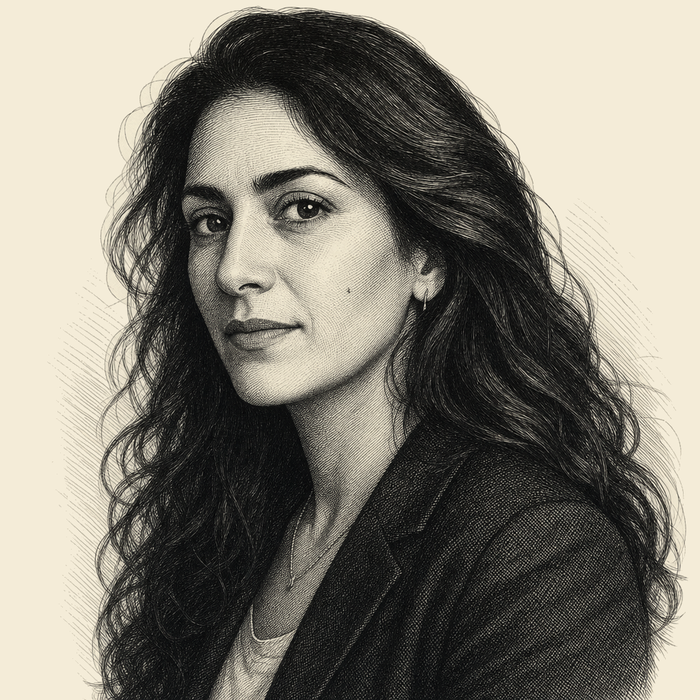
Felicity Jarmon died in a flood. Her best friend, Georgia Bishop, is 19. The 2025 Texas Hill Country floods killed 136 people. This June, Bishop traveled to Washington and spoke to members of Congress about better flood warnings, including sirens for communities like hers.
“I just want to help make sure that this never happens again,” she said.
Some lawmakers appeared uninterested. Others promised action. Bishop said she would believe them when they acted, but feared the action would come too late.
The disaster survivors are coming for the politicians who abandoned them.
Her membership card in a political class nobody chose to join was written in floodwater: a friend killed, a house inundated, a community left without the warnings it needed, federal applications denied again and again. She did not choose this politics. It chose her.
Across Texas, Oregon, Georgia, Louisiana and North Carolina, survivors of floods, fires, hurricanes and record heat are discovering that grief has an afterlife in politics. They do not always share a party, a president or even a preferred explanation for what happened. They share ruined homes, rejected insurance claims, impassable roads, missing money and the suspicion that government will arrive only when politics permits it.
By one FEMA estimate, about half of Americans have been affected by extreme-weather disasters.
Sierra Kos caught in a pall of toxic smoke from the Oregon wildfires in 2020 while trying to take her son for medical care. She later co-founded Extreme Weather Survivors. The network now spans roughly 2,500 people across the country, by Kos’s count. Members have made trips to Washington, testified before lawmakers and begun organizing in statehouses and community halls. Delegations with varied political views have pressed lawmakers. Their ambition is larger than disaster relief. They want to change who listens, who answers and who wins.
Kos expects survivors of extreme weather to shape political outcomes and policies, and then to run for office themselves.
“This is going to be a constituency that policymakers and politicians need to listen to,” she said.
The members disagree about plenty of things. They are united on the core: FEMA must become more responsive, and disaster aid cannot be politicized. They want warnings before the storm, an effective response after it, aid without a loyalty test, temporary housing, insurance relief, and enough resources to make homes habitable again.
Kylie Nidever, a former preschool teacher whose childhood home in Hunt was one of the few in her neighborhood to survive inundation, once had no interest in politics. The destruction of her community changed that.
“It radicalized me to see my community devastated,” Nidever said.
She spoke to Texas lawmakers after watching FEMA fail to respond adequately to later, less deadly floods.
“We need more authority,” she said. “We need more guidance, we need more support.”
This was the language of a citizen discovering that government could govern everything except the moment her family needed it.
The gathering in Kerrville revealed both the emerging power of the survivors and the contempt with which politicians still regard them. The community hall sits near where the flash floods killed 136 people in 2025. All the Texas gubernatorial candidates and selected state legislators were invited to address the survivors. Only one person attended. Vikki Goodwin, a state representative and the Democratic candidate for lieutenant governor, was the one who showed up.
She told the room: “We are seeing more extreme weather in Texas and we need to do more for survivors.”
One candidate. One room crowded with people who had lost homes, relatives and futures. The empty chairs were the message.
These survivors were not assembling as a conventional interest group with a neatly packaged set of demands. They were assembling because government had failed them, often after they had already paid with the most valuable things they owned.
Elisabeth Anderson’s family did not drown. They climbed onto the top of their car with their child and two dogs and watched the water rise around their Atlanta home after Hurricane Helene flooded it in 2024. Anderson thought they might die. After repeated rejections for FEMA assistance, she took out a $400,000 loan to repair the house.
The system that could not respond effectively became another disaster all its own.
Donald, your administration has made deep cuts to FEMA, pushed states to shoulder more of the burden and has been accused of withholding resources from states that did not vote for you. Aid becomes a test of partisan loyalty. Survivors have no interest in passing that test. They want the government to function.
A government that distributes emergency help according to electoral geography teaches survivors a lesson no political consultant needed to devise. Organize, because punishment is coming.
Washington keeps treating extreme weather as a communications problem. It is a government problem.
The disaster bureaucracy can waste time while homes fill with water. Families apply for aid they should receive automatically. Insurers litigate over damage the claimant can document. Donald, your hand tightens around the pen when another application is denied. Your throat closes when Bishop asks why warning did not reach her community. The pressure behind your sternum will not lift when the next survivor meeting leaves every chair but one empty.
You did not cause the flood. Your administration made the federal response smaller and pushed more of it onto the states. You made a government problem into a communications problem because a communications problem has no hand attached to it. The survivors have found the hand.
Mike Malcolm, a 70-year-old Republican voter in Leander, Texas, wrote his Social Security number on his hands and feet in case his body had to be identified after the 2025 floods filled his home with muddy water. He had once dismissed global warming as indoctrination. His children helped him understand the connection.
“I used to think global warming was just indoctrination, then I lived through a flood where I genuinely thought I was going to die,” he said.
Donald, you called climate change a “hoax” and “bullshit.” Your mouth dries when the man who once believed you returns with a fact you cannot rename. Malcolm did not need your permission to learn what the flood had put into his house. His children did the rest.
That is the danger this movement poses to conventional political strategists. It does not arrive as a single ideology. It arrives through competence.
Because Donald has made the language radioactive, survivor groups often avoid the C-word. They choose “extreme weather” to keep the coalition intact.
Nidever explained: “That’s why we just say extreme weather. We use that instead of going there with climate because it’s more inclusive and it’s not a hot-button term.”
That tactical restraint is not retreat. Scientists have said global heating probably worsened the Texas floods and other recent heatwaves and wildfires. They have warned that a warming atmosphere is driving more frequent flash floods. The United States has endured its hottest summer on record and the onset of one of the strongest El Niño events ever recorded.
Donald, your stomach turns when they refuse your vocabulary and keep the fact anyway. Survivors who say “extreme weather” are not waiting for permission to accept the science.
As insurance premiums rise, toxic smoke interrupts school and work, and extreme heat breaks records, “extreme weather” will stop being only a humanitarian issue and become an economic one. Every household forced to sell a home, face a higher premium or abandon a neighborhood gains another reason to vote against the people who did nothing.
The pressure is building now. The most glaring sign is not the size of the survivor network but the blindness of the campaigns. Midterms have arrived, yet most candidates are skipping climate and major disasters even as voters demand action. Politicians are betting that grief remains local, that anger exhausts itself and that the next disaster will always arrive too late for the previous one to matter.
They have the calculation backward. Extreme-weather survivors are not looking for a perfect climate position. They are looking for officials who will show up while the river is rising and stay after the water recedes.
Every new disaster adds another name to the movement. Every rejected application, missing payment and unanswered warning adds another grievance. Every candidate who stays away teaches another survivor that politicians will treat catastrophe as an inconvenience whenever it is no longer electorally useful.
The pattern is blunt: disaster, delay, radicalization.
The old political playbook is to wait for an issue to harden into a partisan identity and then divide it. The survivors have done the opposite. Their coalition spans region and party because their shared experience cuts through the artificial divisions used to make catastrophe somebody else’s problem. The political class expects survivors to remain grateful recipients. Instead, they are becoming organizers, lobbyists, donors and candidates.
There is still a test ahead. The movement must turn episodic outrage into durable turnout. The assumption that survivors will scatter after the cameras leave mistakes a political awakening for a protest. They have already crossed state lines, testified before lawmakers who appeared uninterested, confronted agencies that rejected them and turned grief into demands.
Donald, you expected grief to exhaust itself. It did not. It learned committees, statehouses and campaign offices. It learned to make empty chairs answer for their silence.
Your candidates can keep calling it extreme weather instead of climate change. The survivors can put their demands on the ballot box.
“Truly I tell you, whatever you did for one of the least of these brothers and sisters of mine, you did for me.”
Matthew 25:40
The water has receded. The constituency has not.
It is already heading for the ballot.
The next storm may not be predictable. The political force it has created is.