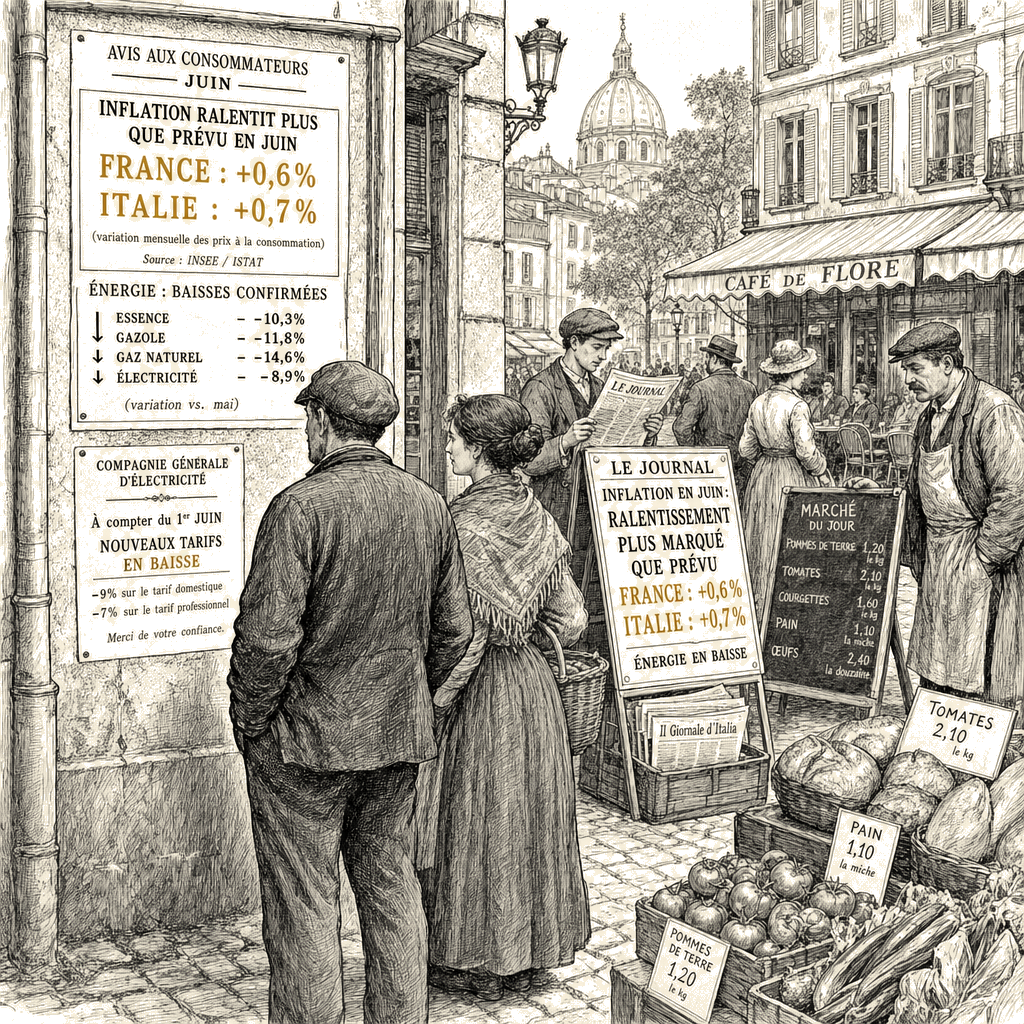
French consumer price growth slowed more than forecast in June, coming in at 2.0% on an EU-harmonized basis, down from 2.8% in May, Insee reported Tuesday. Economists polled by The Wall Street Journal had anticipated a smaller decline to 2.3%. The decline was driven by a sharp slowdown in energy prices, particularly petroleum products, Insee said, adding that services prices also eased to a lesser extent.
Italian inflation slowed to 3.0% from 3.2%, according to Istat, while economists had expected the rate to hold steady at 3.2%. The cooling in both countries followed a significant fall in oil prices over June, as markets increased bets on a resumption of regular shipping through the Strait of Hormuz after the tentative U.S.-Iran peace deal in mid-June. Oil has since fallen to its lowest levels since the conflict began.
The ECB earlier this month raised its benchmark interest rate for the first time in nearly three years, becoming the first major central bank to hike during the Iran-war energy shock. In May, core inflation — which excludes volatile energy and food prices — unexpectedly jumped to 2.5%, highlighting the risk that higher oil prices could spread beyond energy markets.
ECB President Christine Lagarde said Tuesday that the decision to hike was based on the bank’s inflation projections, which showed eurozone inflation remaining above the 2% target through 2027 and 2028 without tighter policy. Still, policymakers are expected to remain cautious as they assess whether recent energy-driven price pressures prove temporary or have longer-lasting effects.
Monday’s data showed that inflation in Spain remained stronger than anticipated in June, with electricity and gas maintaining upward pressure. Inflation figures for Germany are due later Tuesday, while the eurozone-wide print will be published Wednesday.