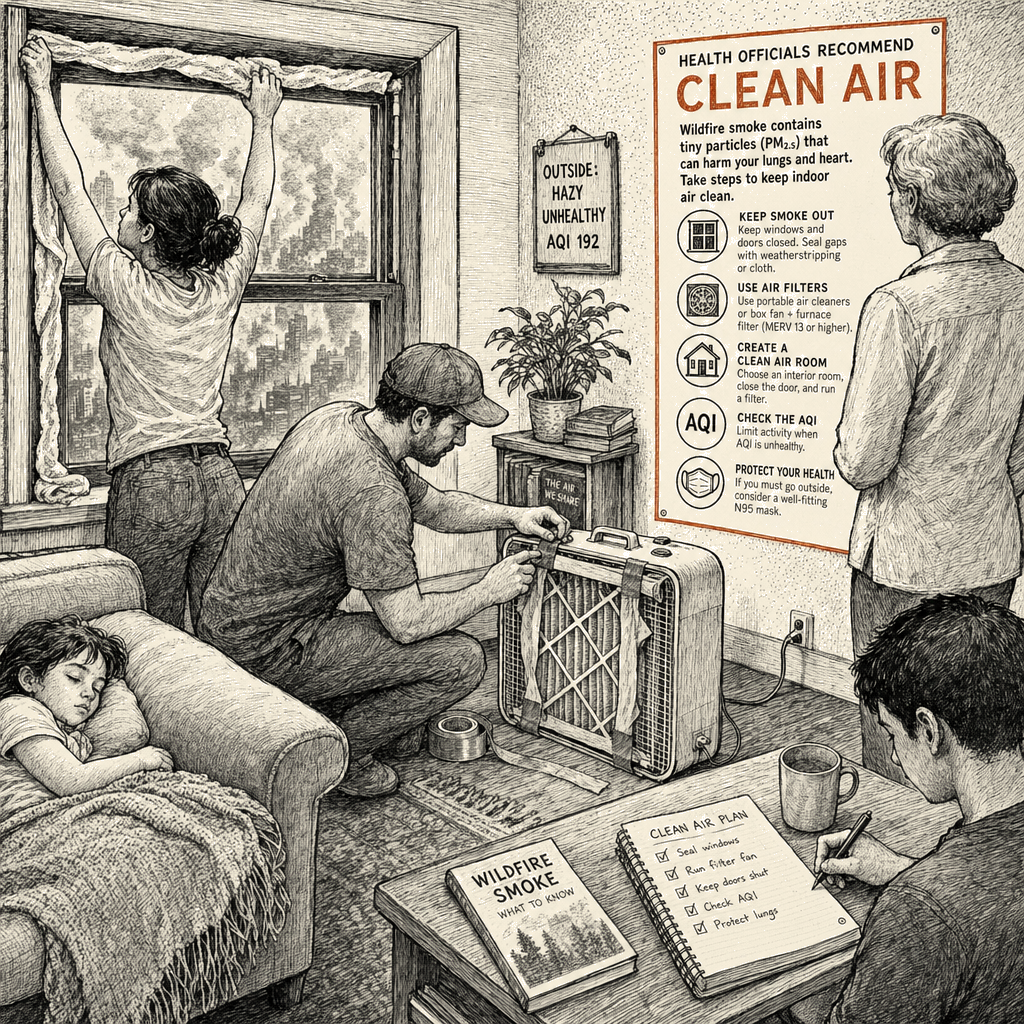
MERV 13 filters, recirculation settings reduce particle exposure
The orange glow of a smoke-dimmed sun might draw attention, but experts said the greatest health threat from wildfire haze is invisible: tiny particles in the air that can cause short-term and chronic health problems.
Smoke from burning fires in Canada has settled over parts of the United States for days, creating hazardous air conditions for millions of people across multiple states, health officials said. Residents are being advised to stay indoors and to take steps to keep the air inside their homes clean.
Homes with central air conditioning can filter smoke out of indoor air when the system is configured properly, experts said. Filters should be replaced on schedule and should be the highest level of filtration the system can manage. Filters with a MERV 13 rating or higher are considered ideal, according to health officials.
The system should be set to recirculate mode, and any vents that draw air from outside should be closed when possible, experts said. The University of Oregon’s Center for Wildfire Smoke Research and Practice recommends running the system’s fan throughout the entire smoke event, not just when the air conditioner is actively cooling.
For households without central air conditioning or those seeking additional filtration, portable air filters are an option. Health officials said consumers should look for a HEPA air filter or one that states it traps small particles of pollution. They also advised checking that the device does not generate ozone, which is itself a harmful air pollutant.