Bulgaria says US requested tanker deployment
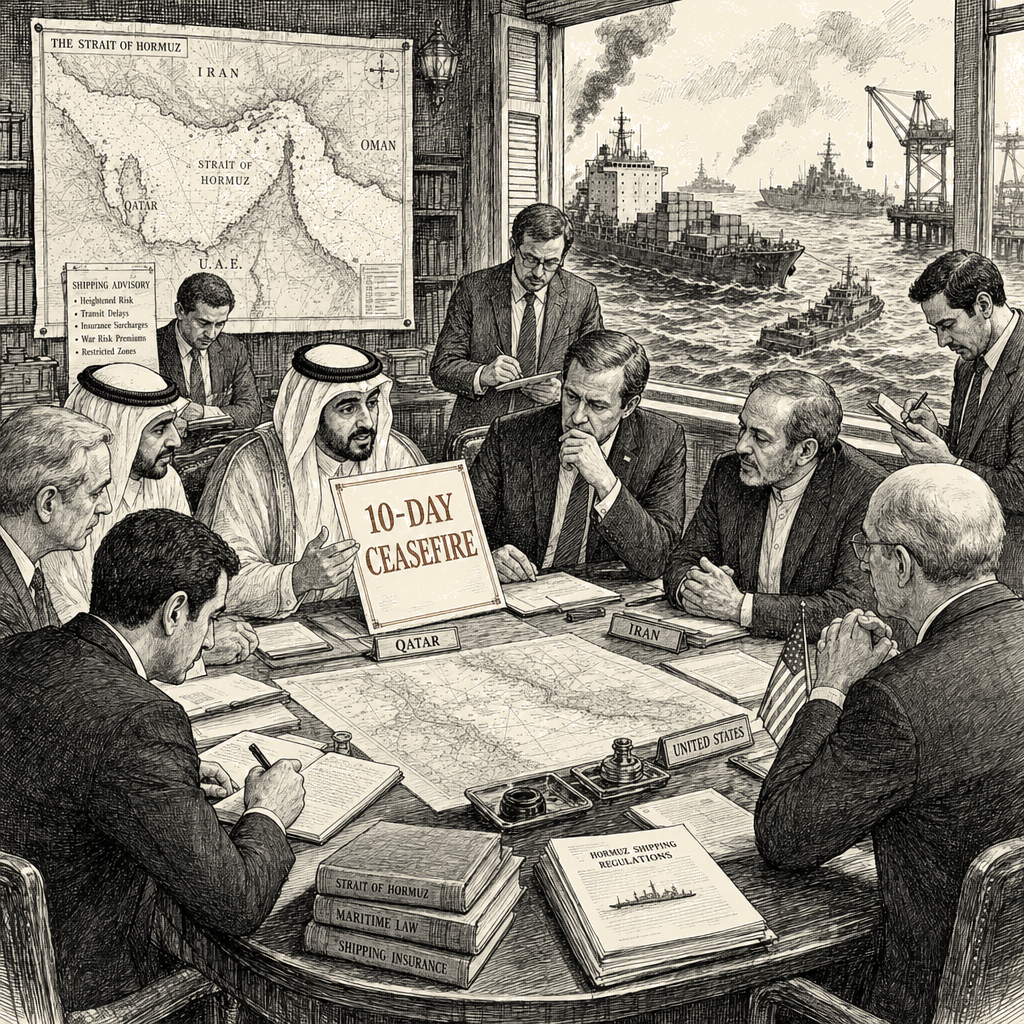
Mediators from Qatar have floated a 10-day ceasefire proposal that would also end shipping restrictions in the Strait of Hormuz, according to people familiar with the talks. It was not clear whether either side was ready to accept a new pause after the preliminary peace deal signed in mid-June collapsed earlier this month. Other proposals for a temporary halt to fighting were also presented to Iran in recent days, but the Islamic Revolutionary Guard Corps has not responded to them, according to some of the mediators.
U.S. Secretary of State Marco Rubio said as he left the Philippines that Iran has signaled through intermediaries it wants to talk. Esmail Baghaei, a spokesman for Iran’s Foreign Ministry, said mediators were actively trying to prevent further escalation and had conveyed various proposals to Iran, and that its diplomats would work to determine whether a solution could be reached.
The central obstacle to any new ceasefire remains the Strait of Hormuz. Iran argues that the memorandum of understanding it signed with President Trump a month ago gives it the right to administer the reopening of the waterway. The U.S. has been helping ships use a channel outside Iran’s oversight that runs along the coast of Oman.
“Considering the continued absence of the Iranian supreme leader and Iranian insistence to not withdraw in any manner from the management of the Strait of Hormuz, the mediation has become nearly an impossible task,” said Umer Karim, a researcher on Gulf security at the University of Birmingham.
The U.S. is moving F-16 and F-35 warplanes into the region to bolster its capabilities. Bulgaria said Monday that the U.S. had requested permission to deploy up to eight aerial refueling tankers in the country to support American operations in the Middle East.
Iran’s top negotiator, Parliament speaker Mohammad Bagher Ghalibaf, said on social media that the movement of military equipment into the region shows the U.S. is not serious about wanting to end the war.
The military escalation has been rapid. Iran began attacking ships using the Oman corridor in early July, setting off an extended series of strikes that collapsed the June deal and all but closed the strait to traffic. The U.S. responded with strikes and by reimposing a blockade on Iran’s ports. Iranian attacks on a base in Jordan killed two U.S. servicemembers, left one missing and injured several others. The U.S. has attacked targets across Iran including bridges, rail infrastructure and a control tower at Iran’s Chabahar port.
Qatar believes it has leverage to push for another pause in the fighting because Iran’s economy cannot sustain further damage from the war or the U.S. blockade, according to mediators. Iran’s security forces have vowed to continue fighting.