SMR project could be first to power a port worldwide
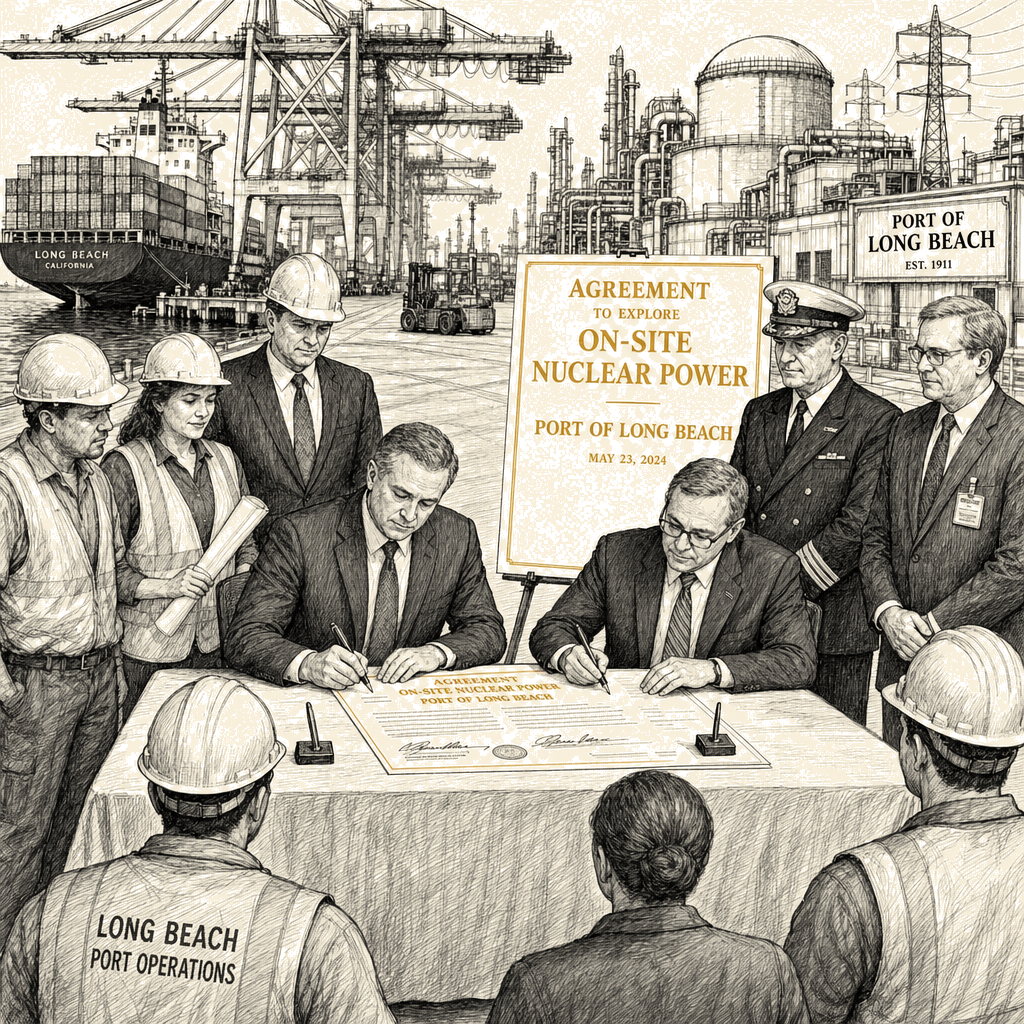
The Port of Long Beach this week signed a memorandum of understanding with the Transportation Department’s Maritime Administration to explore the construction of a small modular reactor at the facility, the Wall Street Journal reported. The agreement is among the most significant steps forward so far in the Trump administration’s push to bring nuclear power to the shipping industry, the Journal reported.
The plan is still in the early stages and may not come to fruition, Hacegaba said. If it does, the port could become the first in the world to run on nuclear power, according to the Journal. The next frontier, the Journal reported, could be building nuclear-powered ships in American shipyards — another administration goal as it looks for ways to revive the domestic shipbuilding sector.
The agreement is a memorandum of understanding with the Maritime Administration, Hacegaba said. He said the port would work with the administration, the Coast Guard, and other federal agencies to develop safety and operational standards for the use of nuclear power in maritime settings, including on commercial vessels. The port is working with Long Beach-based Bluecore Energy, which is now building and testing components for the project, Hacegaba said.
“This could be a turning point for the maritime domain and we are going to move as quickly as possible,” Hacegaba said, though he said there is no time frame for the port’s nuclear electrification or when the first nuclear vessels will arrive.
The nuclear push in shipping is part of a wider effort by the Trump administration to revitalize the U.S. nuclear industry. The president signed a raft of executive orders last year aimed at ushering in a nuclear-energy “renaissance,” the Journal reported. Dozens of companies are pursuing new designs for commercial small modular reactors, the kind that would be used at the port. The U.S. does not yet have any operating SMRs, but a handful of projects have broken ground. As MSI previously reported, the Trump administration has also offered $17.5 billion in low-interest loans to revive nuclear reactor construction and public support for nuclear power has been rising.
The Port of Long Beach, along with the adjacent Port of Los Angeles, is the biggest U.S. import hub for products from Asia. Long Beach has a total of 22 ship terminals, and officials estimate the electricity bill for each terminal averages $420,000 a month, according to the Journal. The port has been looking for cleaner and cheaper electricity sources for decades, a search that has taken on more urgency as it pushes to electrify cargo-handling equipment and other operations that currently burn fossil fuels.
The shipping industry as a whole is one of the biggest emitters of greenhouse gases. Ships emit about 3% of global carbon dioxide, according to the International Maritime Organization, the U.N.’s maritime regulator, which has imposed rules that will require shipowners to pay governments for their emissions starting in 2028.
Momentum for powering commercial ships with nuclear power has been building for years, the Journal reported. In June, the American Bureau of Shipping, the world’s biggest ship registrar regulating safe navigation, approved a nuclear-powered ship design from a maritime consortium run by MIT’s Center for Ocean Engineering, Greek-owned shipping company Capital Group, and Korea’s Hyundai Heavy Industries.
“Nuclear propulsion holds transformative potential for shipping and paves the way for cleaner, more resilient global trade,” said Evangelos Marinakis, chairman and founder of Capital Group, which gave MIT the blueprints of one of its ships that was digitally retrofitted with a nuclear engine, according to the Journal.
The shipping industry expects the first such vessels to hit the water in about 10 years, the Journal reported. Construction of such ships may cost four times that of conventional ones, though that would be more than offset by savings on fuel costs over the life of the ship, the Journal reported.