Seoul presses U.S. to uphold 15% tariff cap in trade talks
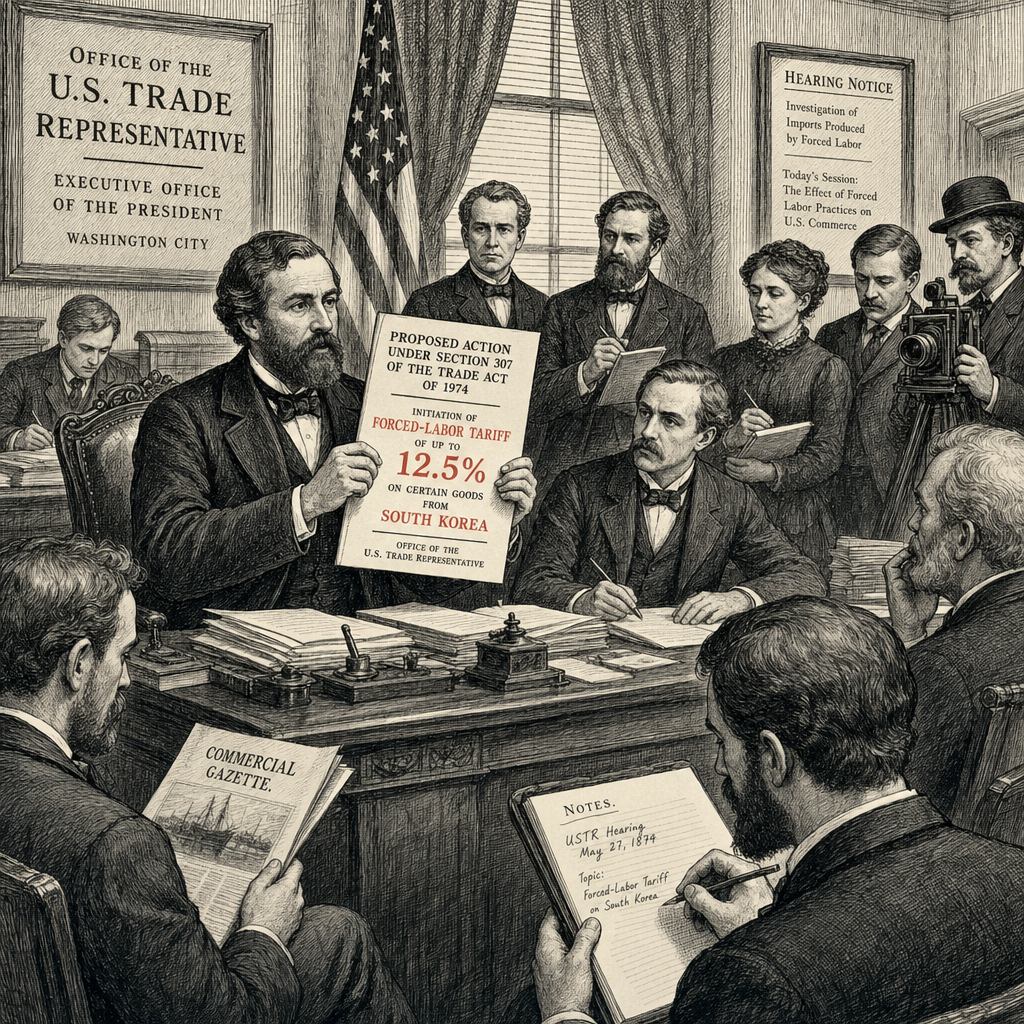
U.S. could announce up to 12.5% forced-labor tariff on South Korea
Greer said in written testimony submitted to the Senate Finance Committee that the Office of the U.S. Trade Representative could release its final determination in the forced-labor investigations as early as Thursday. The proposed action, first announced in June, could subject imports from South Korea to an additional tariff of as much as 12.5%, though Greer did not disclose the final rate or treatment planned for individual trading partners.
Under the proposal, economies judged to have stronger restrictions on forced-labor products would face an additional 10% tariff. Goods from other economies could face an additional 12.5%. Greer said the investigations were intended to encourage trading partners to join U.S. efforts to prevent products made with forced labor from entering international commerce and to provide fairer conditions for American workers and businesses.
The announcement comes as the Trump administration’s temporary 10% global tariff, imposed under Section 122 of the Trade Act of 1974 after the Supreme Court struck down earlier emergency-authority tariffs, is set to expire Friday after reaching its maximum 150-day duration. South Korea is included in both the forced-labor investigations and a separate USTR investigation into structural industrial overcapacity, raising the possibility of additional combined duties.
Seoul presses U.S. to uphold 15% tariff cap in trade talks
South Korean Trade, Industry and Energy Minister Kim Jung-kwan arrived in Washington for meetings running through Saturday with Commerce Secretary Howard Lutnick, administration officials and members of Congress. Kim said he planned to discuss the expiration of the temporary global tariff and USTR’s planned Section 301 action.
The South Korean government maintains that a 15% tariff ceiling negotiated under an earlier bilateral trade agreement should apply to any new U.S. trade measures. Trade Minister Yeo Han-koo, also visiting the United States, is expected to contact Greer directly because USTR is leading the Section 301 investigations.
Kim said the two governments were also focusing on the first project under South Korea’s planned $200 billion investment package in the United States. He said negotiations were in their final stages and that the first project could be announced in late August or September after remaining issues are resolved, adding that the investment would be based on commercial viability and should benefit both countries.
During the Senate hearing, Greer defended President Donald Trump’s tariff policies, saying the administration would continue using trade measures to support domestic manufacturing. “The specific authorities this administration is using have changed but our trade strategy has not,” Greer said. He said the administration would continue using tariffs and trade negotiations to reindustrialize the U.S. economy, protect American workers, raise wages and reduce the trade deficit.
Democratic senators argued that the tariffs were increasing the prices American families pay for consumer products. Sen. Raphael Warnock, D-Ga., said virtually everyone except the Trump administration recognized that tariffs raised costs. Greer responded that the measures were necessary to defend U.S. production and workers from unfair foreign competition.
Congress is weighing both limits and expansions of tariff power. Sen. Ron Wyden of Oregon, the ranking Democrat on the Senate Finance Committee, has introduced legislation that would require congressional approval for new tariffs, establish a commission to review presidential trade measures and require Congress to approve binding trade agreements. Separately, lawmakers are considering legislation that would authorize tariffs of up to 100% on countries that continue purchasing large quantities of Russian oil and natural gas, a measure introduced by the late Sen. Lindsey Graham, R-S.C., that could affect major Russian energy customers including China and India.
Kim also addressed the dispute involving South Korean e-commerce company Coupang, which has emerged as a bilateral diplomatic and trade issue. He said misunderstandings and differences remained between the two governments and that relevant South Korean agencies were working to narrow the gap.