Japan white paper cites China-Russia-North Korea coordination as security risk
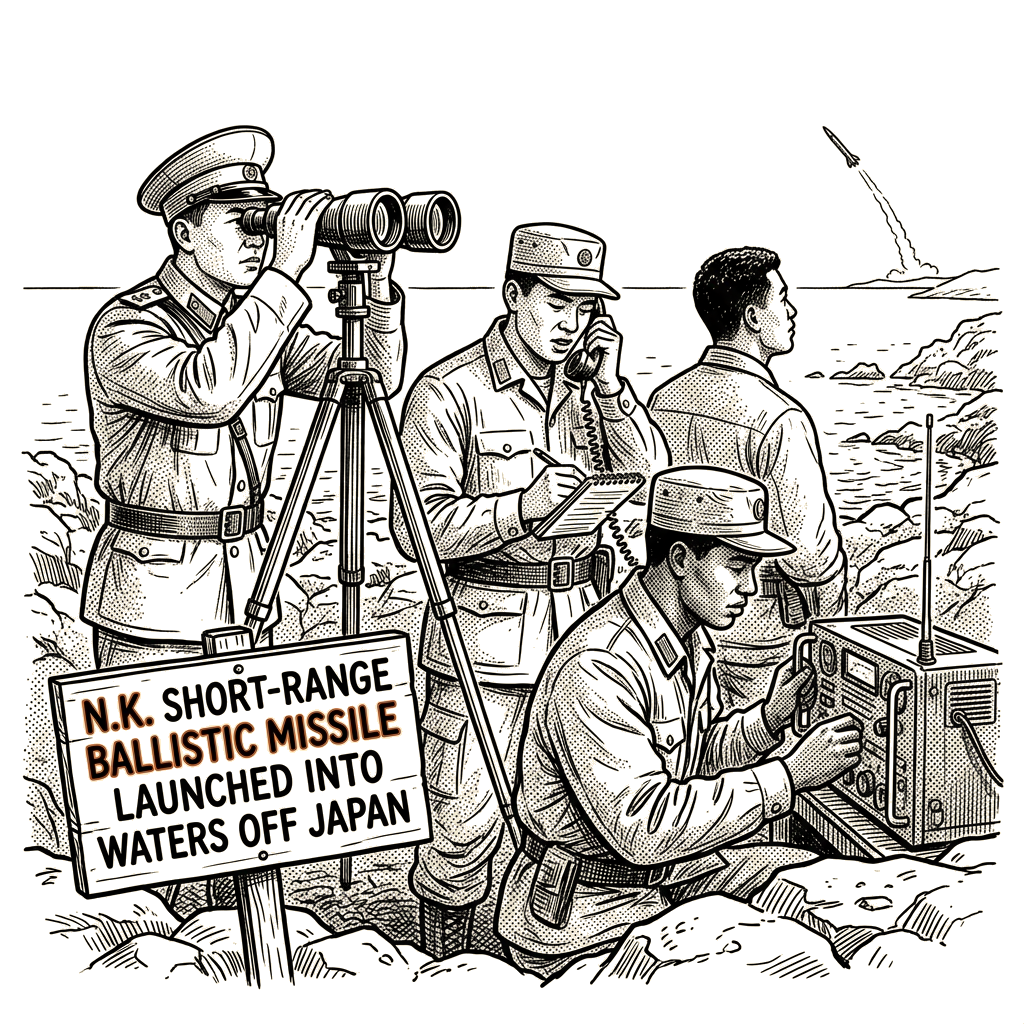
North Korea launched a short-range ballistic missile on Thursday into the waters between Japan and the Korean Peninsula, according to South Korea’s defense ministry. The launch came on the 81st anniversary of the U.S. bombing of Hiroshima and days after Tokyo admonished North Korea about the rising threat it poses.
The test is the latest sign of escalating military friction between North Korea and U.S. allies in the Indo-Pacific. North Korea’s leadership has blasted the deepening of military ties between the U.S. and Japan, while Washington and its allies in the region have expressed alarm over North Korea’s increasing missile testing.
In the days before the launch, Kim Yo Jong, Kim Jong Un’s sister, criticized Japan’s first-ever test launch of a U.S.-made Tomahawk cruise missile, as well as Tokyo’s participation in U.S.-led military exercises earlier this year. She accused Washington of being behind Tokyo’s “dangerous military moves.”
“One effective way is to make Japan feel that its security has been exposed to greater danger,” she said in a Wednesday statement.
After Japan’s Tomahawk test, North Korean state media accused Washington of turning the U.S. forces in Japan into a “de facto war command.” It vowed to continue to expand its nuclear program.
China and Russia have joined North Korea in condemning the expanding scope of U.S. military cooperation with Asian allies.
Japanese Prime Minister Sanae Takaichi has been strengthening Tokyo’s armed forces with new weapons and capabilities. Last week, Japan announced plans to deploy an Aegis destroyer in the Pacific.
In a defense white paper released Tuesday, Japan cited growing military coordination between China, Russia and North Korea as a heightened security risk. The report also raised concern over the possibility that Russia is transferring nuclear and missile-related technology to North Korea in exchange for the North Korean government’s deployment of North Korean troops and weapons for Russia’s war in Ukraine.
While Japanese defense officials said they have found it difficult to assess whether Russia has given North Korea direct military assistance, they expressed concern that close coordination between the two in Ukraine could help the performance of North Korean missiles and its combat methods.
“While we do not assess that Kim Jong Un is currently acting in this manner, we have stated that there is a risk that North Korea’s capabilities will improve over the medium to long term,” Japanese defense officials said.
Pyongyang’s state media didn’t report on the Thursday launch, and the type of missile wasn’t disclosed by Japanese or South Korean authorities. Seoul’s defense ministry said the U.S., Japan and South Korea are closely monitoring the possibility of additional launches while analyzing the ballistic missile’s flight distance.