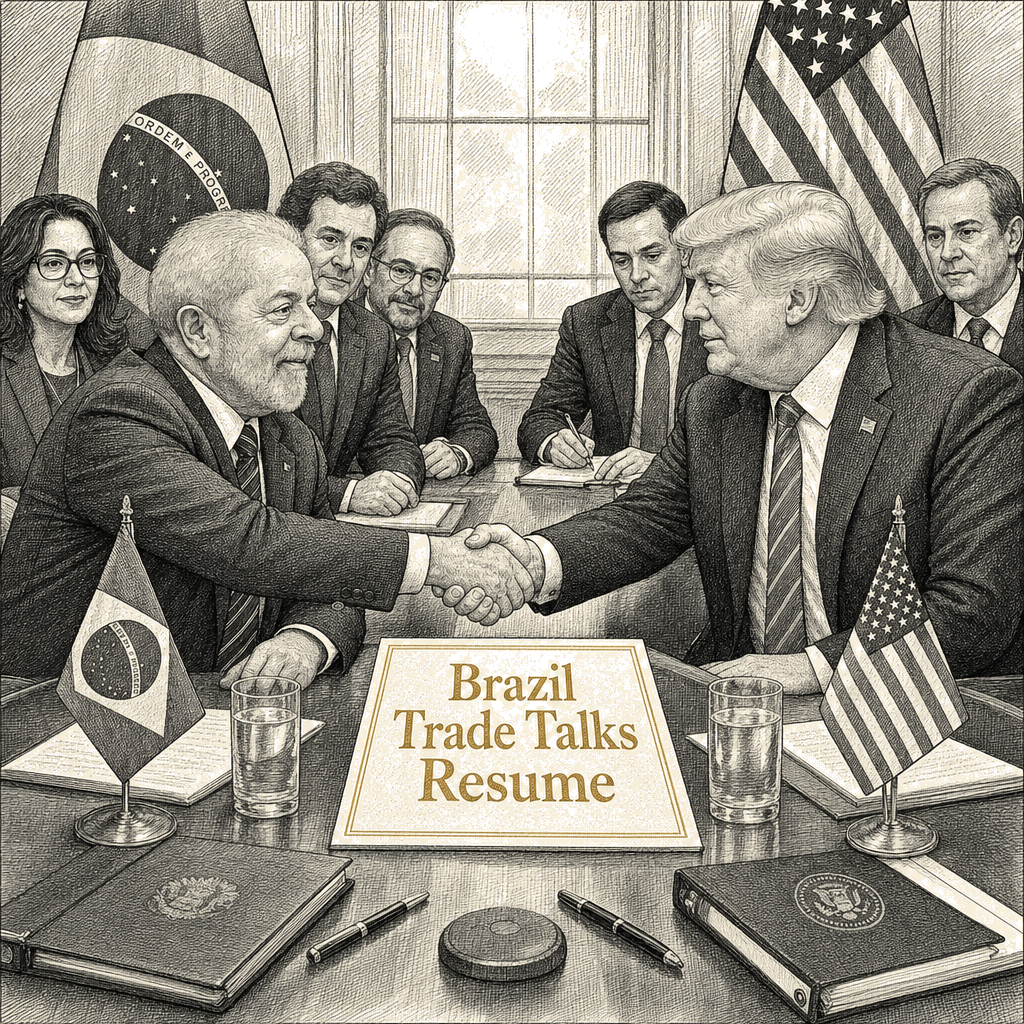
Brazilian leader rejects U.S. tariff justifications as ‘unfounded’ in 80-minute call
Brazilian President Luiz Inácio Lula da Silva and U.S. President Donald Trump held an 80-minute phone call on Friday to discuss resuming bilateral trade negotiations and coordinating on security, Brazil’s presidential office said. During what the Brazilian government described as a “friendly and cordial” conversation, both leaders agreed that representatives of their governments would resume talks aimed at resolving the trade dispute, according to Brazilian state news agency Agência Brasil.
Lula used the call to push back against the U.S. justifications for the tariffs, calling them “unfounded,” according to the Brazilian statement. The recent trade barriers imposed by the Office of the U.S. Trade Representative include an additional 25% tariff over alleged unfair practices and another 12.5% tariff linked to alleged shortcomings in efforts to combat forced labor.
The White House based those measures on a series of regulatory and political concerns involving Brazil’s Pix instant payment system, the country’s anti-corruption efforts, the ethanol market, and efforts to curb deforestation, according to the Brazilian government.
Lula argued that the trade restrictions lack a factual basis and cause direct economic harm to both countries. The Brazilian president said diplomacy is the appropriate path forward and called for bilateral dialogue to remain open.
According to the Brazilian statement, Trump was receptive to the need to preserve strategic trade ties and proposed that technical delegations from both governments resume meetings as soon as possible.
On security, Lula reiterated Brazil’s interest in cooperating with the United States against organized crime. He said criminal groups terrorize the country’s poorest communities on a daily basis but should not be confused with terrorist organizations.
Lula outlined progress in his government’s strategy to financially weaken criminal groups, citing seizures worth millions and detailing the creation of maximum-security prisons. Trump expressed willingness to deepen cooperation on border security and high-level intelligence sharing, according to the Brazilian government.
The two presidents concluded the call by discussing the need to pursue negotiated peace efforts to address the conflicts in Ukraine and the Middle East.