Carney announced planned levies in response to Saturday tariffs
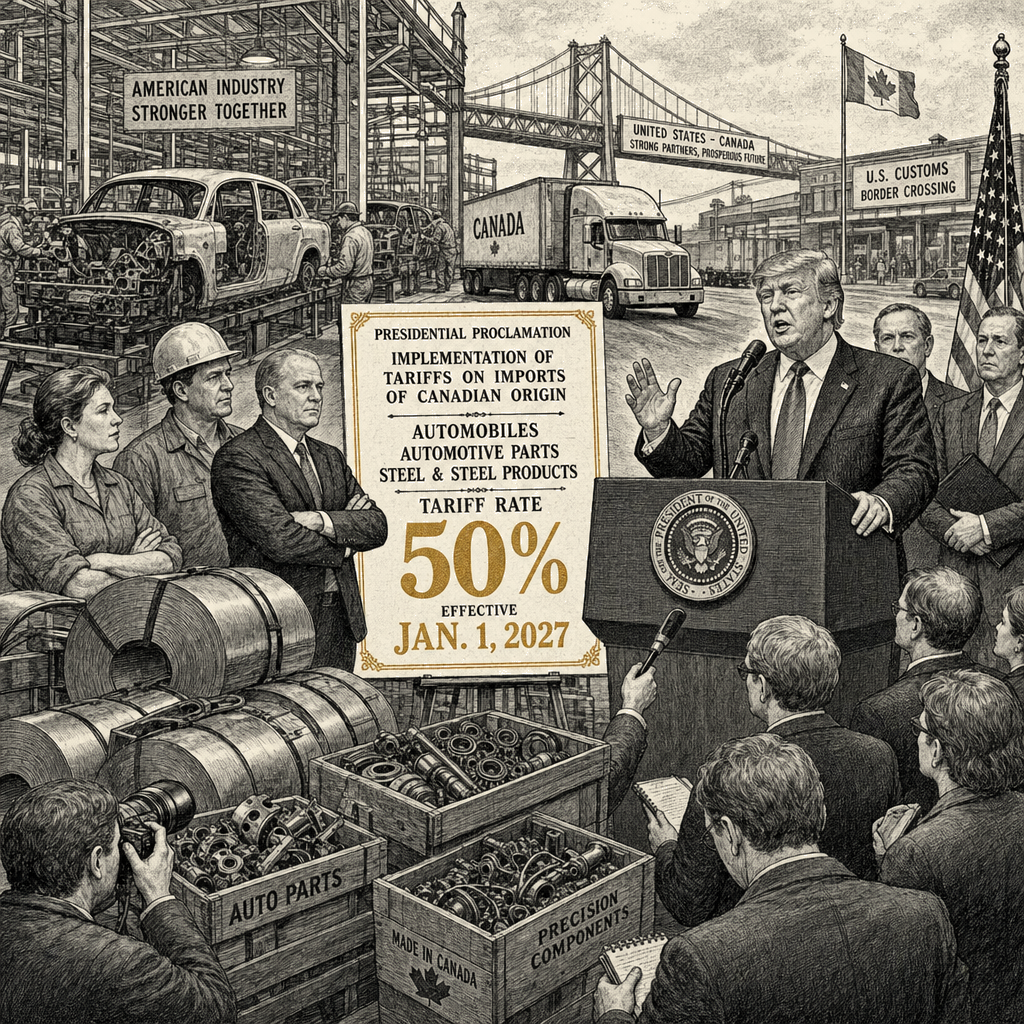
Trump posted on Truth Social that “On January First, 2027, Tariffs on all Cars, Trucks, both large and small, Automotive Parts, and Steel, will be increased to 50%.” Current U.S. duties on Canadian automobiles stand at 25%, with discounts tied to automakers’ use of U.S.-made parts, and tariffs on Canadian steel are already at 50%.
Carney said over the weekend that Canada would impose counter-tariffs on U.S. goods in response to the Saturday duties. Those Saturday tariffs cover goods ranging from wine and cement to hockey sticks and apply to about 5% of Canadian exports to the U.S. Carney said Saturday that he would prefer no economic deal with the U.S. to one he considered bad for Canadian businesses or that he said gave away Canadian sovereignty. Carney’s office did not immediately respond to a request for comment on Trump’s Monday announcement.
U.S. officials said they had no plans to meet with Canadian counterparts after last-minute talks ended without an agreement and would proceed with implementing the previously announced duties. The four-month gap between Trump’s announcement and the proposed Jan. 1, 2027 effective date leaves a window for negotiations before the higher rates would take effect.
The new duties come as the U.S.-Mexico-Canada Agreement is under annual renegotiation after the U.S. declined to renew it as-is this summer. The additional tariffs add uncertainty to those talks.
If the higher auto tariffs are implemented, a 50% duty could push automakers to close Canadian factories, particularly if the U.S. eliminates rebate programs tied to automakers’ use of U.S.-made parts. Automotive parts regularly cross the U.S., Mexican and Canadian borders multiple times before being installed in a finished vehicle. Commerce Secretary Howard Lutnick, whose agency administers the tariffs, has said he wants to bring many of those supply chains to the U.S.