Motion cites Privacy Act, Social Security Act, and Administrative Procedures Act
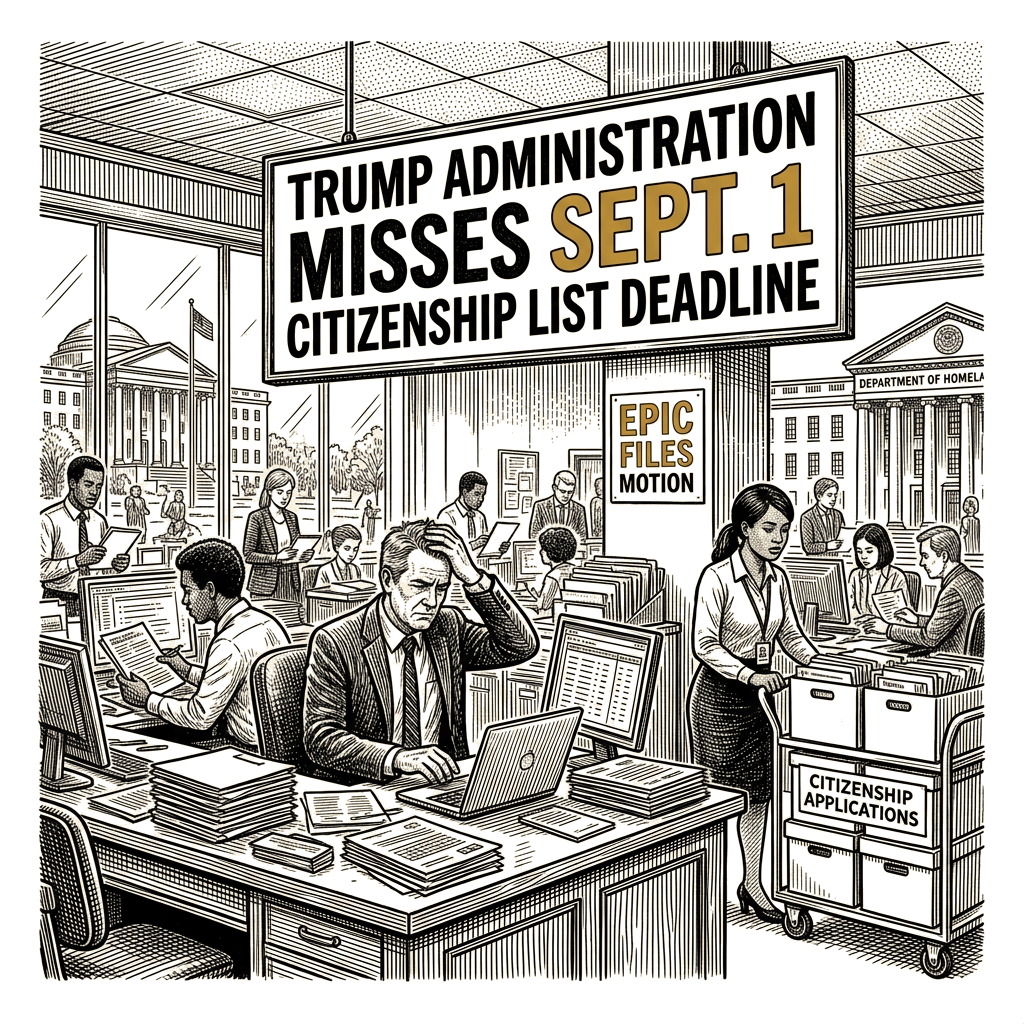
The Trump administration will not meet its Sept. 4 deadline — 60 days before Election Day — for publishing state citizenship lists ahead of the November midterm election, according to recent court filings in two separate lawsuits. Department of Justice attorneys told opposing counsel that instead of meeting the deadline, the administration would give 48-hours notice to plaintiffs’ counsel before the state citizenship portal launched.
The Electronic Privacy Information Center, along with individual voters, filed a motion Thursday in U.S. District Court in Maryland asking a federal judge to block the administration from creating the citizenship lists and publishing them on a portal. Protect Democracy and Citizens for Responsibility and Ethics in Washington jointly brought the motion, which specifically targets a June 8 implementation memo authored by U.S. Citizenship and Immigration Services director Joseph Edlow.
The plan stems from an executive order President Trump signed on March 31. That order instructs USCIS and the Social Security Administration to produce “State Citizenship Lists” of individuals the agencies believe are citizens in each state and to send those lists to state officials “no fewer than 60 days before each regularly scheduled Federal election.” A subsequent section directs the U.S. attorney general to prioritize investigating and prosecuting state and local officials who issue federal ballots to anyone not eligible to vote.
The United States has never previously attempted a comprehensive list of American citizens, and the Constitution assigns voter-list maintenance to states rather than the federal government. A lower court had blocked key parts of the executive order in 23 states and Washington, D.C., but the Supreme Court stayed that injunction late last month, allowing the plan to advance.
The EPIC motion argues the data-sharing and dissemination plan violates multiple federal laws: the Privacy Act, the Social Security Act, and the Administrative Procedures Act. The Privacy Act requires federal agencies to give the public 30 days notice and an opportunity to comment before collecting and disseminating Americans’ personal data for a new purpose.
The lawsuit also contends that federal agencies lack accurate, up-to-date information on American citizens — particularly those who move frequently, have changed their names, or are foreign-born. Social Security citizenship records often are not updated when people naturalize, according to the lawsuit, and the SAVE data system operated by USCIS frequently omits records for people who became citizens as minors when their parents naturalized.
“States here have a strong incentive to actually use these lists to try to avoid federal investigation,” said Jules Torti, counsel at the nonprofit Protect Democracy, in an interview with NPR. “But we know that these lists are going to be based on really inaccurate data. So the risk of disenfranchisement here is really, really palpable.”
Torti described the missed deadline as “deeply concerning” because it means the lists will be completed even closer to Election Day. “It means additional chaos, additional confusion for the state election officials and just for voters,” Torti said. “And I think that’s the point. The point here is to create chaos in advance of the election.”
Neither the Department of Justice nor the Department of Homeland Security, which is tasked with compiling the citizenship lists, responded to NPR’s request for comment.
The June 8 implementation memo stated the portal for state election officials would be available around June 30 and a second portal where citizens could check their information would be available later; the June 30 deadline passed without further updates. The federal government has secured a domain for the state citizenship lists portal, which is not currently online but was briefly live in recent days with a landing page that said “Coming Soon,” according to court filings.
In a separate lawsuit filed in April, lawyers representing Democratic party groups that had challenged the March 31 executive order accused the administration in a recent filing of failing to notify the court or the parties about its plans to move forward with the state citizenship portal. They asked the judge to require the federal government to give immediate updates about its plans to implement the executive order.
The citizenship-list litigation comes as the Department of Homeland Security ramps up its efforts to analyze state voter rolls and identify potential noncitizens registered to vote. Previous audits have found instances of noncitizens casting ballots to be incredibly rare. Last week, U.S. Immigration and Customs Enforcement published a request for information on a federal procurement site seeking vendors who can compile public voter rolls and voter history files from all 50 states, Washington, D.C., and U.S. territories, “to support Homeland Security Investigations (HSI) fraud detection and data segmentation activities.”