Federal appeals court rejected policy last week, upholding lower court ruling
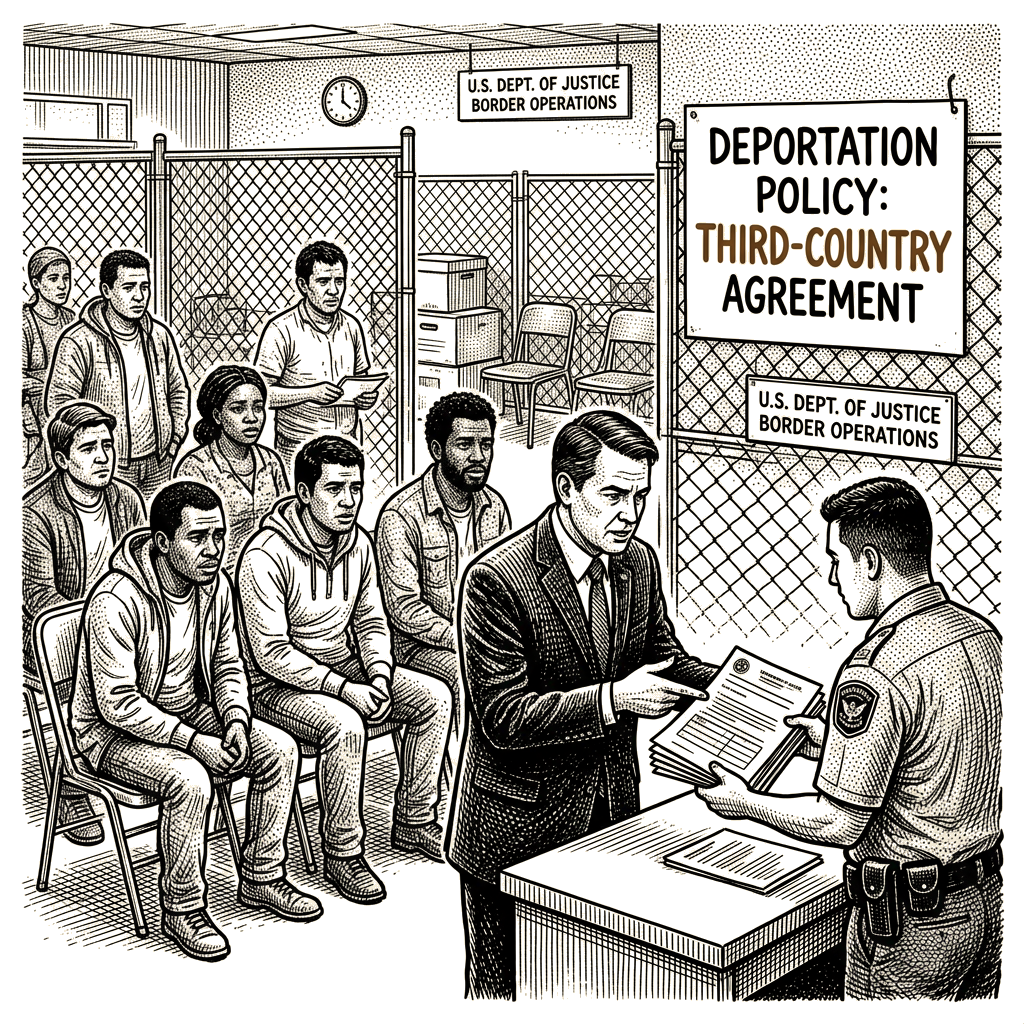
U.S. Attorney General Todd Blanche said Thursday that the Department of Justice will ask the Supreme Court to allow the Trump administration to continue deporting immigrants to countries other than their own. Blanche wrote on X that the government had been shut out of third-country removals without an opportunity to respond.
“Without even allowing the government a chance to respond, and in the dark of night, a federal appeals court blocked us from conducting all third-country removals of illegal aliens, an entirely legal and invaluable tool to stem the tide of illegal immigration,” Blanche wrote.
Blanche added that the department would “immediately seek relief from the Supreme Court, which previously granted a stay in this very same case.”
The appeal follows a ruling last week by a three-judge panel on the U.S. Court of Appeals for the 1st Circuit in Boston. The panel rejected the third-country deportation policy and upheld a lower-court decision that declared the Department of Homeland Security’s policy unlawful. The ruling came in a class-action lawsuit filed by migrants subject to deportation orders and has become a key test of what due-process protections the government must provide before removing people to countries with which they have no connection.
The administration has already used bilateral agreements with foreign governments to deport more than 25,000 migrants to at least 29 third countries, according to Third Country Deportation Watch, a project run by Refugees International and Human Rights First. In many cases the receiving country is Mexico. Other immigrants have been sent to nations in Latin America, Central Asia, the Caribbean and Africa.
In some cases, U.S. officials have deported migrants to countries considered dangerous and high-risk, including the Central African Republic, which is grappling with unrest and terrorism driven by political and militia instability, and South Sudan, where a humanitarian crisis has unfolded amid political and economic collapse.
James Percival, the general counsel for DHS, defended the administration’s third-country deportations on Thursday and rejected allegations that the policy is cruel.
“What is cruel is allowing criminal illegals who can’t be sent home to stay in our communities and victimize anew,” Percival wrote in an X post on Thursday.
Human rights advocates have characterized the policy differently. Critics have described the third-country removal program as “machiavellian” and said immigrants “find themselves in an extremely precarious and stressful situation” when sent to a country other than their own.