Akane rejects US sanctions, says court will continue its mandate
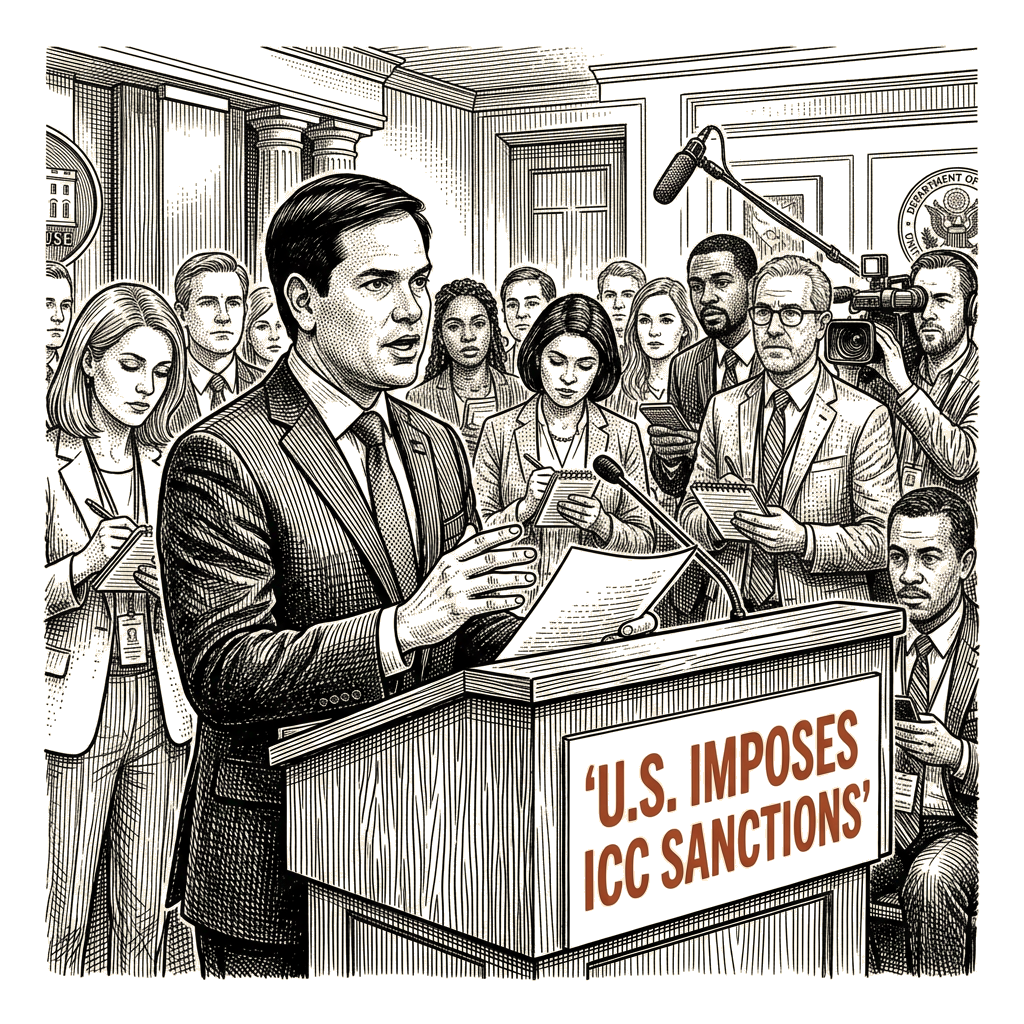
Secretary of State Marco Rubio announced Friday that the United States is imposing sanctions on the International Criminal Court, according to United Press International. The sanctions ban Americans and U.S. businesses from cooperating with the court, could allow the U.S. government to seize ICC assets and name 17 judges and prosecutors inside the organization.
In a video message posted to X, Rubio called the court’s leadership “globalist experts an ocean away” and accused the ICC of wanting “more power,” claiming it was seeking that power “at the expense of our sovereignty as a nation.” He said: “President [Donald] Trump will never allow the International Criminal Court to prosecute Americans.” And: “That is why, today, the United States is sanctioning the International Criminal Court. We will ban transactions with this rogue court, cutting off their resources and crippling its ability to operate.”
In a written post on X, Rubio wrote: “Today, the Trump Administration is sanctioning the ICC. This action should encourage our Allies within the Court to work for solutions to end this threat to U.S. sovereignty forever.”
The ICC rejected the sanctions. In a statement, ICC President Tomoko Akane said: “This Court will continue to fully discharge its mandate, with independence and impartiality, acting only on the basis of the law and the evidence, for the sake of the countless victims of grave crimes.” The court accused the United States of attempting to disrupt its operations.
The sanctions announcement came the same day former ICC judge Navi Pillay received the Nobel Peace Prize, UPI reported.
The ICC was established under the Rome Statute, which a coalition of 120 nations signed in 1998 and which entered into operation in 2002. The United States has never been a full member of the court: former President Bill Clinton signed the Rome Statute, but it was never ratified by the U.S. Senate. Former President George W. Bush withdrew the country’s intention to ratify it in 2002.