European allies pledge to defend court after US move
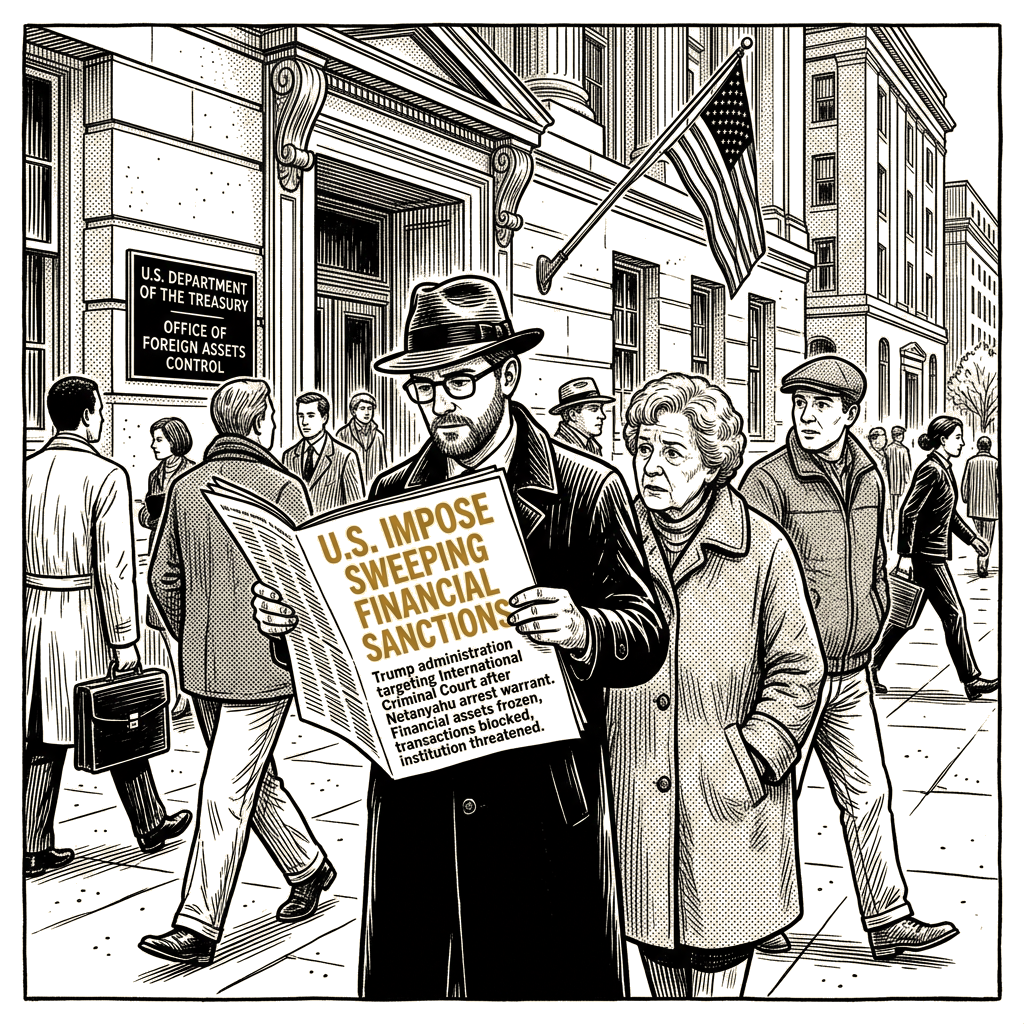
The Trump administration announced sweeping financial sanctions on the International Criminal Court on Friday, threatening to dismantle the institution after it issued an arrest warrant for Israeli Prime Minister Benjamin Netanyahu. Secretary of State Marco Rubio said in a video message that “either the ICC will end its threats, or we will end the ICC,” arguing that the court threatens American sovereignty by threatening to prosecute U.S. citizens despite Washington never having joined it.
The sanctions include a six-month grace period that officials said could give time to negotiate an agreement addressing U.S. concerns. The measures could deal a potentially crippling blow to the ICC by cutting it off from the U.S. financial system and prohibiting it from conducting transactions in dollars. Western banks often refuse to deal with sanctioned entities because of the difficulty of separating dollar trades from transactions in other major currencies.
The ICC responded that it would not be deterred. “The court will continue to fully discharge its mandate, with independence and impartiality, acting only on the basis of law and the evidence, for the sake of the countless victims of grave crimes,” ICC President Tomoko Akane said.
The court has been bracing for the move for months. It has paid employees through the end of the year and switched away from Microsoft to a German open-source software system. The Netherlands, which hosts the ICC in The Hague, and other member states have vowed to defend the institution.
The European Union called the U.S. decision “deeply regrettable” and pledged to work with the ICC to ensure it continues to operate effectively. Some officials have suggested the EU could use a so-called blocking statute to prevent EU-based banks or businesses from complying with the sanctions. The EU said it stands ready “to take any necessary measures” to allow the court to keep working.
The announcement came on the same day that Navi Pillay, a South African former ICC judge, was awarded the Nobel Peace Prize. The committee cited her “efforts to promote peace and international law.”
U.S. officials are seeking guarantees that the court will not target U.S. citizens. They have also criticized the court’s stance that it can prosecute nationals of nonmember states — a group that includes the U.S., Israel, and Russia. Reining in that authority would likely require member states to amend the Rome Statute, the ICC’s founding treaty. The statute allows the court to prosecute nonmember nationals if they commit war crimes or crimes against humanity on the territory of member states. The court’s backers consider that provision a fundamental principle of international criminal law.
The ICC has used that authority to issue arrest warrants for Netanyahu for alleged war crimes on Palestinian territory, which is considered a member state, and for Russian President Vladimir Putin for alleged crimes in Ukraine. It has also opened investigations into alleged crimes by Central Intelligence Agency officials and the U.S. military in Afghanistan.
Washington informed European capitals of the decision on Thursday. Rubio issued a warning to U.S. allies that belong to the court: “We expect our allies, many of whom are part of the ICC and that rely on American servicemembers for their defense, to rein in this rogue court.”
The U.S. had already sanctioned a number of individual ICC officials, including former Chief Prosecutor Karim Khan, whom the ICC ousted in July over sexual-assault allegations; Akane and several other judges; the court’s two deputy prosecutors; and the lead prosecutor in the case against Netanyahu and other Israeli officials. Khan has denied any sexual misconduct. The sanctions announced Friday are far more punitive, applying to the institution as a whole.
The ICC, based in The Hague, is heir to the Nuremberg tribunals that prosecuted Nazi war criminals after World War II and to special courts that held trials after the Yugoslav wars and the Rwandan genocide. European governments and human-rights groups view it as an important institution for enforcing international law, even though the world’s most powerful and populous nations — the U.S., China, India, and Russia — are not members.