Israel controls roughly 70% of Gaza a year into ceasefire, over 1,400 killed
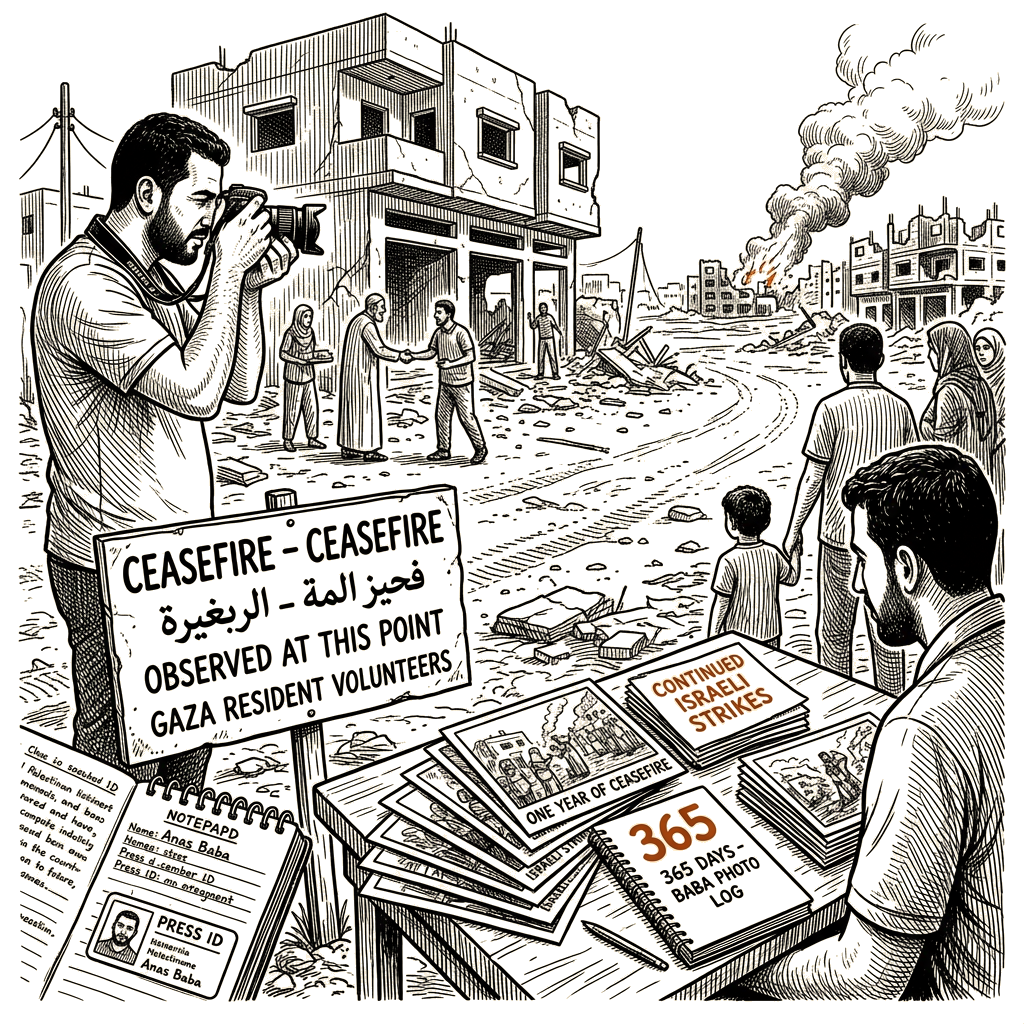
Anas Baba, NPR’s reporter in Gaza, has spent the past 12 months photographing the ceasefire between Israel and Hamas, producing a visual record that captures both brief moments of respite and continuing military operations and civilian deaths.
The ceasefire took effect on Oct. 10, 2025, after President Donald Trump pushed Israel to agree and Hamas to release remaining Israeli hostages, NPR reported. President Trump had promised an end to Israel’s war in Gaza as part of the arrangement. One year later, the deal’s commitments to deploy an international peacekeeping force and begin reconstruction remain unmet. No peacekeeping troops have arrived in the territory, and no reconstruction has begun.
Instead, Israel’s military has expanded its control over the territory to roughly 70%, squeezing more than 2 million Palestinians toward the sea’s edge, according to NPR’s reporting.
Israeli forces have continued targeting Hamas throughout the year of ceasefire. Those attacks killed more than 1,400 Palestinians in the past year — nearly 500 of them women and children — according to Gaza’s Health Ministry. The bombings have not stopped, though they have slowed during the ceasefire period.
The reduction in strikes has allowed humanitarian conditions to partially recover. U.N.-backed experts declared famine in northern Gaza last year; since then, more food has entered the territory, reversing starvation across Gaza, according to NPR.
Baba’s photographs, presented as a selection from his 12 months of on-the-ground reporting, capture both moments of respite and continued grief under the ceasefire — the dual reality that has defined the year since the deal took effect.