Zelensky says Russian drone hit Kyiv power plant after Trump’s announcement
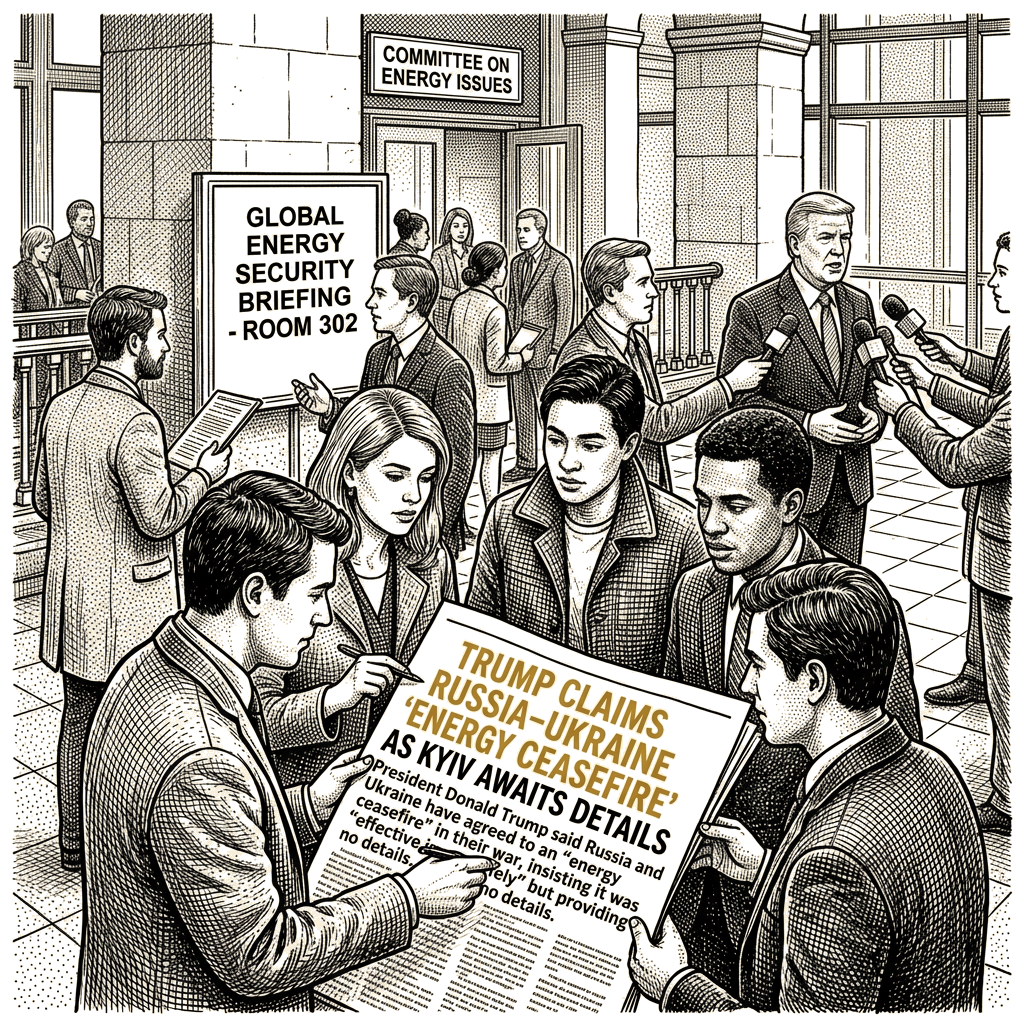
President Donald Trump said Russia and Ukraine have agreed to an “energy ceasefire” in their war, insisting that it was “effective immediately” but providing no details. Kyiv said it would support such a move, while Moscow made no comment.
Zelensky initially told the news site Axios that the announcement was “news” to him before saying Kyiv would support it if Moscow did. He later wrote on social media that his officials “look forward to clear details of America’s dialogue with Russia.”
“Ukraine is ready not to strike at Russian energy and we count on Russia’s similar readiness and on the agreement of the president of the United States of America on this,” Zelensky said.
The BBC has asked the White House for further details. French President Emmanuel Macron and European Commission President Ursula von der Leyen have both expressed support for an energy truce.
After speaking to von der Leyen, Zelensky said Russia had hit a power plant in Kyiv with a drone, causing power outages, followed by strikes on energy facilities in the north-eastern Kharkiv region. “All of this happened after the president of the United States made his statement about an energy ceasefire,” he said. Regional officials said an earlier strike in Kharkiv killed three people in a grocery store.
For months, Ukraine and Russia have exchanged strikes on energy infrastructure. A BBC image caption reported huge plumes of smoke rising in the skies from the site of the Slavneft-Yanos oil refinery in Russia on 6 August. Moscow said the installations it hits were legitimate targets because they supported Ukraine’s military operation, while Zelensky has described Ukrainian attacks deep inside Russian territory as part of an effort to “reduce Russia’s ability to finance the war.” The attacks have disrupted energy supplies on both sides.
Trump has been urging Ukraine to stop strikes on Russian oil infrastructure — which Kyiv says are vital to curtailing revenue for Moscow’s war machine — so Russia can fulfill a recently struck deal to release diesel to the US and the global market. The deal, announced earlier this week, temporarily undoes sanctions on Russian imports and is the latest effort by Trump to lower fuel prices in the US ahead of the midterm elections, having spent months grappling with the political consequences of the Iran war.
The US-Israeli war with Iran has led to the effective closure of the Strait of Hormuz — a vital waterway through which around a fifth of the world’s oil products usually flow — and pushed up global fuel prices, particularly those for diesel. The conflict has soured Trump’s standing with the American public, who have been stung by higher pump prices and knock-on effects that led to across-the-board inflation, the BBC reported.
The diesel deal was condemned by European allies of both the US and Ukraine. Zelensky warned it would provide Moscow with money to continue its war against his country, calling it a gift to Russian President Vladimir Putin.
Trump, in turn, accused Zelensky of wanting to “make problems for the world” by continuing to authorize attacks on Russian refineries, while urging Ukraine to hold elections for a new leader. Zelensky responded by pledging to hold elections — suspended by the Ukrainian constitution during wartime — if Russia agreed to a 60-day total ceasefire.
The Ukrainian president previously resisted calls from the US for fresh elections, pointing to complications with holding a vote in parts of the country that are active war zones or under Russian occupation. Trump has repeatedly accused the Ukrainian leader of using the war to stay in power.