Lula blames court scandal for first-round loss; Flávio leads runoff
A scandal rooted in a police investigation into the financial ties between Brazilian Supreme Court Justice Alexandre de Moraes and a banker accused of orchestrating Brazil’s largest banking fraud has come to dominate the final stretch of the country’s presidential campaign, The Guardian reported Tuesday from Rio de Janeiro.
The crisis has roots that stretch to September. On Brazil’s Independence Day, 7 September, Senator Flávio Bolsonaro addressed thousands of far-right supporters in São Paulo, focusing less on his presidential election opponent than on a figure not running at all. “Whoever votes for Lula is voting for Alexandre de Moraes,” Bolsonaro shouted, referring to the shaven-headed supreme court justice once described as “Voldemort” by Elon Musk. Although Lula did not appoint Moraes to the court, Bolsonaro’s supporters have linked the two men ever since the judge oversaw the case in which the senator’s father, former president Jair Bolsonaro, was sentenced to 27 years in prison for attempting a coup.
Now, just days before the 25 October runoff, Moraes is once again at the centre of a presidential scandal — one Lula believes may have helped Flávio Bolsonaro overtake him to emerge as the frontrunner. The justice once hailed as democracy’s “saviour” for containing Jair Bolsonaro may now have helped pave the way for the family’s return to power, The Guardian reported.
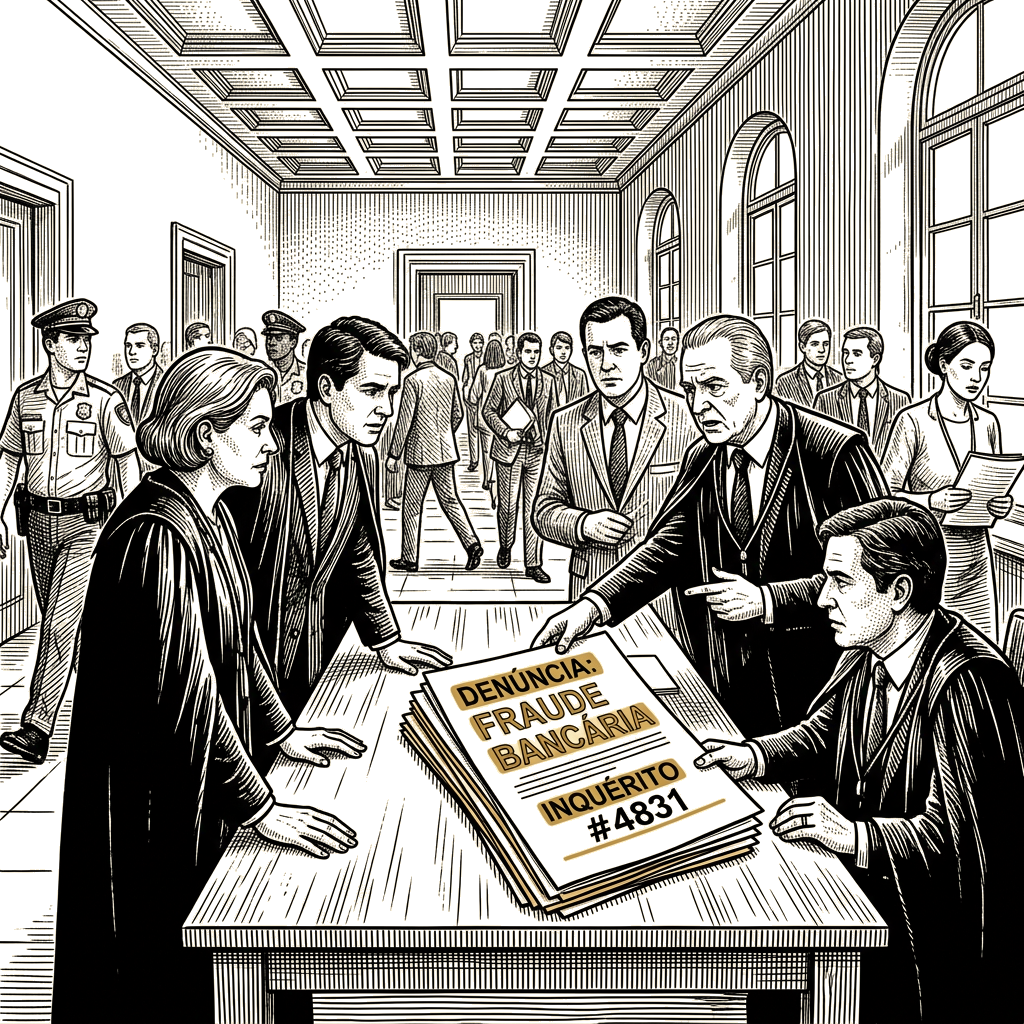
The scandal itself began with a police investigation that found a law firm run by Moraes’s wife, Viviane Barci de Moraes, held a contract worth about £20m with Daniel Vorcaro, the banker accused of leading a scheme through Banco Master involving aggressive fundraising, unrealistic returns and falsified balance sheets. The scheme left an estimated £9bn hole, much of it involving public money and pensioners’ savings. Text messages also emerged suggesting a close relationship between Moraes and Vorcaro, though the judge denies the messages are authentic.
Vorcaro has been in custody since November, when he was arrested preparing to board a private jet from São Paulo to Malta. Text messages extracted from his phone show that, two days before his arrest, he asked someone whom police later identified as Moraes: “Do you think … I need to get out [of the country]?”
Moraes denied being the recipient, accusing Justice André Mendonça — whom former president Jair Bolsonaro had appointed — of using the police against him for electoral reasons, allegedly to benefit Flávio Bolsonaro’s campaign. Moraes also denied the messages were authentic, denied any conflict of interest, and said he had never ruled on any case involving Vorcaro.
Investigations subsequently revealed that at least four other justices had links to Vorcaro, meaning half of the court’s 10 current justices have been drawn into the scandal. Mendonça is among them; an institute he created is reported to have taken out an £800,000 loan from one of the banker’s associates, which Mendonça said had already been repaid. In the other justices’ cases, investigators uncovered links ranging from a £64m contract to an alleged stake in a fund that received £5.2m from Vorcaro. All the implicated justices deny wrongdoing.
Conrado Hübner Mendes, a professor of constitutional law at the University of São Paulo and a leading scholar of the supreme court, said Moraes put himself in that position by “embracing the role of heroic protagonist”. The judge had blocked some of Jair Bolsonaro’s moves during his government and drew the ire of far-right figures such as Elon Musk and Donald Trump; the United States went as far as to impose sanctions on him, in a move widely seen as an attempt to interfere in Jair Bolsonaro’s trial. Beyond the anger of Bolsonaro’s supporters, legal scholars and some on the Brazilian left, while acknowledging Moraes’s decisive role in the coup trial, also criticised several of his other rulings as authoritarian. “He took on a huge responsibility, and now he has thrown that away in the most mediocre way possible, with this alleged corruption case,” Mendes said.
The crisis peaked last month with a ferocious exchange of insults between Moraes and another justice during a televised court session. A series of rulings followed in which the pair — as well as other judges aligned with each side — overruled one another, dominating public debate for weeks.
The political fallout was swift. Lula, the day after the first round of voting, said he had lost in part because he had to “carry on his back … the promiscuity” of the supreme court — a comment many political observers read as an attempt to distance himself from the crisis. His campaign coordinator, Edinho Silva, said that, “in the eyes of society … [Lula] paid the price for that institutional damage.”
Camila Rocha, a political scientist who studies Brazil’s new right and has spent recent months interviewing undecided voters, told The Guardian that voters came to view Moraes as the “big corrupt figure and the main villain” — precisely the judge who jailed Jair Bolsonaro. “These are people who thought that, just as they see congress, the country’s highest court had become corrupt, too. That deepened apathy among some who might otherwise have voted for Lula and fuelled the anti-system sentiment that feeds the far right,” Rocha said. Although analysts point to a range of reasons for the far right’s lead, from household debt to a simple preference for Flávio Bolsonaro, many agree the supreme court crisis played a decisive role, particularly among indecisive voters who, with the electorate generally divided between two similarly sized left and right blocs, are the ones who ultimately decide the election.
Senator Flávio Bolsonaro, Jair Bolsonaro’s eldest son, is the frontrunner against Lula in the 25 October runoff. Flávio himself is being investigated over what happened to the £20m he was caught on tape asking Vorcaro to provide for a biopic about his father. One suspicion is that the money helped cover living and travel expenses for his brother, Eduardo Bolsonaro, in self-imposed exile in the United States, where he has lobbied the Trump administration against Lula. Flávio said all the money went toward sponsoring the film, which still has no release date.
On Monday, Moraes authorized Flávio to resume visiting his father after a 90-day ban imposed in July, when the senator read out a letter from his father about the elections that Moraes considered a breach of Jair Bolsonaro’s ban on using social media.
No reports had linked Lula to the scandal until Friday, when Veja magazine reported that Vorcaro allegedly said he had paid £4.5m to finance a 2024 Oliver Stone documentary about the president. Brazil’s federal police and the public prosecutor’s office said the banker had neither made the allegation nor provided evidence to support it in his testimony. Lula denied receiving money from Vorcaro.
Beyond Flávio Bolsonaro’s lead, the far right’s sweeping victory ensured a more conservative congress in 2027, including the senate majority needed to impeach supreme court justices — a demand among Jair Bolsonaro’s supporters since the former president was convicted. “With the scandal, the justices handed Bolsonarismo something it still didn’t have: an impeachable offence that could justify their removal,” Mendes said. “A court that ignores conflicts of interest and immerses itself in relationships with political and economic power is a court that has already become corrupted.” Even if no justice is impeached, a Flávio victory could leave the court with at least six of its eleven members appointed by either him or his father, given the four seats that would open during his term. “We can expect a court completely servile to the government,” Mendes said. “The court ended up doing to itself the work an autocratic project needs — and brought itself down.”
Environmentalist Marina Silva told The Guardian that Flávio Bolsonaro would try to finish his father’s “perverse project” to destroy the Amazon, foreshadowing the environmental stakes of a Flávio victory.