UK Steel proposes £51 million annual electricity price cap for industry
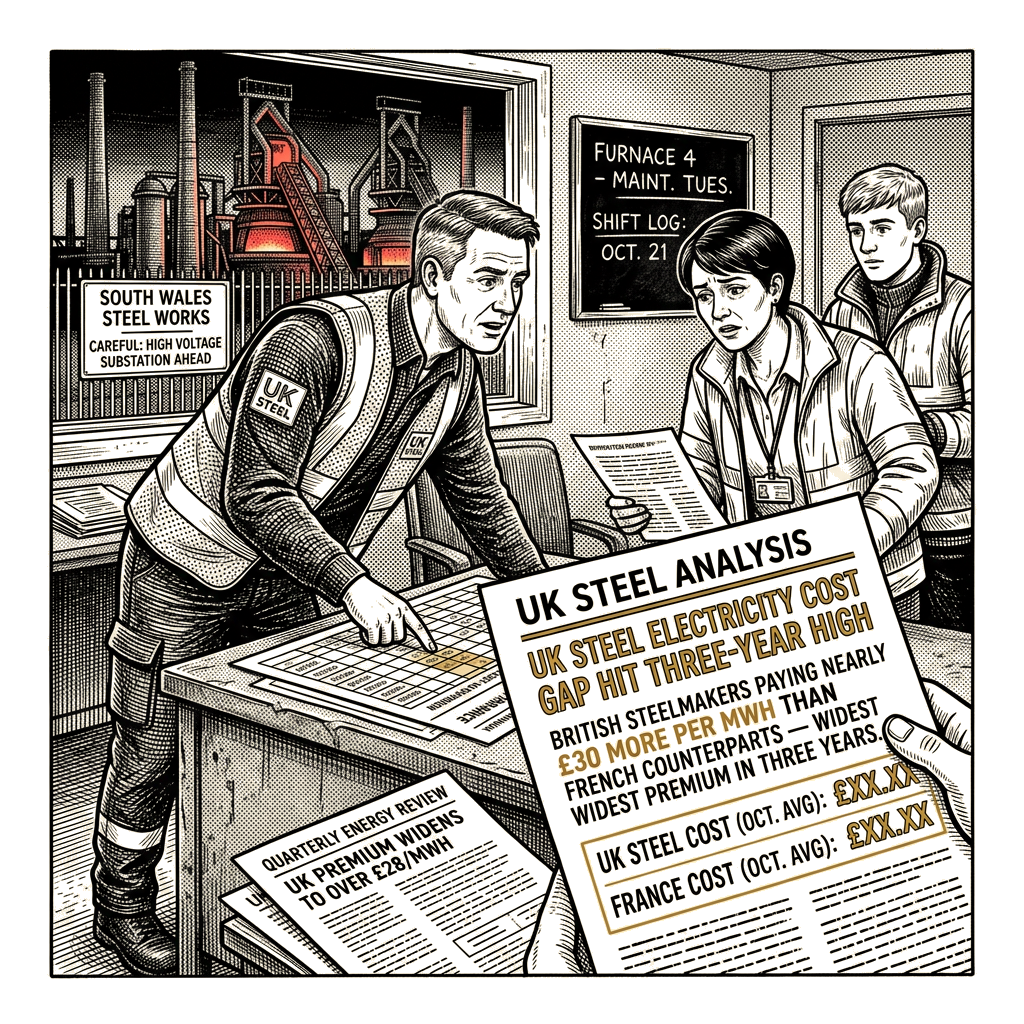
British steelmakers are paying nearly £30 more per megawatt hour (MWh) for electricity than their French counterparts — the widest such premium in three years, according to analysis by the trade lobby UK Steel.
The £30 per MWh premium is above the £18 premium measured last year but well below the £153 premium British industry paid in 2022, when Russia’s invasion of Ukraine triggered a global gas crisis, the analysis said. The gap with German producers has narrowed slightly this year, to about £12 per MWh.
UK Steel attributed the widening gap to global gas prices climbing since Iran closed the Strait of Hormuz in response to Donald Trump’s bombing campaign. The Guardian, publishing the analysis, tied the gas-price climb more broadly to the US-Israeli war on Iran, which it said had caused a surge in global gas prices.
Britain’s wholesale electricity market sets the price of every source of generation by reference to gas-fired power — including wind and solar, which cost far less to produce — so the gas surge flows directly into industrial electricity bills. Analysts blame the UK’s high electricity prices on its reliance on gas for power generation, a reliance that is especially heavy in cleaner steelmaking with electric arc furnaces. French electricity is largely set by its nuclear reactors; in Germany, heavily polluting coal still plays a large role in generation.
The comparison with France carries particular weight because the European Union is the principal export market for British steel. About 75 percent of UK steel exports, worth roughly £3 billion, go to EU member states, the analysis said.
Under Prime Minister Keir Starmer, most of the costs added by government policy to heavy industrial businesses’ electricity bills were removed last year, the analysis said. The remaining options for closing the gap further, the lobby argued, are expanding cheap renewables — a constraint in the short term — or directly subsidising industrial prices.
For Andy Burnham, energy prices represent perhaps the biggest obstacle to his goal of “reindustrialising” the UK, The Guardian reported.
UK Steel’s director general, Peter Brennan, called for direct subsidies as the only near-term option to help steelmakers. The lobby has proposed a price cap it estimates would cost about £51 million a year, with the government paying the difference when electricity prices rise above the threshold and the industry paying the government when they fall below it.
“British steelmakers are being asked to compete with one hand tied behind their backs,” Brennan said. “Despite welcome government action, our electricity prices remain vastly higher than those of our European and global competitors, and the gap with France is getting worse. The government has rightly made reindustrialisation a national priority. But we cannot rebuild British manufacturing while forcing our steelmakers to pay substantially more for electricity than their competitors.”
In a separate announcement Monday, the UK government set out measures to support more than 100,000 workforce opportunities across eight growth sectors of its industrial strategy. The “jobs plans” focus on professional and business services, the defence sector and construction. Similar plans for financial services, clean energy and life sciences have already been announced; plans for advanced manufacturing and the creative industries are expected to follow shortly.
A government spokesperson said: “We are tackling industry’s number one concern head-on by reducing electricity bills by up to 25% for over 10,000 manufacturing businesses, and cutting costs for hundreds of our most electricity-intensive businesses by around £1bn per year — delivering on the prime minister’s pledge to reindustrialise Britain.”