Middle US households lost $1,700 in 2026, ITEP estimates
President Donald Trump has repeatedly claimed ahead of the midterm congressional elections that his administration has boosted incomes, reduced inflation and created jobs, asserting that “we have the hottest country anywhere in the world.” BBC Verify examined whether the evidence supports the president’s claims.
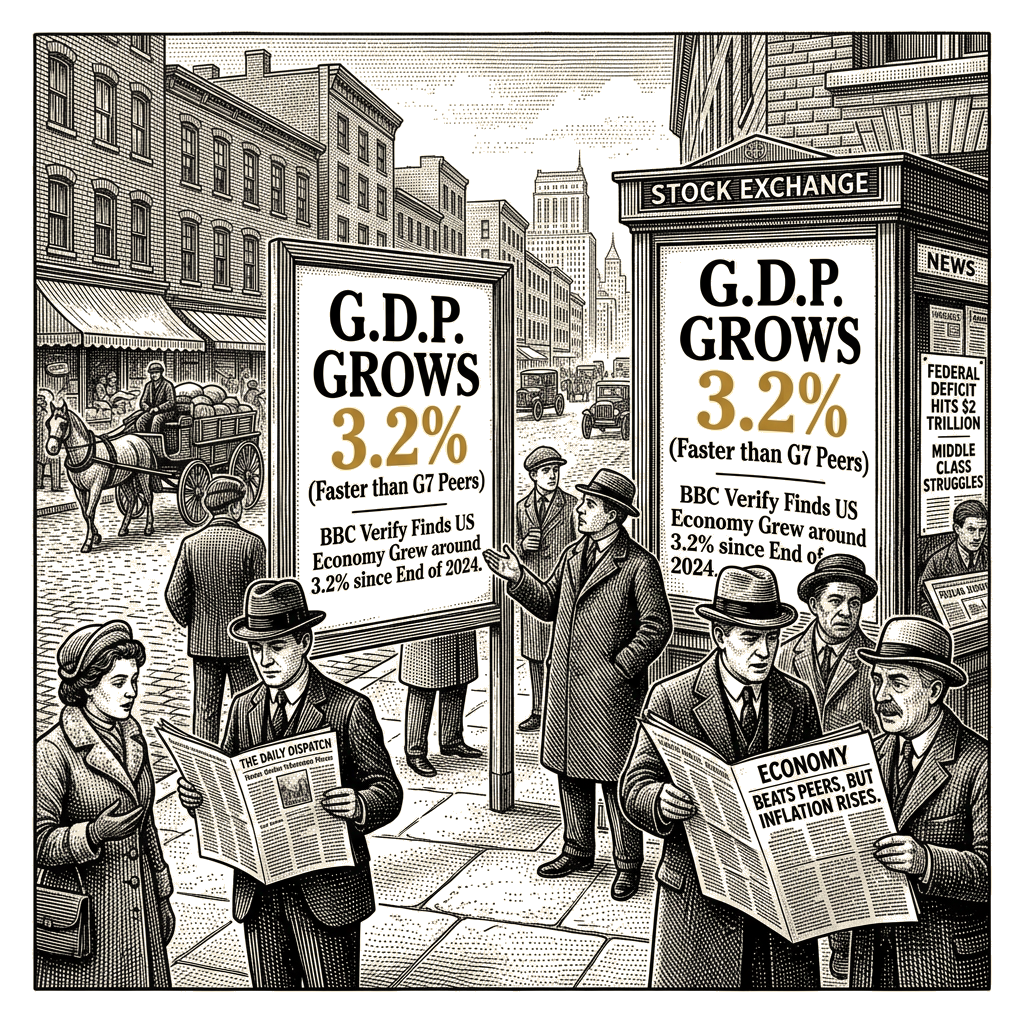
The overall US economy is growing at a respectable clip by the country’s recent historic standards, according to BBC Verify. The latest data shows US GDP currently expanding at an annualized rate of 2.2%, having increased by around 3.2% overall since the end of 2024, just before Trump took office for his second term. That is more growth than any other member of the G7 group of leading economies recorded over that period.
The US growth rate has been faster than the International Monetary Fund forecast in the immediate wake of Trump’s announcement of a swathe of new tariffs on goods coming into the US on 2 April 2025. The IMF downgraded its forecasts at the time, citing the negative impact of the import duties on investment and consumer spending, though Trump later eased the tariffs considerably in the months that followed, reducing the impact that had initially been expected on the economy.
The US economy has also been heavily supported in recent years by American technology companies making massive investments in AI, including by constructing data centres around the country. Spending on building data centres — excluding the IT hardware to go in them — by US businesses in August 2026 was $5 billion, almost double the monthly rate when Trump returned to office. BBC Verify noted that the AI investment boom is helping the economy but that it could falter if that spending were to dry up.
The political backdrop to today’s economic numbers is the inflation spike that followed the pandemic, which many American voters blamed on President Joe Biden in the 2024 presidential election. US inflation now stands at 3.7% — well down on the recent peak of 9% under Biden in 2022 but higher than the 3% rate Trump inherited in January 2025. Economists estimate US inflation would have been lower without the new tariffs Trump has imposed since returning to office. The Iran war’s impact on global energy prices, with significant disruption to oil and fuel supplies from the Middle East, has also helped push up domestic inflation.
The price of a gallon of diesel in the US — a fuel used not only by drivers but also widely in agriculture and industry — hit a record high of $6.52 in September. The price of some grocery staples like beef and coffee have risen since Trump returned to office, though the price of eggs has fallen. Some US retailers have warned that rising energy prices caused by the Iran war will make producing food more expensive and raise prices at the till.
Average US household incomes are still rising under Trump. The median income — after adjusting for inflation — rose 2.6% in 2025 to $87,460, the highest on record. But the Institute on Taxation and Economic Policy has calculated the combined effects of Trump’s tax cuts, the expiry of extra government subsidies that had made health insurance cheaper for millions of Americans, and higher-than-expected price rises during Trump’s second term, including those linked to tariffs and the Iran war.
ITEP concluded that the middle fifth of households are, on average, around $1,700 worse off in 2026 than they would have been, while the poorest fifth are around $750 worse off. The richest 1%, by contrast, are estimated to be an average of $12,560 better off, primarily because of Trump’s tax cuts. ITEP’s estimates about the impact of tariffs on American households of different income levels are broadly similar to those of the Tax Foundation think tank.
Trump predicted his tariffs would result in America being “flooded with jobs” as manufacturing firms set up new factories on US soil to avoid their products being taxed at the border. Since he returned to the White House, an average of 34,000 jobs have been added to the economy each month. That is significantly down on the 122,000 jobs added each month in the final year of Biden’s presidency.
The number of Americans employed in manufacturing — 12.6 million in September 2026 — is slightly lower than it was when Trump’s second term began. The US unemployment rate remains at 4.2%, broadly where it was when Trump returned to the White House. According to BBC Verify, part of the reason is Trump’s immigration enforcement operations and deportation programme, which has reduced the size of the available US workforce and means a lower number of jobs need to be created each month to stop unemployment rising.
US government borrowing has increased in Trump’s second term, partly driven up by his significant tax cuts. The federal deficit — the gap between revenues from taxes and spending — was $2 trillion in the year to September 2026, equivalent to around 6% of US GDP. The deficit is projected to rise to above 8% of GDP by 2030. That high rate of government borrowing is itself helping to boost US GDP growth.
The IMF has warned that excessive US government borrowing and its rapidly rising national debt are raising the risk of a future financial crisis in America, which would have a deeply damaging impact on most American households. The growing deficit is also one of the reasons the US government gets charged more to borrow money in financial markets.
The 10-year US government bond yield has risen sharply since Trump returned to office in January 2025 and is now above 5%, the highest rate since the global financial crisis in 2007. That increase in the market cost of US government borrowing also puts upward pressure on the interest rates on mortgages available to American households.
The interest rate on a new 30-year US mortgage has risen to 7.4% per year, up from 6.9% when Trump returned to the White House. That has added to problems in the US housing market, making homes less affordable for new buyers, and left many existing owners reluctant to move because doing so would mean giving up their cheaper mortgages, which they took out at lower rates and cannot take with them to a new property.