ProPublica found $470 million stolen electronically from SNAP recipients last year
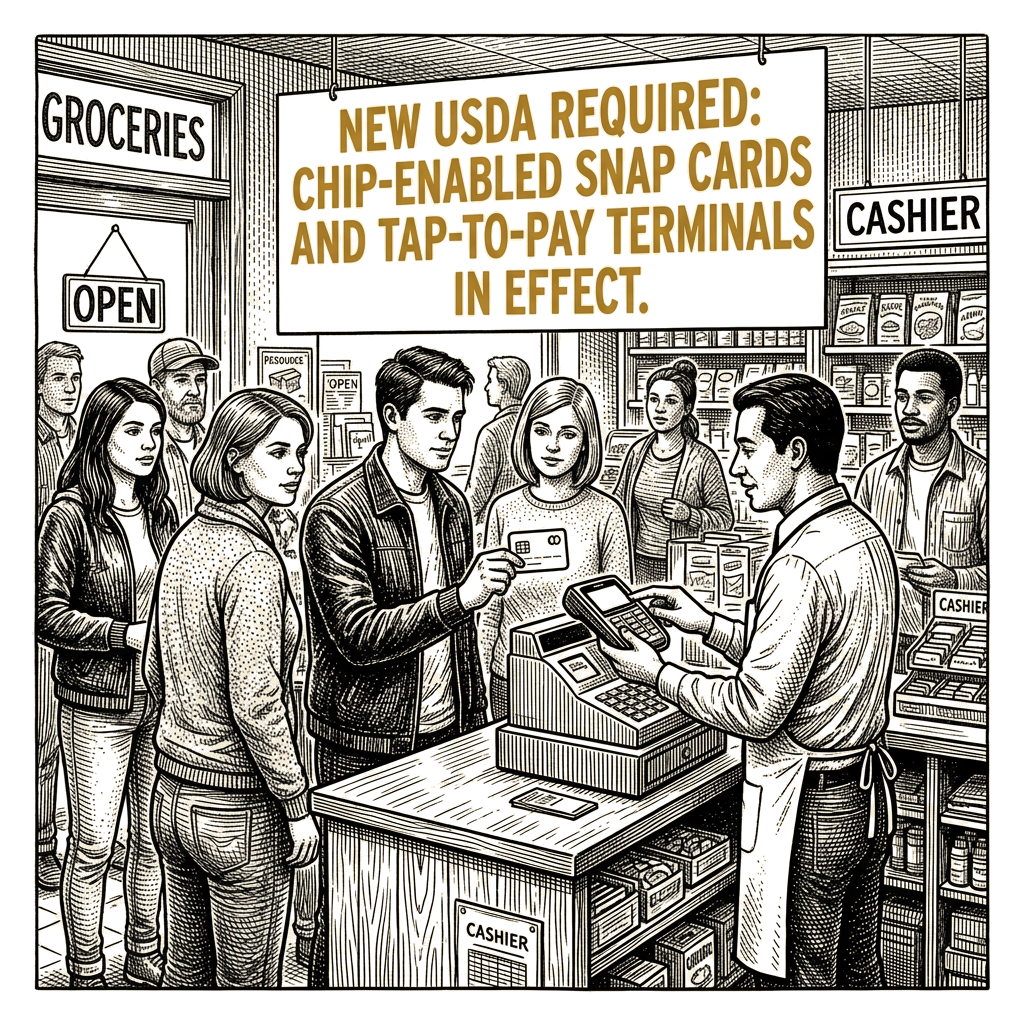
The U.S. Department of Agriculture has proposed requiring all states to issue chip-enabled Electronic Benefit Transfer cards for Supplemental Nutrition Assistance Program recipients and requiring retailers that accept SNAP benefits to have payment terminals that support tap-to-pay. The proposal, released last week, targets card skimming, in which thieves extract personal information from payment terminals and drain money from accounts. The proposal opens a 60-day public comment period before the department publishes a final rule.
The department is considering giving states a two-year deadline from the final rule’s publication date to implement the rule, and it also welcomed input on whether that is enough time.
The department’s Food and Nutrition Administration, which administers SNAP, attributed card skimming as a reason behind the proposal. In its summary of the rule, the agency said, “These proposed changes will protect SNAP benefits from thieves and ensure benefits are accessible by approved households.” The USDA said the proposed rule has been in the works for nearly four years. The department estimates the changes would reduce stolen benefits by at least $1.5 billion over the next decade.
The federal push for stronger card security features comes as state SNAP agencies face new budget pressures triggered by President Trump’s One Big Beautiful Bill Act. According to the Government Accountability Office, chip-enabled cards are about 10 times more expensive to produce than their magnetic-stripe counterparts. Money has been a major barrier for states to make the switch.
Earlier this month, NPR reported that food assistance card modernization had widespread support from state officials and federal watchdogs, as well as Republicans and Democrats in Congress. Cost remained a major barrier for states.
The proposed regulation recognized the financial barrier and said the USDA is interested in hearing from state agencies about the cost burden. The department wrote in the rule, “As stewards of taxpayer dollars, the Department considers these administrative costs as a necessary investment to deter the loss of Federally-funded SNAP benefits.” When asked whether the department would consider providing funding to help states upgrade their card technology, the USDA said, “For years, States had access to administrative funds to stop this egregious abuse of taxpayer resources. Yet few acted.”
Most SNAP cards still rely on a magnetic stripe for swipe payment, a technology that tends to be vulnerable to skimming because it does a poor job of securing data stored on cards. Many banks in the U.S. took action against this issue over a decade ago by upgrading their cards to include microchips and tap-to-pay, which are considered more secure. States have lagged in making the same transition for Electronic Benefit Transfer cards. According to the USDA, fewer than a third of states have made the switch or are in the process of doing so.
In January, the USDA Office of Inspector General projected that SNAP theft could climb to $233 million between 2025 and 2026, largely as a result of skimming. A recent ProPublica investigation found that $470 million was stolen electronically from SNAP recipients last year. ProPublica calculated the total using data from Propel, an app that helps SNAP recipients check their food benefits.
According to Propel, stolen benefits are not replaced in most states, leaving recipients to make difficult choices such as skipping meals or borrowing money to pay for groceries.
SNAP has been one of the focus areas in the Trump administration’s fraud-fighting efforts. Last week, the Justice Department announced that its fraud division helped uncover nearly $42 million in schemes targeting food benefits, ranging from identity theft to retailers illegally exchanging cash for food benefits.
For states, the unresolved questions are the cost of card production and how long the transition would take. The comment period closes before the USDA sets a final rule, and the two-year implementation window remains under consideration.