Judge scheduled to hear California ballot arguments Oct. 27
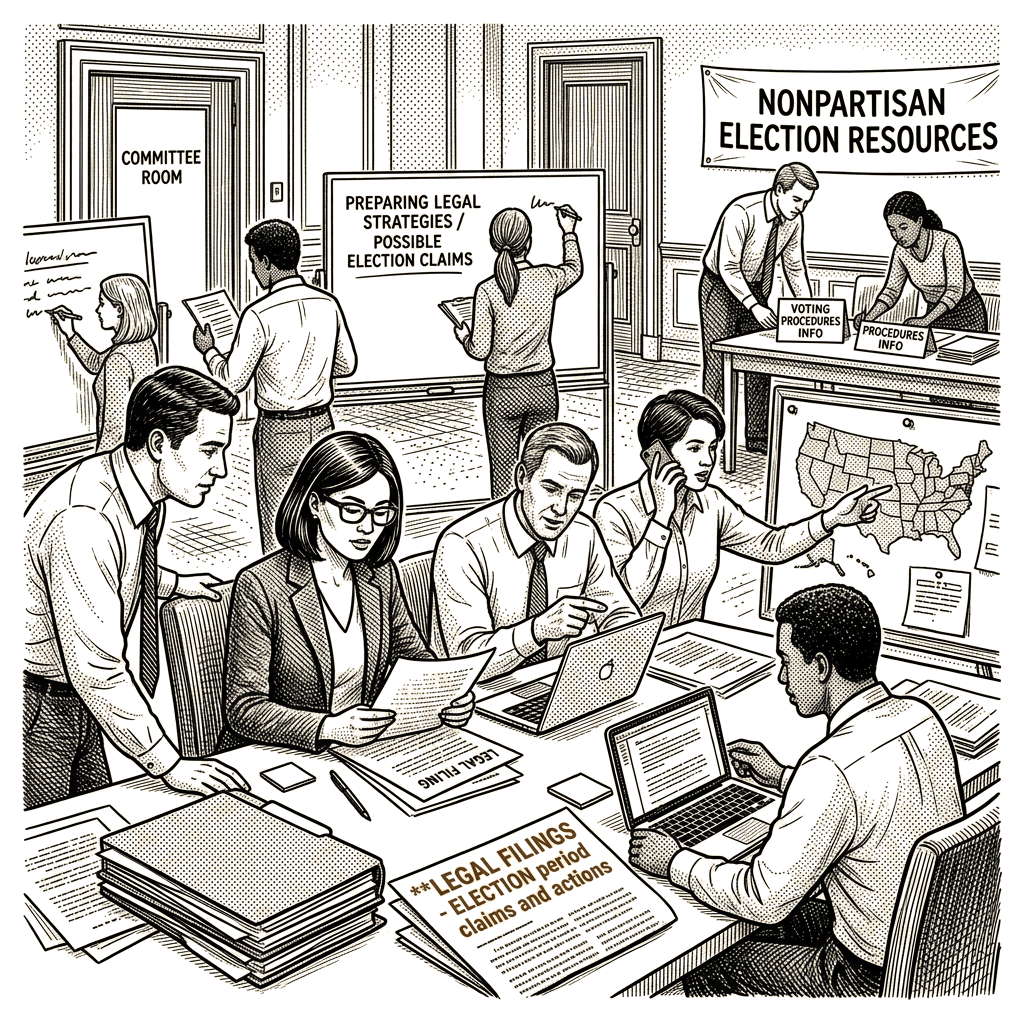
Congressional Democrats and a constellation of good-governance and nonpartisan groups have been preparing for what they fear could be meddling by President Trump or his allies with the results of this year’s midterms, drafting court filings in advance, reaching out to local election officials and assembling public statements that can be released quickly, NPR’s congressional reporter Eric McDaniel said.
The preparations are underway before voting ends. NPR host Steve Inskeep described the stakes: “If Democrats should win Tuesday’s voting, their next task will be securing the vote.”
The scenarios McDaniel described include possible pre-election and election-period measures, rather than only claims that might follow the count. He said the groups were concerned about a federal election emergency declaration, which he said does not exist in law; troops at the polls, which the groups describe as illegal; and President Trump saying, without evidence, that a foreign enemy has hacked voting machines. Inskeep characterized the possible presidential actions or statements as things that would be illegal if undertaken or made.
The work comes as the administration pursues its own election agenda. “The Trump administration has used the federal government’s power to highlight the president’s constant claims of voter fraud,” NPR host Michel Martin said.
McDaniel described the administration’s actions as an ongoing “election disruption effort,” pointing to a million-dollar bounty President Trump offered the previous day for election fraud tips that lead to a conviction, though it was unclear how or if the payment would be made. He also cited Department of Justice lawsuits in Alaska and California and the administration’s failed effort to restrict mail-in voting. McDaniel said those matters have been and will remain subject to legal fights.
A judge was scheduled to hear arguments Oct. 27 over the administration’s effort to force California to set aside some ballots, Martin said. The administration wants that treatment for people it claims are likely not citizens, he said. An appeals court declined to intervene in the case the previous night, Martin said.
The White House said the SAVE America Act would protect the election by restricting mail-in voting and requiring people to show proof of their citizenship status to stay registered to vote, McDaniel said. The bill failed for lack of Republican support in the Senate. McDaniel said he spent much of the year reporting on the effort to pass it.
McDaniel said the president’s claims have followed a pattern and that Trump has claimed fraud in every election in which he has been involved. Trump said in 2016 that he had won the popular vote after discounting millions of illegal votes and noted that he had won the Electoral College; he claimed electoral fraud in states such as Arizona in 2018, and told CNN in 2024 that voting was rigged. The January 6 insurrection was about fraud claims in the 2020 presidential election, McDaniel said.
There has never been credible evidence of voter fraud anywhere near the level to affect results of elections in the United States, McDaniel said. Inskeep noted that the president’s allies have never been able to substantiate the various claims of voter fraud in 2020 and other elections.
The White House describes all of its work as securing elections, McDaniel said. Election experts say elections are already secure, and the public trusts elections and the officials who run them, he said.
McDaniel said he interviewed Representative Jim Himes, a Democrat and ranking member of the House Intelligence Committee, the prior week. Himes recalled that he was in the Capitol during the January 6 insurrection and said it would be irresponsible for him and other Democrats not to be ready to combat fraud efforts.
Asked earlier this month whether he would honor the results, Trump said: “Of course I will. But we don’t want cheating.” McDaniel said the exchange continued at length, with Trump repeating that he did not want cheating.
The prewritten talking points were meant to carry a simple message, McDaniel said: people should feel comfortable casting their ballots. The groups’ links with local election officials and prewritten legal filings were part of the same advance preparations.