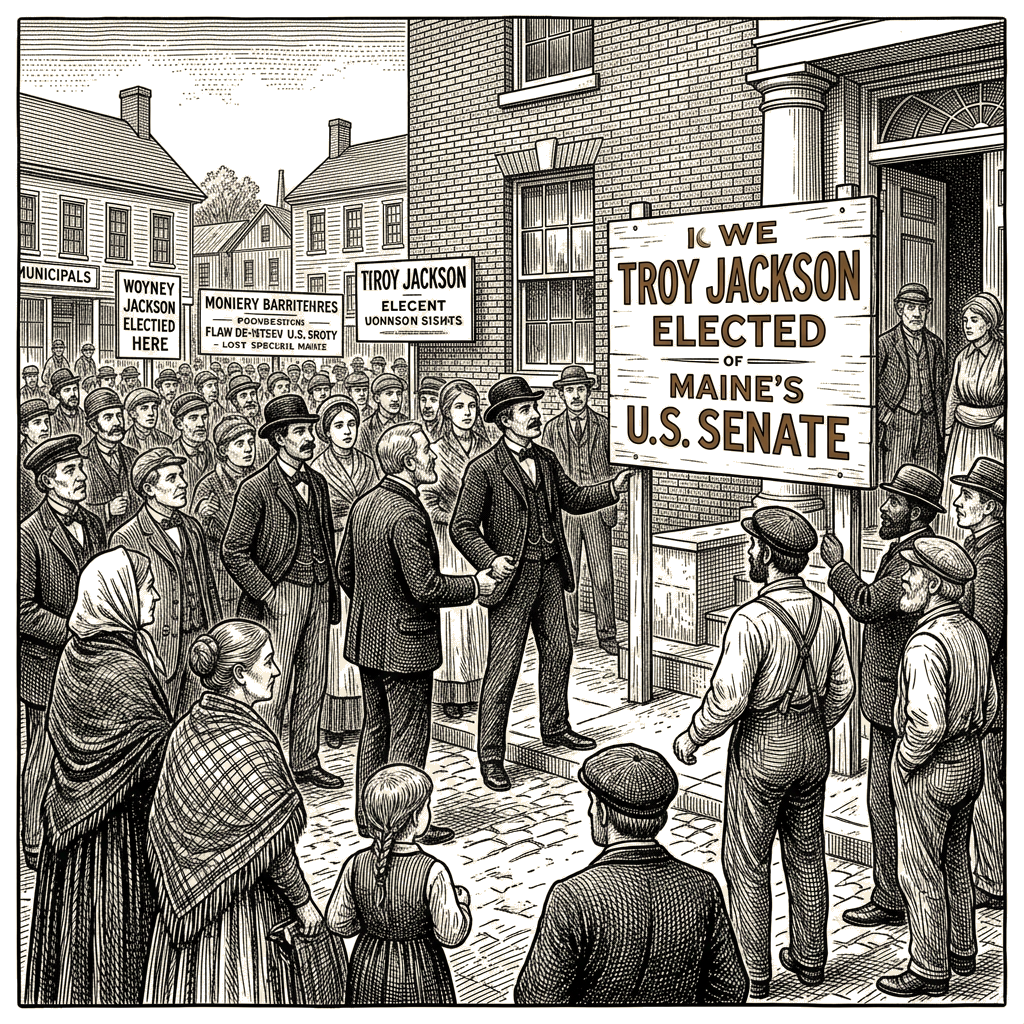
Collins’s defeat ends her nearly three-decade Senate tenure
Democrat Troy Jackson won Maine’s U.S. Senate race in the 2026 midterms, defeating five-term Republican incumbent Susan Collins. The Guardian described the victory as one of the biggest upsets of the 2026 midterms and one of Democrats’ most coveted pickup opportunities of the cycle. Jackson, 58, ended Collins’s nearly three-decade Senate tenure; Collins had served since 1997.
The closely fought race included mutual accusations of corruption and clashes over living costs in a predominantly rural state. Jackson was a lumberjack by trade and former state senate president.
Late nomination left Jackson 101 days to campaign
The first Democratic nominee, Graham Platner, was an oysterman and former Marine. The Guardian reported that Platner was forced to withdraw after a series of controversies, including an allegation of sexual assault and rape that he denied.
Maine Democrats had weeks to organize a special convention to select Platner’s replacement, and the convention chose Jackson. Jackson then had 101 days to mount a Senate campaign. Collins repeatedly sought to tie Jackson to Platner’s brand of progressivism, noting that the two had campaigned together during Jackson’s unsuccessful gubernatorial bid earlier in the year.
Jackson challenged Collins’s Trump alignment
Jackson sought to portray Collins as a loyal Trump supporter rather than a moderate Republican willing to break with Donald Trump. The Guardian characterized the platform on which he ran as progressive economic populism.
Jackson argued that Collins had emboldened Trump’s agenda through critical votes, including her vote to confirm Brett Kavanaugh, the conservative Supreme Court justice. Jackson said the Kavanaugh vote paved the way for overturning the constitutional right to an abortion in the United States.
Collins countered that Jackson was ideologically inconsistent and lacked the experience needed to deliver for Maine at the federal level. As the only Senate Republican running in a state Donald Trump lost in 2024, Collins argued that her independence and influence had delivered tangible results for Maine. She often pointed to the millions of federal dollars she had helped steer home as chair of the Senate appropriations committee.
Both nominees courted Mainers who were comfortable splitting their votes in 2020, backing Joe Biden for president while sending Collins back to Washington for another term.
Maine voters faced high fuel and heating costs
The Guardian linked soaring fuel costs in Maine to what it called Trump’s war with Iran and to record-high heating-oil prices, which the report said began squeezing voters as temperatures fell in the weeks before the election.
The report described the administration’s tariffs as sweeping and said they had affected several of Maine’s most critical industries.
The campaign centered on Jackson’s challenge to Collins’s alignment with Trump, Collins’s defense of her independence and the economic pressures facing Maine voters. Jackson’s victory ended Collins’s nearly three-decade tenure and sent a former state senate president and lumberjack to the Senate.