Environmental groups cite weaker safeguards and limits on judicial review
Many environmental organizations oppose the bill, saying the changes would lock in fossil-fuel development, weaken environmental safeguards and make it harder for communities to challenge energy-project approvals. Major industry groups representing developers in clean energy and in the oil and gas sector support the legislation.
The Sierra Club and National Wildlife Federation strongly opposed the measure in recent days. The groups cited concerns about limits on judicial review and changes to the landmark National Environmental Policy Act.
House Minority Leader Hakeem Jeffries, a New York Democrat expected to become speaker in January, criticized the legislation last week. A spokesperson said the bill “falls short” in a number of areas.
Bill mechanics and Monday’s procedural step
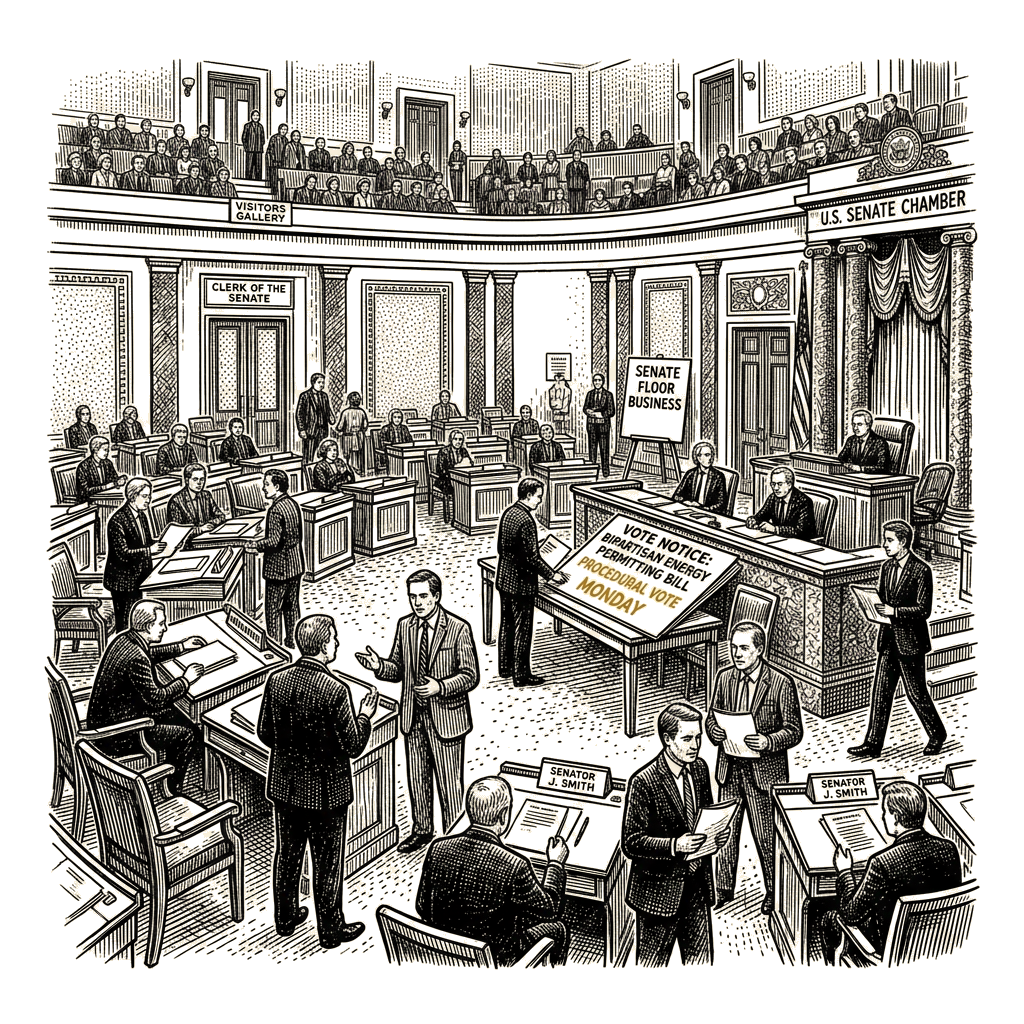
The Senate was expected to hold a procedural vote Monday in Washington on the bipartisan legislation. The vote would be the Senate’s first major action since last week’s election. The bill is aimed at speeding permitting reviews for data centers and other infrastructure projects. Its changes would shorten timelines for major clean-energy and fossil-fuel projects and require data centers to pay for the energy they use.
Officials are trying to meet growing demand for electricity and other forms of energy while new projects face yearslong delays in reaching the grid. Senators and President Donald Trump have pushed the changes as officials seek to address growing energy demand.
President Donald Trump urged senators to vote for the legislation in a social media post on Sunday, calling it a “BIG WIN for U.S. ENERGY INDEPENDENCE and DOMINANCE.” He wrote that the bill would “ensure that we can build Pipelines, Mines, and Power Plants faster than ever before, lowering Energy Costs for American Families.”
Four-senator amendments and post-election uncertainty
The AP said anger over artificial intelligence data centers and rising electricity helped prompt a wave of Democrats pledging tighter controls on those sites.
The bill’s four main champions released a detailed set of amendments Saturday designed to bolster support: Republican Sens. Shelley Moore Capito of West Virginia and Mike Lee of Utah, and Democratic Sens. Martin Heinrich of New Mexico and Sheldon Whitehouse of Rhode Island. The four senators lead the chamber’s energy and environment panels and negotiated the deal weeks before the election.
The senators said Americans are tired of paying more in utility bills while projects that could lower costs sit stuck in the planning phase for years. “Americans can’t afford to wait for lower electricity prices. We need to pass this bill now,” Heinrich said.
The AP said the election “soundly repudiated President Donald Trump and congressional Republicans.” Democrats’ sweeping midterm victory strengthened their position in the next Congress, which could complicate passage of the bipartisan bill. Some Democrats say the party should use that stronger position to pass legislation that builds out needed clean energy.