State data-center limits and a health subsidy fight could follow
In its assessment of the 2026 midterms, The Wall Street Journal said polls showed Democrats had a strong chance of taking the House and a pretty good shot at the Senate. Laws would still be difficult to pass even if the party won both chambers because President Donald Trump has promised to be “Mr. Veto.” Democrats’ agenda could include tariff relief, efforts to rein in healthcare costs and scrutiny of companies and government agencies at odds with their priorities.
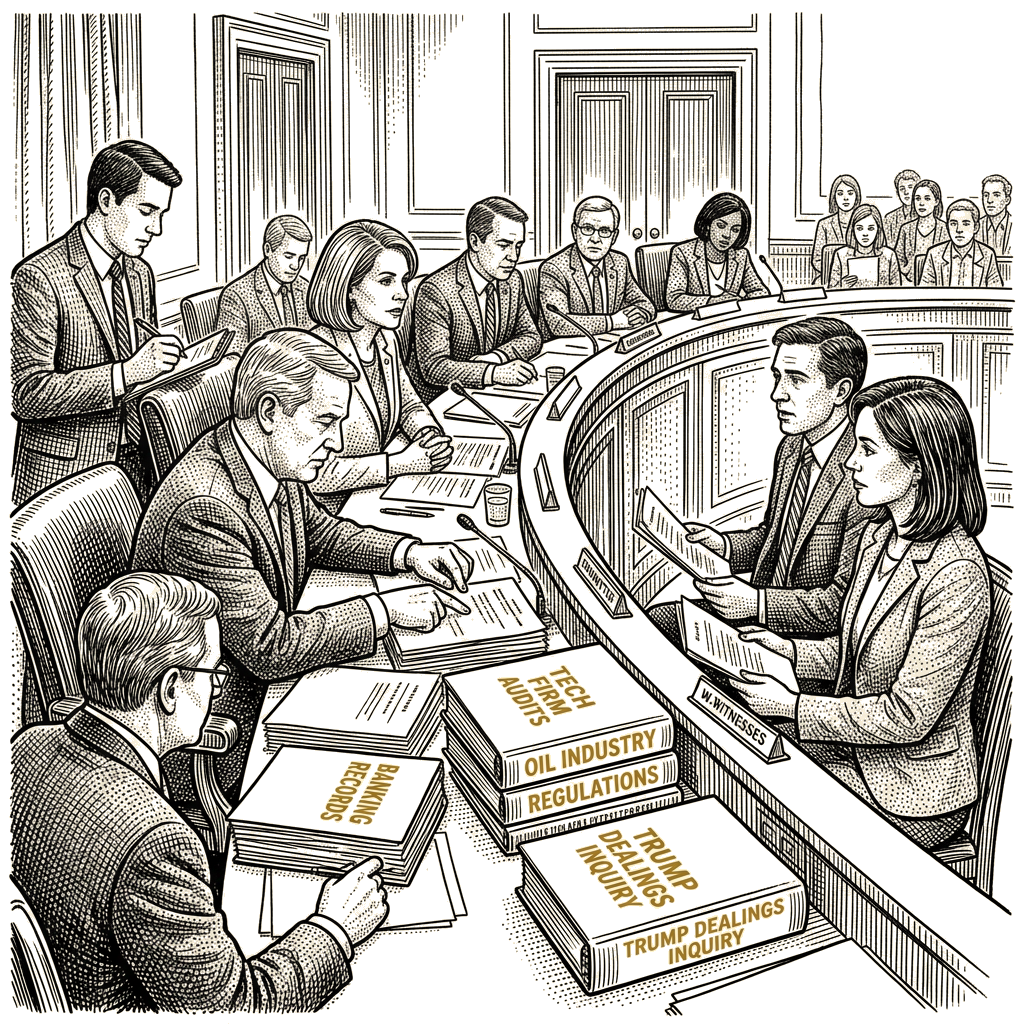
The Wall Street Journal reported concern among businesses, from banks to technology giants to major oil companies, that a Democratic-controlled Senate would fire up investigations and wield the power of the subpoena. The party has promised to focus on the Trump family and allegations of corruption, digging into donations from big businesses. New oversight powers would allow Democrats to investigate many of the issues they have been complaining about, from the first family’s crypto deals to alleged favoritism in government contracts.
For banks and financial firms, including crypto companies, the newspaper identified Sen. Elizabeth Warren (D., Mass.) as the person to watch; she could take control of the Senate Banking Committee if Democrats won the chamber. Warren has been firing off letters asking for details of dealings with the Trump family, artificial-intelligence projects, initial public offerings and the Federal Reserve, and she would likely haul in many chief executives for hearings.
A Democratic Senate would effectively freeze Trump’s influence over the Fed where it is now, The Wall Street Journal said, an outcome that falls well short of the control he has sought. Trump has made no secret that he wants lower interest rates, and his administration wants the Fed to ease capital requirements for big banks and give crypto and fintech firms easier access to its payment system. Trump has appointed three of the seven governors. To gain a working majority on that board, he needs at least a fourth seat, which requires a vacancy and a Senate willing to approve his preferred replacement. With no scheduled opening before Gov. Jerome Powell’s term ends in early 2028, a vacancy would come only if a governor quits or Trump succeeds in ousting one.
Cryptocurrencies and stocks tied to the industry received a major boost when Trump took office on expectations that Republicans would regulate the industry with a lighter touch, but the failure to pass major legislative reform has quickly dampened the mood. The Senate failed in September to progress an act supported by Coinbase and other digital-asset giants that would have put most crypto trading outside the purview of securities regulators. If Democrats win, they are likely to scrutinize the industry’s close ties to the Trump administration, and it could mark the return of Sherrod Brown from Ohio to the Senate. Brown had lost his seat after sparring with crypto firms for years.
Opposition to data centers is strikingly bipartisan among voters, The Wall Street Journal reported, though in national races Democratic candidates have tended to lean more AI-skeptic than their Republican counterparts. At a news conference over the summer, Texas U.S. Senate candidate James Talarico criticized tech companies and demanded the state legislature not give out what he called “sweetheart tax deals.” He said, “Right now, there is no transparency, no accountability, no community input,” then added, “AI should be working for us, not against us.” The newspaper said the most consequential results for data centers may come at the state level. In Georgia and Texas, two of the busiest states for data-center developers, Democratic candidates for governor are calling for temporary bans on new server farm construction. Jocelyn Benson, the Democratic candidate for governor in Michigan, is calling for a temporary ban, too.
The Trump administration’s light touch on antitrust enforcement has emboldened companies in many industries to strike deals they would not have attempted in years past, The Wall Street Journal reported. Wall Street anticipates a continued rush of deals, including very large ones, for the remainder of Trump’s presidency even if Democrats gain ground in the midterms, because the power to challenge deals sits with the executive branch.
The Kansas Senate race could have major implications for efforts to regulate credit-card fees. Republican incumbent Sen. Roger Marshall has been a fierce champion of legislation that could hit banks’ profits from credit cards and chip away at Visa’s and Mastercard’s dominance. As Trump and his allies have sought to prop up Marshall’s campaign and emphasize affordability issues, they have become vocal supporters of the legislation. Trump said he wanted to pass the bill as soon as possible, exciting merchants and worrying some bankers. Democrats also agree on lowering credit-card fees and costs, which could make cards a rare bipartisan issue. Without Marshall, the bill would lose a key supporter from the GOP side.
Farm industry groups are also hopeful Democrats expand the use of biofuels made from corn and soybeans blended into the U.S. gasoline and diesel supply, which would help prop up demand for their crops. Democrats tend to be more friendly to expanded biofuel than oil-state Republicans, and some industry officials think a bipartisan push could help farmers by expanding demand. “There is a need for higher biofuels. There is a need for supporting demand for agriculture,” Archer Daniels Midland CEO Juan Luciano said on a call with analysts on Tuesday about how the midterms will impact biofuel policy. “The world right now needs more energy.”
Policy experts expect Democrats to fight to restore subsidies under the Affordable Care Act, which lapsed at the start of the year, The Wall Street Journal reported. The cost of Obamacare plans rose sharply as a result of the lost federal support, leading millions of Americans to drop ACA plans and leaving the market in turmoil. The source also said price hikes are only going to continue next year.
A Republican-driven policy to add “work requirements” for people in Medicaid hasn’t been popular with Democrats because of its potential to increase the number of uninsured people. Ipsita Smolinski, managing director of health policy consulting firm Capitol Street, said Democrats in Congress might struggle to change that policy without also controlling the White House. Some progressive Democrats like Abdul El-Sayed in Michigan have campaigned on establishing a national healthcare option like Medicare for All. A recent KFF poll showed 66% of respondents were in favor of a national health plan like that. But policy experts don’t see that being a realistic priority for a Democratic-led Congress because of the massive cost and persistent divisiveness, and because lawmakers will be focused on bolstering the ACA instead.