GOP leans on $400m super PAC cash, redrawn maps to hold House
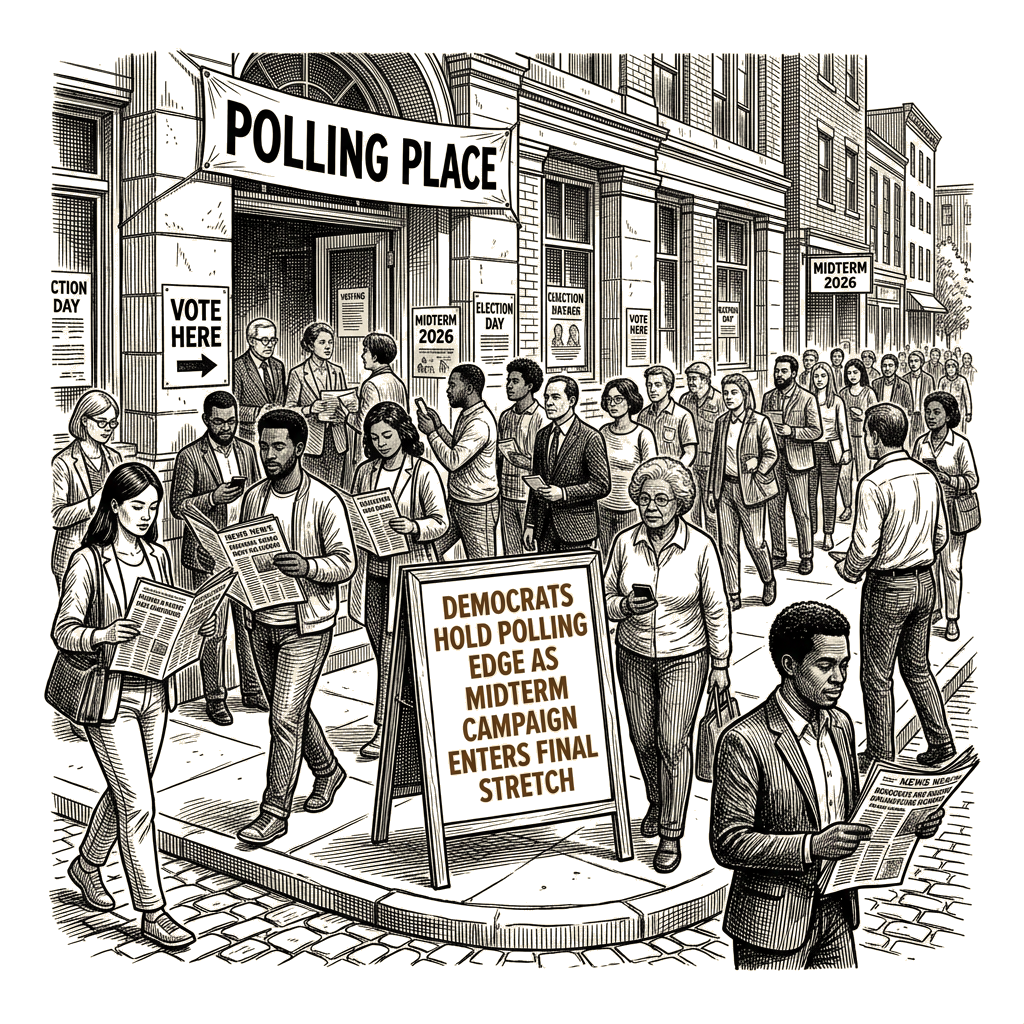
The 2026 midterm campaign enters its decisive phase with the post-Labor Day stretch marking roughly two months until voters decide control of Congress. President Donald Trump is unpopular, inflation remains high though below the levels seen under his predecessor, and the party in power faces a historical pattern of midterm losses. Democrats, who hold neither chamber, are seeking to convert those conditions into majorities as Republicans defend the House and Senate seats they won in the 2024 election.
“Out party” discontent is the engine of the Democratic case. “The out party, typically speaking, is frustrated or even angry at what has happened during the previous two years, and they’re itching to register their disagreements and discontent, and 2026 is going to be no exception,” said Bill Galston, a senior fellow at the Brookings Institution who previously advised Democratic presidents.
Recent public opinion surveys have shown Democratic candidates for House and Senate seats either ahead of their opponents or in close contention, and major election forecasters have moved their ratings of key races in the party’s favor. Polls of the generic ballot — a measure of national sentiment in congressional elections — show Democrats with an edge of between three and eight percentage points, though the trend is not unanimous: a Harvard CAPS-Harris Poll taken in August showed Republicans with a slight advantage among likely voters.
Republicans hold an advantage in campaign cash. Although some Democratic candidates, including Georgia Sen. Jon Ossoff and James Talarico, who is running for a Senate seat in Texas, have posted strong fundraising figures, Trump’s Maga Inc Super PAC has $400 million that could be deployed to help his allies. A separate Super PAC backed by Elon Musk holds $50 million and began spending in favor of some Republican candidates last week, according to the Guardian.
Republican-led states have also likely limited the party’s House losses by redrawing congressional maps, with the help of a recent supreme court ruling, despite efforts by Democratic-led states to retaliate. The strategy has not changed the party’s public posture. “I’ve been saying this over and over, but Republicans are going to defy history in 63 days and we’re going to hold this House majority,” House Speaker Mike Johnson told reporters.
History is the Republicans’ burden. George W. Bush’s party expanded its majorities in 2002, a little over a year after the September 11 attacks, but most other midterms have punished the party in power. Bill Clinton lost both chambers in 1994, Bush suffered the same fate in 2006, Barack Obama described Democrats’ 2010 losses as a “shellacking,” and Democrats lost the Senate four years later. In 2018, Trump’s Republicans lost the House while building their Senate majority.
The 2022 midterms stand as the exception that defined the current terrain. With inflation high and President Joe Biden unpopular, forecasters including Larry Sabato’s Crystal Ball predicted substantial Democratic losses; Sabato said his model forecast two dozen House losses that year. The results fell well short of those projections: Republicans netted nine House seats for a tiny majority, while Democrats expanded their Senate control by a single seat and all their incumbents won re-election.
Sabato attributed the gap to the supreme court’s decision in Dobbs v Jackson Women’s Health Organization, which overturned Roe v Wade and ended the constitutional right to abortion. “It was very clear that women were more energized than usual, and that young people were more energized than usual because of one thing: the Dobbs decision. That’s what really changed the direction of the election,” he said.
Trump was out of office during that election, and Aaron Hitefield, a political science professor at Mississippi State University who studied the 2022 contest, said the former president’s visibility without appearing on the ballot worked against congressional Republicans. “Trump rhetoric benefits Democrats electorally and motivates voters, while not equally motivating Republicans,” he said. “This isn’t necessarily anything new; we always have a surge and decline comparing a president’s party in the presidential election year versus a midterm, but it is particularly more pronounced with Trump.”
Now back in the White House, Trump has announced plans for an unusual midterm convention later this month in Dallas, where he said he will personally pitch voters on keeping Republicans in control of Congress for the final two years of his presidency. Holding the House is a tall order: its majority is no bigger than three seats. Winning the Senate is expected to be harder for Democrats, who must capture at least three seats in states Trump won two years ago, including several that elected him by double digits.
Control of either chamber would let Democrats block Trump’s legislative agenda and give their lawmakers subpoena power to investigate his administration. Party leaders have centered their pitch on affordability, arguing that the president’s attack on Iran, tariffs on trading partners, the refusal to extend tax credits for Affordable Care Act health plans, and cuts to the social safety net have driven prices higher. “Life has gotten far too expensive in this country, and Republicans don’t give a damn about it,” House Democratic Minority Leader Hakeem Jeffries told reporters last week.
The House reconvened last week after a five-week recess, but Johnson cut its September schedule short by two weeks, giving representatives time to return home and campaign.
Galston said he believes voters’ perceptions are largely “baked in,” with the remaining question being which party turns out more supporters. “A lot of people have already made up their minds,” he said. “Especially for Republicans, the question is not so much whether they’re going to cross party lines and vote for Democrats, although I think some will, but whether they’ll get out of bed on election morning.”
There, Democrats appear ahead: an Economist/YouGov survey from late August showed Democratic voters with a six-percentage-point lead in enthusiasm, higher than earlier in the summer. Galston pointed to the party’s case on the economy and foreign policy. “It’s hard to get excited about a presidency that has been defined by a complete failure to get prices under control, coupled with a war that is looking increasingly like a fiasco,” he said.