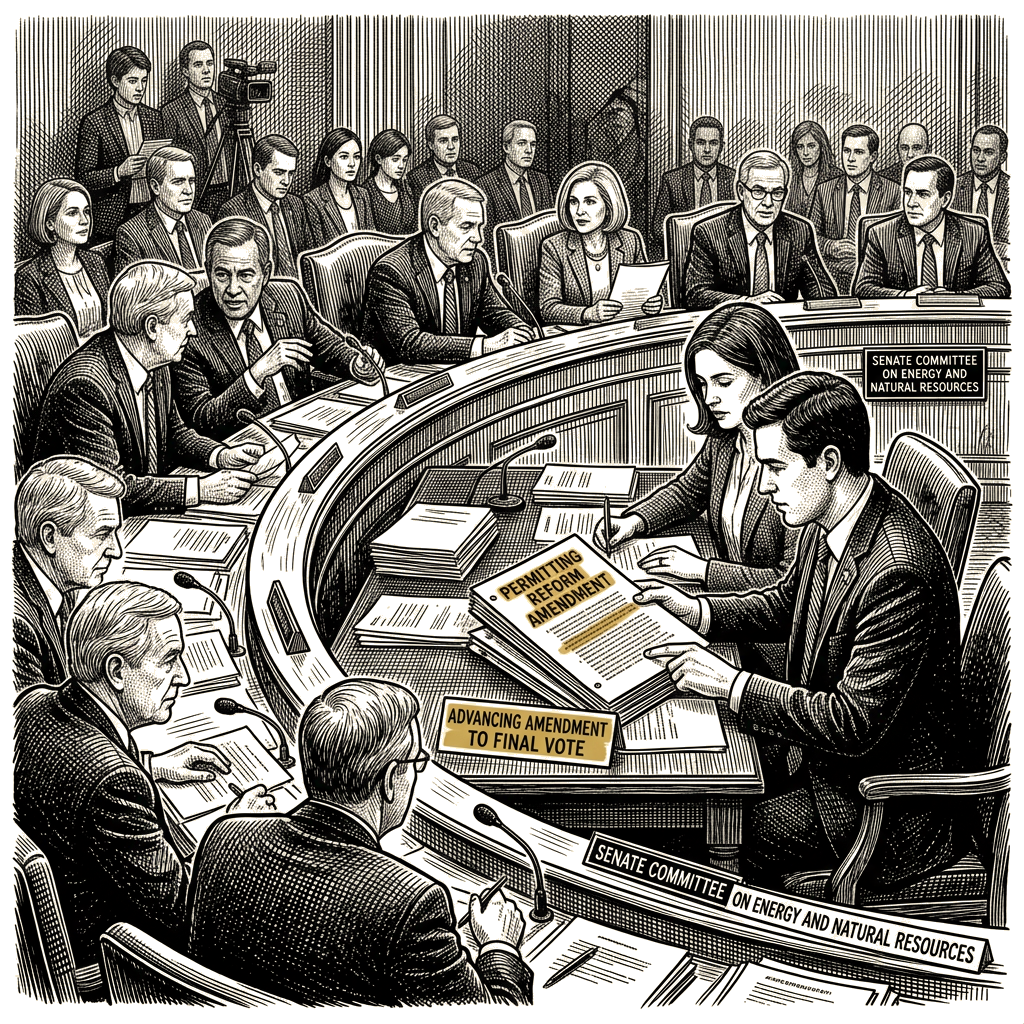
The amendment cleared a 70-27 procedural hurdle Monday evening
The U.S. Senate voted 70-27 on Monday evening to end debate on an amendment to the Bipartisan American Affordability and Jobs Act, moving a permitting reform measure toward a possible final floor vote this week. New Mexico Democratic Sen. Martin Heinrich, a key sponsor, and three other senators from both parties introduced the amendment Saturday, saying it aimed to address tribal opposition. If the Senate passes the measure, it would go to the U.S. House of Representatives.
The bill, also called BAAJA, seeks to free a wide range of energy projects, from natural gas pipelines to solar arrays, from years of federal permitting bureaucracy and delays caused by litigation. It also would make data center developers liable for the energy costs their centers impose on power grids.
The measure has drawn widespread criticism, especially from environmental and tribal groups, which say it weakens “bedrock environmental and historic preservation protections.” Many of Heinrich’s fellow Democrats have also opposed it, including other members of New Mexico’s congressional delegation.
Sen. Ben Ray Luján voted no on Monday evening with 26 other Democrats. That marked his second vote in opposition to the bill.
The All Pueblo Council of Governors, which represents 19 pueblos in New Mexico, sent members to Washington, D.C., to lobby against the bill. In a social media video posted Monday evening, U.S. Rep. Melanie Stansbury joined several local Pueblo governors on the U.S. Capitol steps and urged senators to vote against advancing the measure. The All Pueblo Council of Governors condemned the Senate vote advancing the permitting reform bill.
The Senate’s first procedural BAAJA vote passed by a similar margin last week. In the days since, more prominent groups and national figures have weighed in on the debate.
On Thursday, the American Federation of Labor and Congress of Industrial Organizations, the nation’s largest federation of labor unions, endorsed the bill as a “critical first step towards meeting the moment on affordability, jobs, and environment.”
Environmental groups continued to voice opposition. Former U.S. Vice President Al Gore, speaking this week at an international climate-focused conference in Turkey, said passage would be a “serious mistake” and warned that it would give the fossil fuel industry even more license to pollute the earth.
The Guardian reported that Gore said Congress should wait until January to consider the bill, when newly elected Democratic majorities would take office. He said delaying the decision would enable “the new balance of power in the US government to do a much better job.”
After the Monday vote, the next procedural step is a final Senate floor vote, which could come as early as this week. If the Senate approves the bill, it would head to the U.S. House of Representatives.