
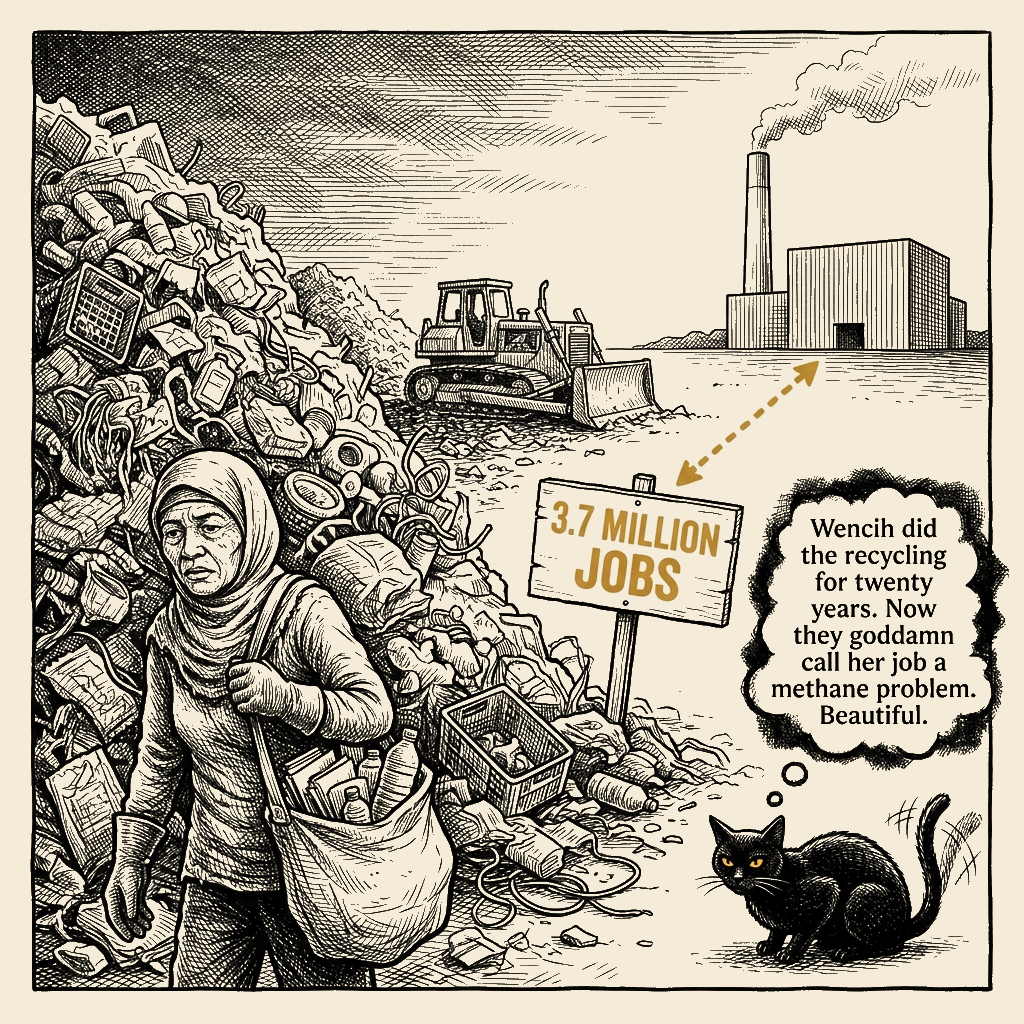
Nur Wencih was fifteen years old the first time she climbed a garbage mountain outside Jakarta. She’s thirty-five now. Two decades of picking through other people’s trash so she can send money to her two daughters and hope to God they never have to do this work.
Her parents still pick alongside her. Three generations. Same garbage.
On a good day, she makes twelve dollars. Twelve dollars sorting plastic bottles and broken toys in hundred-degree heat before the bulldozer buries everything fresh. That’s her life. That’s the job.
And she’s not alone. There are 3.7 million waste collectors in Indonesia doing exactly this work. For decades, these people have been the world’s recycling infrastructure. Over 70% of recovered plastics in Indonesia go through the informal waste sector — a better rate than most wealthy countries manage with their fancy blue bins and guilt-free collection trucks.
Now Indonesia wants waste-to-energy incinerators to cut methane. Sounds responsible. Sounds modern. Sounds like the kind of thing rich countries love to fund at a conference.
Here’s the part they hope you don’t notice: those incinerators burn the recyclables that 3.7 million people depend on to survive. The “solution” to climate change is to torch the livelihood of every person who was already doing the recycling.
Nobody asked Wencih. Nobody offered her a replacement paycheck. Nobody built a bridge from picking trash to whatever comes after. They just called her livelihood a methane problem and moved on.
The countries that shipped their plastic waste to Asia for decades now get to dictate the cleanup. The corporations that built an economy on disposability get to call it sustainability. And Wencih gets to explain to her daughters why the garbage mountain that fed them is now a furnace.
Somebody built this system. She paid for it. Now somebody else will profit from dismantling it, and she’ll pay again.
Bullshit. All of it. The global North gets to be the hero twice — first for creating the mess, then for burning the evidence. Goddamn.
Source story: Waste picker earns $12 a day at Indonesia’s largest landfill.