Kalshi pulls sports mention markets pending federal review
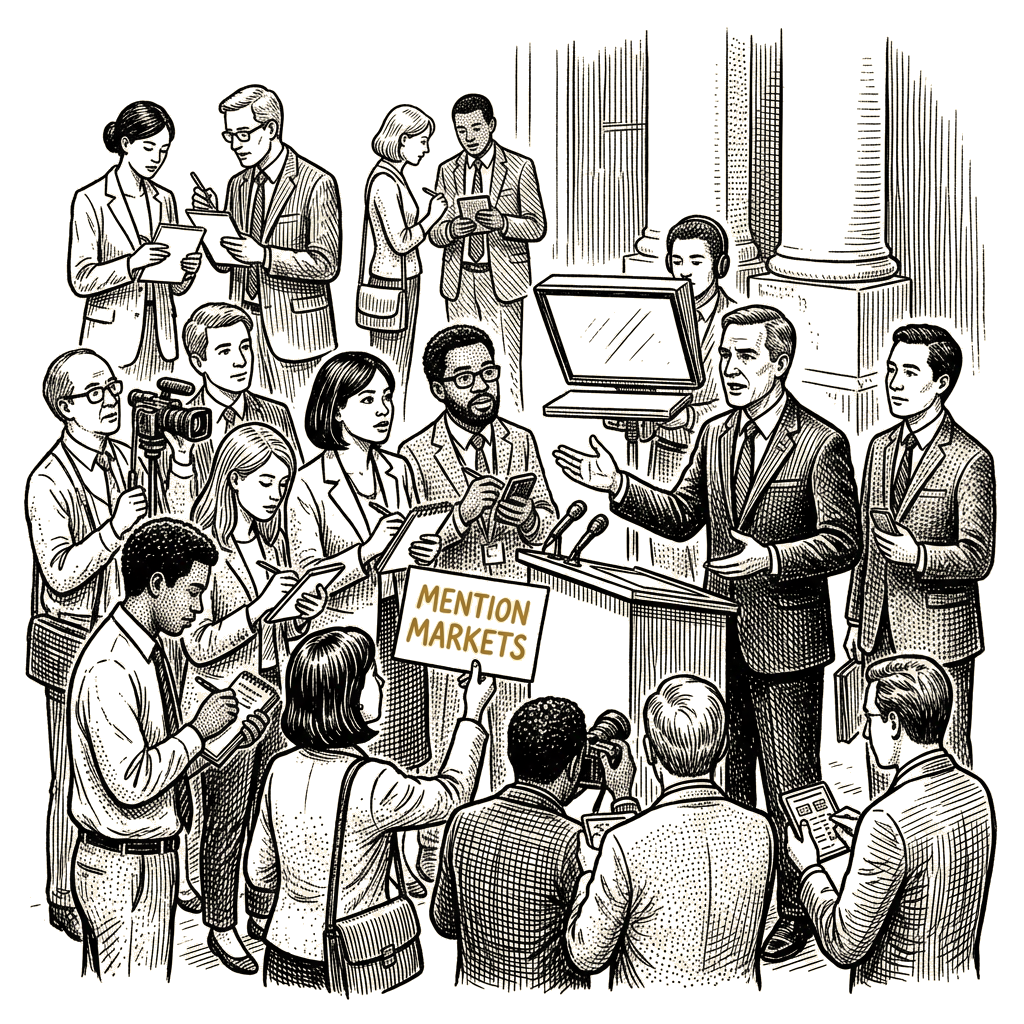
The Commodity Futures Trading Commission has launched a formal inquiry into “mention markets” — prediction-market contracts that let bettors wager on the precise words a speaker will or will not utter during public events — according to two people with direct knowledge of the probe who spoke to NPR on condition of anonymity because they were not authorized to speak publicly.
In response, Kalshi, the largest prediction market in the United States, has removed all sports-related mention markets from its offerings “until further notice,” according to one of the people. It is unclear when or if Kalshi will reinstate the sports category. The company is still allowing wagers tied to what people say at political events, on earnings calls and during live television newscasts.
Mention markets have grown alongside the broader prediction-market boom, with Kalshi offering bets on whether sportscasters will say terms such as “MVP,” “ankle” or “redshirt.” Sports wagers account for more than 80% of the billions of dollars traded every week on the site, so removing sports mention markets will significantly reduce that segment. Kalshi faces more than two dozen lawsuits from states and tribes over sports betting.
The federal scrutiny follows a high-profile incident that reached the White House. Last month, regulators disclosed that President Trump’s longtime teleprompter operator had been using Kalshi to profit from correctly betting on what words the president would or would not utter during public appearances. Kalshi said its internal surveillance tools flagged the suspiciously timed bets and reported them to federal authorities.
“These mention markets are not popular across the political aisle,” the second person with knowledge of the probe told NPR. “They are potentially very easy to manipulate, so the CFTC is taking a hard look at whether some of them make sense.” Spokespeople at Kalshi and the CFTC declined to comment.
Polymarket, Kalshi’s main competitor, offers mention markets only on its overseas service, which is not regulated by the CFTC. Polymarket’s smaller U.S. service does not list mention markets.
The vast majority of prediction markets operate under a “self-certification” model, meaning platforms can launch a market as long as they file paperwork with federal officials affirming that the contract complies with rules for a “swap,” a type of financial derivative. One such rule requires operators to attest that a market cannot be “readily susceptible to manipulation.”
There is growing concern among Kalshi’s lawyers and federal regulators that some speaking-event markets run afoul of that standard because their nature attracts possible manipulators, according to the second person familiar with the CFTC probe and a former Kalshi employee who also spoke to NPR on condition of anonymity out of fear of retaliation.
Inside Kalshi, employees have debated the usefulness of mention markets, with co-founder Luana Lopes Lara especially championing them, according to the former staffer. Lopes Lara views betting on words spoken at an awards show, a reality television program or an earnings call as a way to draw participants from beyond sports — the dominant category on the platform, but one that has become heavily litigated for the company.
The Brad Pitt incident illustrates the unusual outcomes mention markets can produce. During the live broadcast of the World Cup final on Fox, Kalshi traders placed millions of dollars in bets over who would attend the event.
When a Fox sportscaster mistook Matt Damon for Brad Pitt, several news organizations — some of which serve as Kalshi’s “source agencies” that resolve the platform’s contracts — mistakenly reported that Pitt was in attendance.
The market settled on Pitt attending, strictly following its contract rules, even though the actor was not actually present. Kalshi data shows that bettors who wagered that Pitt would not attend collectively lost $287,866.