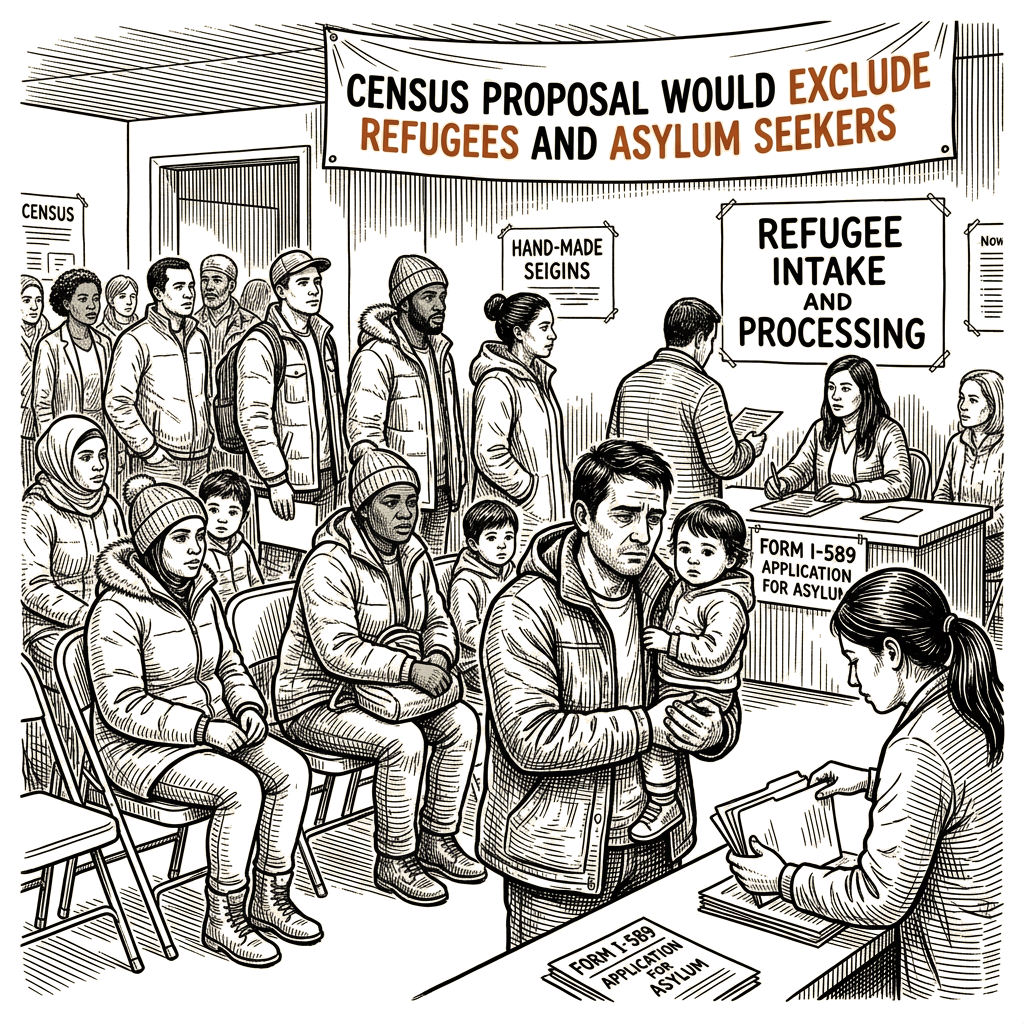
New York considers legal action over proposed counting rule
Refugees and asylum seekers would be left out of the decennial U.S. census under a Trump administration rule proposed in the Federal Register on Wednesday. The proposal would also exclude undocumented immigrants, expand the types of race and ethnicity data the government collects and leave millions of U.S. residents out of the count, United Press International reported.
New York Attorney General Letitia James said Wednesday that the state is considering legal action against the proposal. “The Constitution is clear. Every person living in the United States, regardless of immigration status, must be counted in the census,” James wrote on social media.
James led a lawsuit against Donald Trump when he attempted to change the 2020 census during his first term.
The census currently counts people born in the United States, naturalized U.S. citizens, lawful permanent residents, temporary migrants, U.S. nationals, refugees, asylum seekers and immigrants without legal status in the United States. The proposed rule would remove some of those groups from the count.
The U.S. Census Bureau justified removing undocumented immigrants, refugees and asylum seekers “due to their lack of a sufficient tie and allegiance to the United States.”
Applicants for U.S. citizenship are asked to take the Oath of Allegiance, which requires them to renounce allegiance to their nation of origin or other nations.
President Donald Trump wrote on social media: “People who are in our Country illegally WILL NOT BE COUNTED IN THE CENSUS.”
The Apportionment Clause of the 14th Amendment orders that Congress be apportioned among the states “according to their respective numbers, counting the whole number of persons in each State.” The Constitution does not refer to legal status.
The census, conducted every decade, plays a key role in how federal funds are dispersed to states. It also informs congressional maps, federal policy and government services.
Trump has long sought to remove groups of immigrants, refugees and asylum seekers from the census. During his first term, he tried to add a citizenship question to the 2020 census, but the U.S. Supreme Court rejected the bid.