Five senators warn agencies nearing depletion of $6bn suppression budget
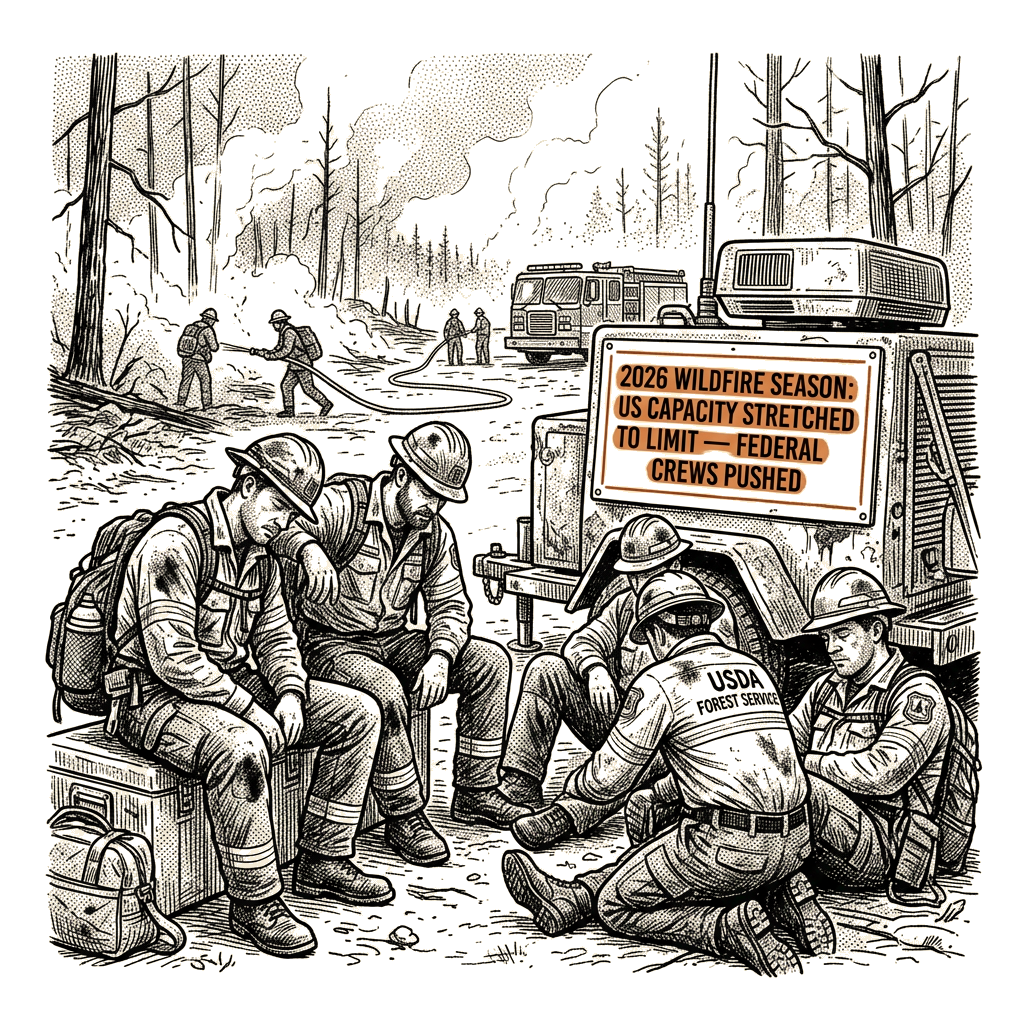
Nine federal firefighters told the Guardian, speaking on condition of anonymity because they are barred from disclosing the information, that spread-thin crews are being pushed to their limits amid an unrelenting and extreme year of fire. Several retired firefighters gave similar accounts. “Accidents have been through the roof,” one firefighter said, adding that widespread fatigue had set in after crews had been on near-nonstop fire assignments since April. Another firefighter, a member of a specialized helicopter crew, said he had opted out of assignments this year because they were too high-risk or ill-advised.
The job has always carried inherent risks, particularly as the climate crisis continues to create blazes that are harder to battle, but this year has been especially dangerous. Data from the Wildland Fire Lessons Learned Center, a federal agency, recorded 12 entrapments by mid-August — exceptionally dangerous situations when flames overrun safety zones or block escape routes — the highest number in 20 years, according to figures the Guardian attributed to Reuters. There have been 14 reported on-duty fatalities this year, including three firefighters who died battling Colorado’s Knowles fire. An additional member of their crew succumbed to his injuries weeks later and another was severely burned. The Knowles incident was the deadliest entrapment in 13 years.
Dr Timothy Ingalsbee, a fire ecologist who began his career as a wildland firefighter with the US Forest Service, told the Guardian he had heard from safety officers that there had been a notable spike in burn injuries this year, a sign he attributes to “crews being pushed into aggressive direct attack in times when it is not effective.” Ingalsbee is the executive director of Firefighters United for Safety, Ethics and Ecology (Fusee), a non-profit he cofounded in an effort to increase both safety and sustainability in firefighting, and he said he is concerned that operations are heading in the wrong direction on both fronts. “Climate change is half the explanation,” Ingalsbee said, for what he called “the perfect firestorm for a really bad season for firefighting.” The Department of the Interior and the US Forest Service did not respond to Guardian requests for comment or answer questions on the comprehensive number of injuries reported so far this year.
Last week, five senators — Michael Bennet, Alex Padilla, Ron Wyden, Adam Schiff and John Hickenlooper — wrote jointly to the heads of the Interior Department and the US Department of Agriculture, which oversees the USFS. They said personnel had had to work extended assignments, that requests for crews went unfilled in communities across the west, and that the agencies were facing the depletion of their combined $6bn suppression budget with weeks left to go before the highest fire risks subside. The letter claimed “that teams have worked more fires than is safe, using temporary supervisory structures because fully qualified personnel are not available.” The senators added: “This is exceptionally concerning given the high wildland firefighter fatality rate this season.”
Taskforce leaders, division supervisors and heavy-equipment bosses are essential to run large firefighting operations and require decades of experience, the Guardian reported. Losses in those on-the-ground leadership roles have become extremely difficult to replace. Meanwhile, firefighters said the federal government has failed to scale up staffing levels overall to meet rising needs, pushing resources to the brink season after season. “Firefighting capacity is kind of like wages, and the fire environment is like inflation — it has not kept up,” a fire captain who works out of the Pacific north-west told the paper.
Bobbie Scopa, a retired fire chief who serves as a vice-president for the firefighter advocacy group Grassroots Wildland Firefighters, said: “We have had shortages for 20 years — and it’s only gotten worse.” As the need for resources grew and leadership ranks thinned, responsibilities were sometimes doubled up. “That sets everyone up for failure,” Scopa said. “It is not like we are trying to add bureaucracy — we are trying to keep people alive.”
The accounts from firefighters differ sharply from those of USFS Chief Tom Schultz, who has repeatedly assured lawmakers and the public that the agency’s firefighting workforce is at full capacity. “Our firefighting workforce is stronger than at any point in recent years,” Schultz said in testimony to a congressional subcommittee in July. “We are fully staffed and equipped to respond aggressively to every unplanned ignition.” Several firefighters told the Guardian that the Trump administration has pushed for more aggressive tactics, at times at the expense of firefighter safety. Agriculture Secretary Brooke Rollins and Interior Secretary Doug Burgum both issued directives this year that prioritize direct attack, a strategy that can carry higher risk. Officials have also mandated a return to fast and full suppression, shifting away from recent policies that took a softer approach to containing flames that could be beneficial to a landscape.
Agency leaders have argued that a more aggressive approach is necessary to ensure firefighters and communities are protected as conditions set the stage for more catastrophic fires. Critics, including many fire ecologists and firefighter advocates, have raised concerns the approach will perpetuate a cycle that contributed to the current crisis — leaving more vegetation on parched landscapes to burn in the future — and will more quickly exhaust limited resources. Scientists, forest managers and other fire experts have advocated for allowing some fires to burn, especially those far from communities or in places that are difficult or dangerous for firefighters to reach. As Scopa put it: “Firefighters already stop 98% of fires before they spread. The administration wants to tighten that gap. We’re going to kill people trying to put out those last couple percent and we’re going to spend a lot of money doing it.”
The busy and destructive season has left little room for rest. By mid-September, roughly 54,400 blazes had burned through more than 8.4 million acres, 149% of the 10-year average. The US was classified at Preparedness Level 5 — the highest level, indicating that resources are fully deployed — for 48 consecutive days, close to double the 10-year average for days at that level per year. The level dropped to PL4 on 4 September and to PL3 a few days later, but thousands of firefighters remained committed across the country.
Long seasons of sleep deprivation, smoke inhalation, exhaustion and malnutrition have a cumulative effect, Ingalsbee said. “It impacts your ability to think clearly and act decisively to keep you and your crew members safe.” With months potentially still to go, he added: “There are some crews near the breaking point. Their roster is depleted and there doesn’t seem to be any strategic prioritization where they are sent.”