Only states hold complete voter-registration and voting information
States compile and maintain voter rolls, so only states hold complete information about who is registered and who actually casts ballots. The Trump administration faces a major obstacle to proving that noncitizens are participating in elections. The Justice Department’s request over California ballots followed a monthslong battle with the state over the accuracy of its voter rolls.
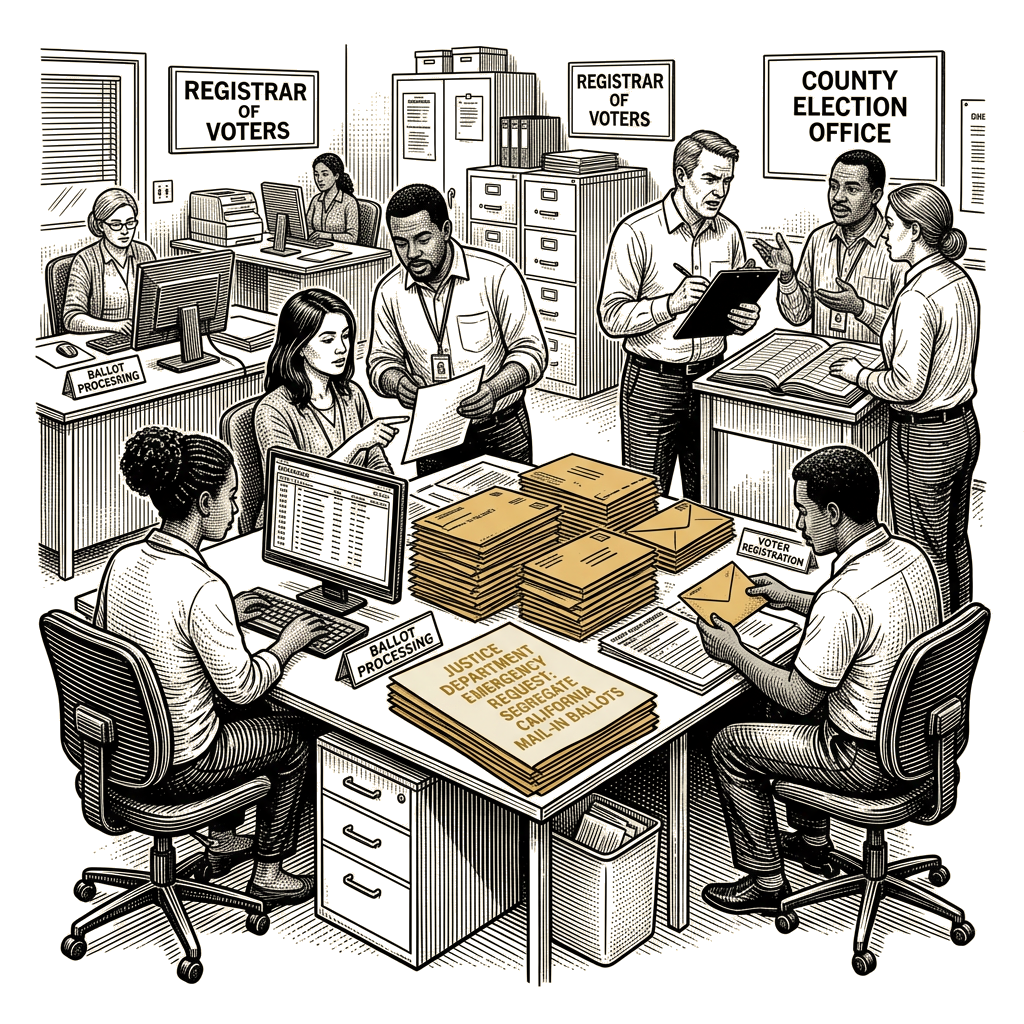
The request sought to require California immediately to set aside mail-in ballots received from 20,000 people the federal government says might not be U.S. citizens.
Voting was already under way in California, where every active registered voter receives a mail-in ballot. The state begins processing those ballots before Election Day but does not count them until the polls close. Trump seized on California’s slow ballot-counting in the state’s summer primary to call into question the validity of the results.
Trump and top administration officials have alleged that hundreds of thousands of ineligible people are registered to vote around the country, focusing especially on people they believe are noncitizens. California has said that it prohibits noncitizens from voting and that state voters had to repeatedly attest to their U.S. citizenship to cast ballots.
On Monday, the Ninth U.S. Circuit Court of Appeals ruled 2-1 that the Justice Department was not entitled to an emergency order segregating the ballots. The ruling did not decide whether the ballots should be blocked, leaving that question for U.S. District Judge David Carter.
At Monday’s ruling, the Justice Department’s case was 11 days old, and no trial judge had considered the case. The panel tied its decision to the timing of the department’s request, saying the administration’s “claimed emergency, at least in part, is a self-constructed one” and that the Justice Department could have filed its lawsuit earlier in its monthslong battle with California over voter-roll accuracy.
The order followed an unusual Sunday hearing in which appeals court judges questioned Justice Department lawyer Matthew Donnelly about the timing of the agency’s suit and the administration’s claims about noncitizen voting. Donnelly said the administration needed an injunction “as soon as possible, based on the amount of votes that are being processed as we speak.”
Mark Bennett, a Trump appointee in the majority, said the Constitution gives California the power to manage its voter rolls and run its elections. Gabriel Sanchez, a Biden appointee and the other majority judge, questioned the reliability of the Trump administration’s claims that up to 20,000 ballots could be cast by “likely noncitizens.”
Patrick Bumatay, also a Trump appointee, dissented. He said the federal government was entitled to a ruling in its favor because it “has a sovereign interest” in stopping illegal voting and California was not helping.
Carter, the Clinton-appointed U.S. District Judge in Santa Ana, California, is scheduled to hear arguments Tuesday on whether to block the ballots from being counted. Whatever Carter rules is likely to be appealed back to the Ninth Circuit.