Roughly 500 Oleshky residents have registered for evacuation
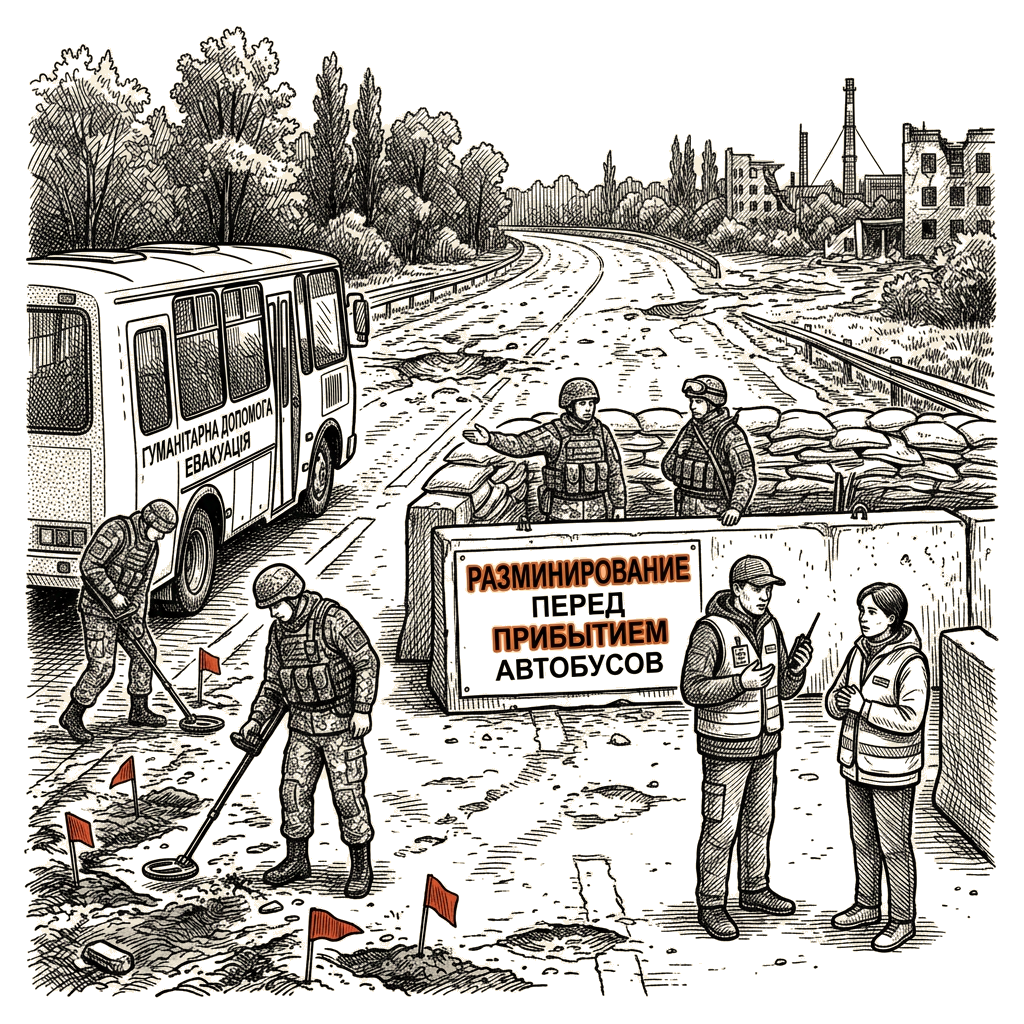
Russian forces must first clear mines from the road out of Oleshky before humanitarian aid and evacuation buses can arrive under the temporary ceasefire in the Russian-occupied city in southern Ukraine. Aid and buses are due to begin arriving later in the week, and the route remains contingent on that clearance. The pause in fighting between Russian and Ukrainian forces, coordinated in part by first lady Melania Trump, took effect early Tuesday. It is designed to allow humanitarian aid into Oleshky and the evacuation of civilians who want to leave.
Residents have begun registering for evacuation. Ksenia Arkhipova, a 42-year-old former Oleshky resident who fled to Ukrainian-controlled territory in 2022 and has since helped coordinate aid to the city, said roughly 500 people in town are waiting to be evacuated. She said almost all of them hope eventually to reach Ukraine. According to Arkhipova, residents have been told to gather outside the town’s main hospital at 10 a.m. Friday.
Ukrainian and Russian officials give sharply different estimates of how many civilians remain in Oleshky. Ukrainian officials, who remain in touch with residents by phone, say roughly 2,000 civilians remain; Russian officials say only a few hundred people are in the city. Those who remain are mostly elderly and unable to make the 12-mile journey on foot.
Arkhipova said she is telling residents that the evacuation is likely their last chance to leave. Most are eager to go, but not everyone, she said. “I keep trying to explain to people that they need to take this opportunity, before winter comes,” she said, adding that people were trapped in unheated homes last winter in temperatures below freezing. “There will be mines everywhere again, and then snow will cover everything. People will try to walk out of town and they will step on mines. Dozens of people stepped on mines last winter.”
Olena Solovyova’s father is among those on the evacuation list. She said there is still a lot of confusion among residents about how the evacuation will take place and where evacuees will be taken. Her father hopes eventually to join her in western Ukraine. “There is so much hope surrounding this humanitarian mission,” Solovyova said. “We just hope everything will work out and nothing will go wrong.”
Getting out of Oleshky has become perilous in recent months. The city sits on the Dnipro River in the southern Kherson region, was occupied by Russian forces in the first days of the war and is now on an active front line. Russian soldiers have taken positions in the city and shell Ukrainian-held territory across the river; Ukrainian forces have fired back, destroying much of Oleshky. Roads into the city are mined and policed by drones. The report also included a note saying the data were as of Oct. 25 and credited to the Institute for the Study of War.
The Wall Street Journal reported that civilians in Oleshky have been starving since food deliveries stopped earlier this year. The last volunteers bringing food arrived in May. After that, residents said, several vehicles hit land mines on the road to Oleshky, and the volunteers stopped coming. Ukrainian authorities have delivered some food and other supplies by drone. Some civilians made the trek on foot through the mines in recent months to escape, while others died trying to make the journey.
Ukrainian officials spent months publicly demanding that Russia allow civilians some safe route out of Oleshky. A variety of world leaders, including Pope Leo XIV and first lady Melania Trump, eventually took up the cause. After Melania Trump announced that a ceasefire had been agreed, Ukrainian President Volodymyr Zelensky said Sunday: “The main thing is to free these people from the blockade so they can live.”
Ukrainian lead negotiator Dmytro Lubinets said on social media that the plan had three elements. “First, a regime of silence will be ensured. Second, humanitarian aid will be delivered to Oleshky, and third, free movement of civilians from Oleshky will be ensured,” he said.
Alexander Gabuev, director of the Carnegie Russia Eurasia Center, said agreeing to the ceasefire allows Russian President Vladimir Putin to maintain good relationships with the Trump administration at a moment when President Trump has handed Moscow several victories, including suspending sanctions against Russian diesel exports. “There is a window where he needs to string the Trump administration along,” Gabuev said. “Russia has no serious intention of stopping the war at this moment. They want to wear Ukraine down over the winter…but why not pretend to be cooperative and do small favors, if they cost nothing?”