IG Metall leader criticizes Audi CEO’s Trump rally appearance
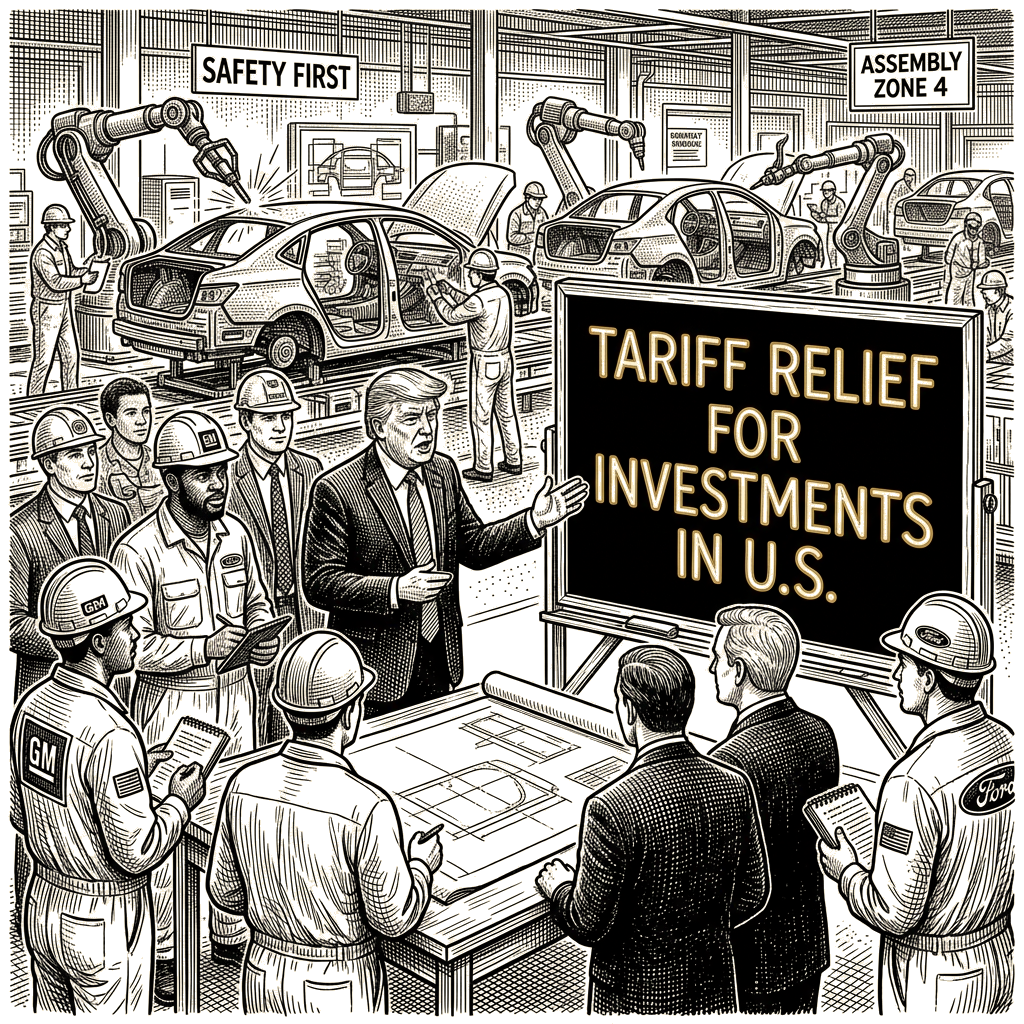
The Trump administration has promised to ease tariffs on automakers that commit to more U.S. manufacturing, according to people familiar with the situation. The policy change emerged amid talks to get Audi to build a $4 billion assembly plant in Georgia, the people said.
President Trump announced Audi’s plan to build the factory in rural Georgia, with the capacity to make 200,000 vehicles a year, Saturday at a campaign rally in the state. The deal with Georgia officials was reached earlier that day.
Audi, owned by Germany’s Volkswagen, imports all of its U.S. cars from Mexico and Europe and paid more than $1 billion in duties last year. Audi executives traveled to Washington in recent weeks to press for a break on tariffs, some of the people said.
The executives received assurances from the Trump administration that the Commerce Department would soon institute a tariff-relief program for companies that invest in the U.S., according to people with knowledge of the discussions.
Officials are still working out details of the plan, which is likely to allow companies that invest in U.S. factories to receive exemptions or offsets for tariffs on imported vehicles or parts, the people said. Companies must commit to starting factory construction before the end of next year to qualify, one of the people said.
The Audi factory has been touted as a win for Trump’s industrial policy ahead of midterms that are expected to be highly contentious for his party. The administration has used tariffs as a bargaining chip for winning manufacturing investments, even as they have driven up the cost of many goods.
Tariff relief, in turn, bolsters automakers facing billion-dollar tariff bills that are eating into profits, upending their global supply chains and forcing them to rethink manufacturing strategies. Many automakers have since unveiled significant investments in U.S. production.
The tariff-relief program is likely to be similar to one the Commerce Department established for its tariffs on polysilicon, a key ingredient in solar panels. Under that program, solar companies can submit plans to reshore production to the Commerce Department and receive tariff exemptions for certain products upon approval.
Georgia officials had been wooing Audi for years, promising incentives and infrastructure improvements in the area. A group of state and local officials recently traveled to Germany to see the company’s facilities, said Roy Lewis, a Peach County, Ga., commissioner who attended the visit. Company representatives also made several trips to Georgia to see the site, Lewis said. Audi evaluated more than 70 locations before settling on the Georgia site, executives have said.
Despite the efforts, Audi wasn’t yet sold on building a new U.S. factory. “I was a little worried I wasn’t gonna get that done before I got out of office,” Georgia Gov. Brian Kemp said at a news conference to discuss the project.
In January, Volkswagen Chief Executive Oliver Blume said the company couldn’t afford a new Audi U.S. plant while footing the big tariff bill.
The U.S. tariff hit has forced the automaker to raise prices on several models, and its U.S. business is hit by falling sales and financial losses. Last year, the company announced plans to cut up to 7,500 jobs in the hopes of saving money.
After announcing plans for a U.S. factory, executives said the plant was a chance to turn around Audi’s U.S. operation. Rivals BMW and Mercedes-Benz established a manufacturing foothold in the U.S. years ago, leaving them generally less exposed to tariff costs.
In Georgia, officials are hailing the factory as a historic win years in the making. But the announcement sparked outrage among German politicians and labor-union leaders worried about job cuts at home.
The plan needs a signoff from the Volkswagen Supervisory Board, half of which is composed of worker and labor-union representatives. IG Metall, a German metalworkers’ union with several seats on the company’s supervisory board, criticized Audi CEO Gernot Döllner for joining Trump onstage at a political rally. “The way Gernot Döllner has presented himself and Audi in the U.S. is highly embarrassing, politically unacceptable, and unworthy of the company,” Christiane Benner, the union’s leader, said.