Collins’s requested relief could aid Republicans in trade-reliant states
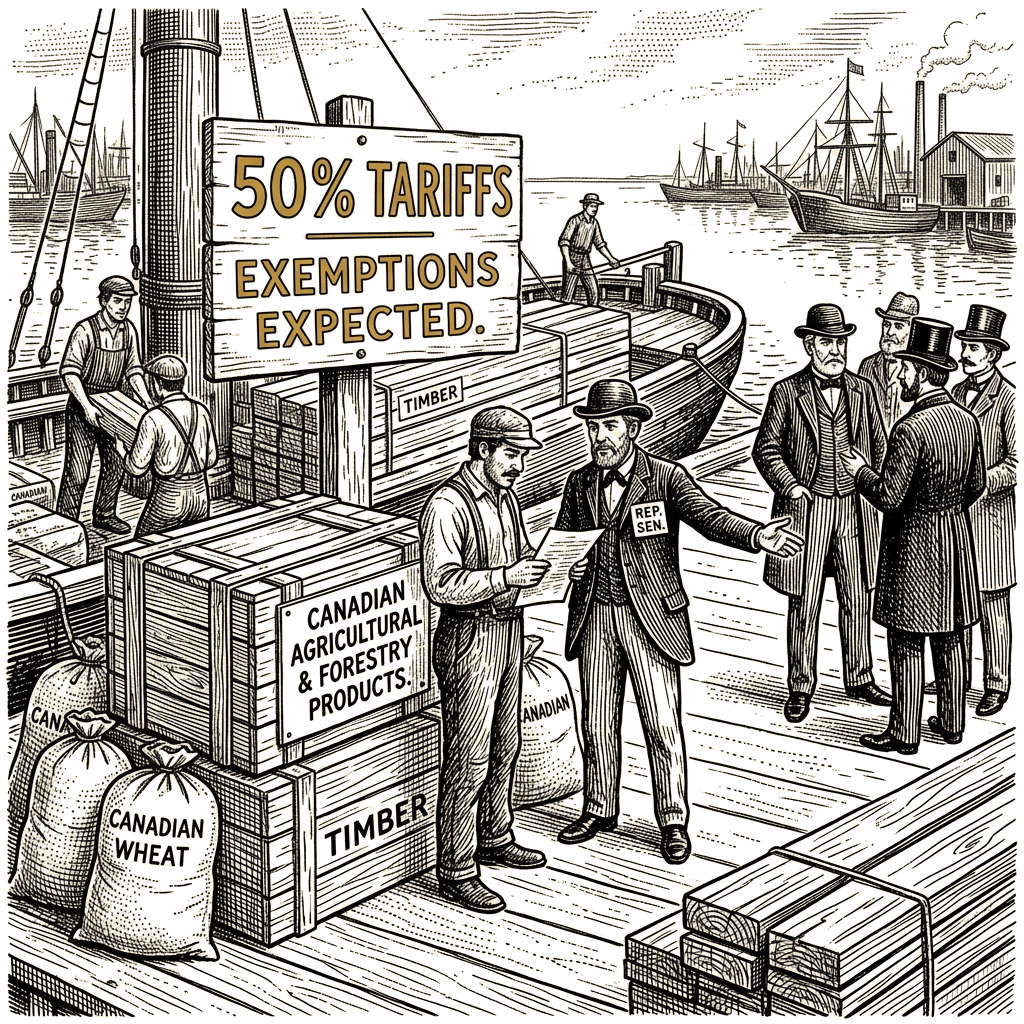
The Trump administration is expected to issue a proclamation as early as Friday that would remove 50% tariffs from certain Canadian agricultural and forestry products, according to people familiar with the upcoming action. The action is intended to help Republican Sen. Susan Collins of Maine as she seeks reelection in the upcoming midterm elections, but the people familiar with it said the scope and timing could change.
The tariff reductions could be balanced out by raising levies on other Canadian goods. A White House official said any tariff announcements would come directly from the administration and that preliminary reporting was speculation. The U.S. Trade Representative’s office, which administers the tariffs, declined to comment.
Collins has requested relief from tariffs that hit Maine industries and consumers, and she has broken with Trump on tariffs as she tries to secure reelection in a state heavily reliant on trade with Canada. Her Democratic challenger, Troy Jackson, has made Trump’s trade war with Canada a central issue in the campaign. The two were neck-and-neck in the polls heading into the final week before Election Day, according to The Wall Street Journal.
The proposed adjustment could also aid Republican candidates in other trade-reliant states. In Michigan, Republican nominee and former Rep. Mike Rogers has cut ads calling for Trump to end his trade war with Canada after months of supporting the president’s actions. In New Hampshire, former Sen. John Sununu has criticized Trump’s tariffs on Canada in his race against Democrat Chris Pappas.
Trump applied the 50% tariffs in late August after last-minute negotiations between the two countries broke down. The action covered about $20 billion worth of Canadian goods, roughly 5% of Canada’s exports to the U.S. Canada retaliated with tariffs of its own, leading Trump to ban the import of certain Canadian products and threaten to double tariffs on Canadian vehicles in January if the sides could not reach an agreement.
The upcoming move would be the second time the Trump administration has altered its 50% Canada tariffs. Last month, it removed tariffs from products including road salt and cement, a decision Collins took credit for on the campaign trail. When it exempted those products, the administration balanced the action by applying 50% tariffs to other Canadian goods, leaving the total value of Canadian exports affected by the 50% rate at about $20 billion.
The earlier exemption did not deter attacks from Jackson. During a debate with Collins this month, he said Maine residents “can’t eat road salt.” It remained unclear which, if any, new products would be tariffed when the administration moves to exempt some agricultural and forestry products, and the reductions could be offset by levies on other Canadian goods.
Trump’s 50% tariffs were imposed under Section 338 of the Tariff Act of 1930, better known as Smoot-Hawley, a trade authority described as never before used. This week, a New Jersey-based food importer filed a legal challenge arguing that the Trump administration was overstepping its legal authority.
Three points remained unresolved in the report: when the proclamation would arrive, which agricultural and forestry products would be exempt, and whether other Canadian goods would face higher levies to offset the reductions.