Carney promises dollar-for-dollar tariff match on nearly 900 US goods
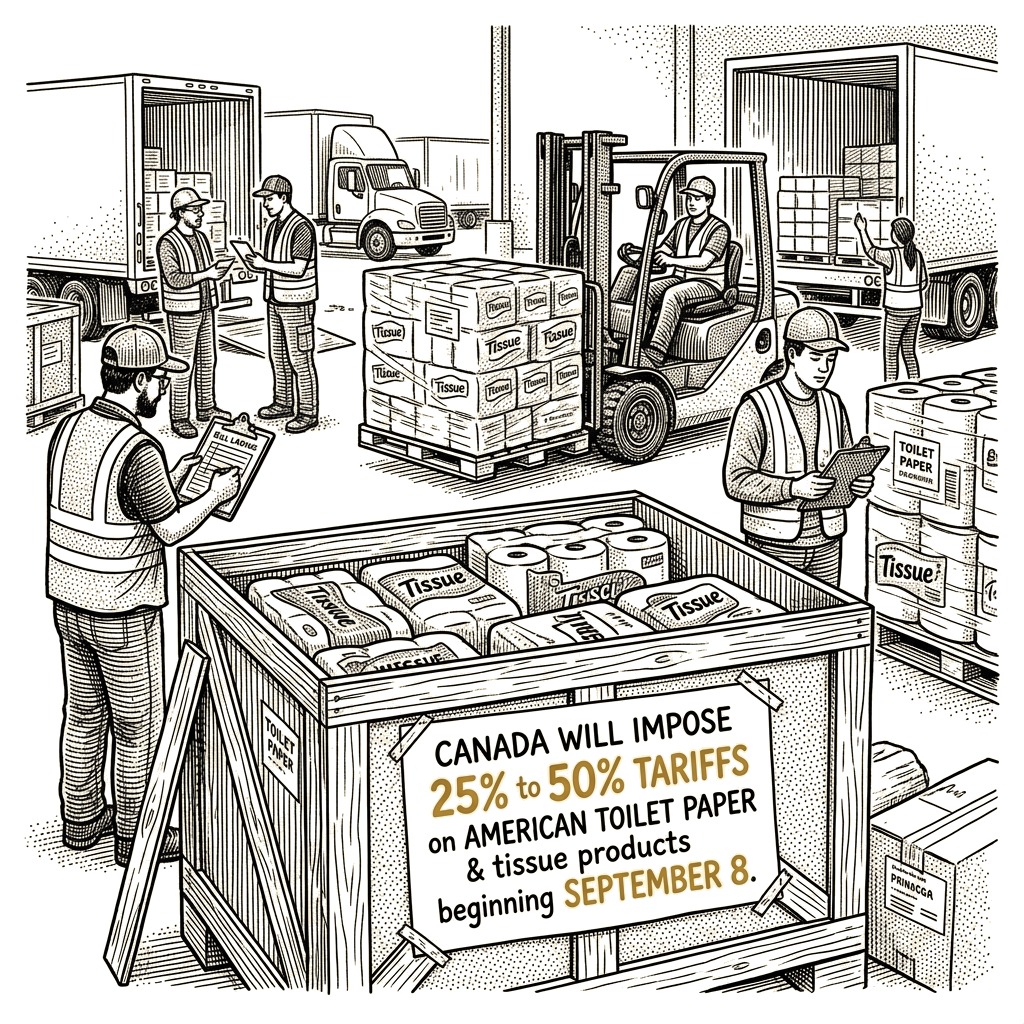
After trade negotiations broke down between the US and Canada last weekend, Canadian Prime Minister Mark Carney vowed to match US tariffs “dollar for dollar” and unveiled a list of nearly 900 American goods that will face 25% to 50% tariffs starting on September 8. Paper products rank among the hardest-hit sectors in the retaliation, with Canada threatening 25% to 50% tariffs on “toilet paper or face tissue stock” in response to a 50% US tariff hike announced by Washington.
The US imported $328 million worth of toilet paper from Canada in 2024, according to World Bank data, making Canada by far the largest exporter of the product to the US. Retailers including Costco source much of their paper products from Canada.
Though American toilet paper and tissues are often produced domestically, the manufacturers rely on lumber-rich Canada for raw materials. Procter & Gamble, the owner of Charmin toilet paper, said last year it would have to increase prices amid tariffs that were in place at the time.
The US accounts for more than 20% of global tissue consumption despite having only 4% of the world’s population. The average American uses 141 rolls of toilet paper per year, just ahead of Germany, where residents use an average of 134 rolls annually.
The broader US-Canada trade war spans additional sectors. US tariffs are affecting Canadian liquor, including popular whiskey brands Crown Royal and Canadian Club, which face a 50% tariff. Canada has not introduced a federal tariff on American liquor, but most Canadian provinces have imposed their own bans on American alcohol in retaliation for earlier US tariffs on Canadian products. President Donald Trump cited the province-wide bans as part of his legal justification for new tariffs against Canada.
Carney has asked provincial leaders to consider putting American liquor back on shelves, though Nova Scotia Premier Tim Houston told CBC News the demand question remains open. “Whether Nova Scotians or Canadians will actually buy it when it’s back on the shelves, that’s a whole other discussion,” Houston said.
Trump also said his new tariffs are in retaliation for Canadian levies against the American dairy industry. He introduced a 50% tariff on nearly all Canadian dairy products, with the exception of Canadian cheese. Canada has responded with a 50% tariff on American dairy products and a 25% tariff on American cheese.
Canada also imposed a 25% tariff on American fish and seafood, including frozen lobster. The move prompted Republican Senator Susan Collins, facing a tough re-election battle in lobster-capital Maine, to call Trump’s latest action “a mistake.” A 25% tariff on Canadian cars and auto parts is set to affect the American auto industry, which relies heavily on Canadian parts for manufacturing; Trump has threatened to double the tariff to 50% if a deal isn’t made by January 1, 2027.
US Trade Representative Jamieson Greer said “there’s no possible way” the trade dispute with Canada will affect US consumers. “The fundamentals are good,” he said. “I don’t think this is going to affect anything.”
It is unclear if or when the tariffs will be lifted.